Introduction
Suppose it is as follows: you have your ship in the port, and after weeks of sea passage, the purchaser is impatiently awaiting his order, and you are summoned. People have stolen your consignment. One signature is not completed here, one certificate is not completed there, and before you know it, the demurrage charges are piled up by the hour, angry customers are threatening to cancel future orders, and there is a logistics nightmare that could have been completely avoided. Such a scenario happens in thousands of cases every day on international shipping routes, where it is quite essential to learn about the largest and most significant shipping papers and make the task of clearing customs a little more difficult.
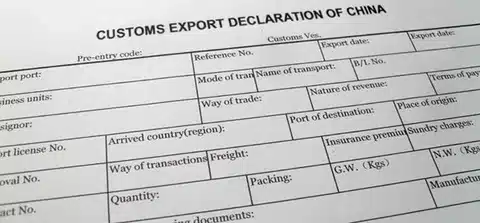
The shipping papers that are employed in international shipping are much more than paperwork; they are also an important document that ensures legal compliance. They are the legal foundation of world trade, the monetary tools that process payment, and the roadmap that controls your product on its way to the destination. Without them, your freight does not fly. Having mistakes in them, your cargo will go straight into a warehouse where it will collect storage charges, as you work hard to correct the errors, which may be days or even weeks before getting corrected.
You will find the most important documents that regulate shipping over the borders and beyond, learn why each of them is necessary, and provide detailed information on how to prepare them properly how they are to be prepared properly, and what practices can be used to distinguish between seamless work and expensive failures. You may be an experienced exporter who needs to streamline operations or you may be a beginner who is undertaking your first international shipment, in which understanding related documents becomes essential. The article will provide you with the skills to manage international shipment documentation with accuracy and precision.
1. The Role of Shipping Documents in International Trade
Why Documentation Is the Foundation of Global Commerce
The international shipping documents have three important functions that render them impossible to compromise in international trade. First, they satisfy the legal requirements of the exporting and importing countries, which gives the formal documentation that goods have been duly declared, valued, and approved for international transportation. Second, they are financial instruments—banks will not make payments, letters of credit will not be honored, and insurance claims cannot be made without proper documents. Third, they act as working tools, which allow freight forwarders, carriers, customs brokers, and warehouse operators to manage, ship, and move your products most effectively.
The Real Cost of Documentation Failures
In case of missing shipping documents or incomplete or incorrect shipping documents, including any mandatory document, the effects are felt very fast. Customs officers may reject it and detain your shipment indefinitely due to not adhering to import regulations until problems can be solved. This leads to a domino effect: demurrage and storage costs add up, delivery time limits are not met, relationships with customers are damaged, and in serious cases, product may get confiscated or destroyed, especially when dealing with perishable goods or controlled goods. Financial sanctions are not limited to storage costs but may also be a fine for violating the regulations, reviewing duties, and, in certain jurisdictions, even criminal liability in case of severe offenses such as misclassification or underestimation.
Documentation as Your Risk Management Shield
In addition to compliance, sound documentation will guard against disputes and liability. A properly drafted bill of lading creates the proper ownership and responsibility of goods being transported. Proper commercial invoices eliminate the accusations of tax evasion or smuggling. Certificates of origin open preferential tariff rates that may save thousands in payments in duties. Insurance certificates provide security in the event of a disaster. Combined, these documents allow you to set an audible trail of proof of good faith adherence to international trade regulations and give you legal recourse in case of problems with carriers, customs agencies, and business partners.
2. Core Documents You Need to Master
Bill of Lading (B/L): The King of Shipping Documents
The bill of lading is one of the most significant documents in international shipping, which has three but not independent roles. It is a receipt to the carrier, which acknowledges that we have delivered our goods to him in the state and quantity stipulated. Being a contract, it defines the conditions according to which your goods are going to be delivered, such as the obligations and the limitations of liability of the carrier. Above all, as a document of title, including the cargo receipt, it embodies ownership of the goods. He who is holding the original bill of lading, which is a legal document, has the legal right to claim the cargo at the destination.
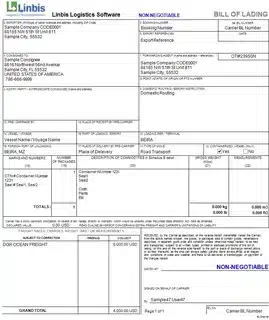
The knowledge of the kinds of bills of lading avoids unnecessary confusion at high costs. A bill of lading used in sea freight is called an ocean bill of lading, and exists in both negotiable and non-negotiable versions, the former of which can be transferred by endorsement. An air waybill works the same with air cargo, only that it is non-negotiable and just assures that goods have been received by carried customs office. Multimodal or combined transport bills of lading include transport voyages that use more than one type of transport mode under the same contract and are useful in situations where goods have to be transported by truck, rail, and ship in series.
On your bill of lading there are important areas that require attention. The party named shipper and the party named consignee’s information must be the same as other records and the parties identified in your sales agreement, including the export packing list. The goods description must be precise enough to be recognized, yet not overly specific to the point of inconvenience because of minor changes—use generic commercial descriptions. The volume, weight, and amount of packages have to be matched with your packing list, as well as your shipping labels. The Incoterms used and freight terms (prepaid or collect) should be in accord with your trade contract. Physical markings on packages must be associated with any marks and numbers.
Some traps in bills of lading include the acceptance of received for shipment bills in lieu of shipped on board bills where letters of credit insist on shipped on board bills; not recording exceptions or damages where goods are loaded in poor condition; acceptance of copies where originals must be provided to clear the goods at customs and to release payment; and descriptions of goods that are inconsistent with your commercial invoice. Always take clean bills of lading and a customs invoice, those that have no notations of damage or shortage, because they lead to delays in payments and problems with insurance claims.
Commercial Invoice: Your Financial and Customs Declaration
The commercial invoice is both a payment demand and a customs declaration and is therefore at the core of both the financial and regulatory nature of international shipping. The following information should be in this document: full legal names and addresses of buyer and seller, which are crucial for the sales transaction, a detailed description of goods including commercial names and specifications, the Harmonized System (HS) codes under which your products are subject to tariffs, quantities and unit of measure, unit prices and overall value in a the agreed currency, terms of payment and Incoterms applied and country of origin and license or permit number where needed.

Duty and tax are calculated based on the commercial invoice; therefore, accuracy becomes very imperative. It is a document that is used by the customs authorities to determine the duties to be paid on imports, value-added taxes, and any other charges. The declared value should be based on the real transaction price and any assets or royalties and other costs that constitute a part of the customs value as per the international valuation rules. The HS codes are used to calculate what tariff rate is relevant, and even a one-digit error can translate to duty-free entry or costly tariff penalties.

Errors in trading invoices cause grave difficulties. Understating—representing goods at less value than their actual worth to pay lesser duties—is fraud and may lead to seizure of goods, imposition of tremendous fines, criminal charges, and permanent blacklisting by the customs. Lack of information, such as the tax identification number of the buyer, mandatory statements by the regulation, and an adequate description of the product, leads to delays in the clearance. Disagreements in the invoice with other documents have warning signals that result in thorough investigations. Rounded numbers rather than real transaction values may indicate approximate values rather than actual ones and may be subject to question.
Commercial invoice best practices involve official company letterhead, filling all mandatory fields prior to shipment, consistency among other documents, clear charge itemization (distinguishing between product costs and freight, insurance, and other charges), a detailed description of products that aligns with your tariff classification, and simple record keeping that can be used to substantiate values declared under the inquiry. In related party transactions, make sure that your pricing is appropriate to arm’s-length market values to prevent transfer pricing problems.
Packing List: The Operational Roadmap for Your Shipment
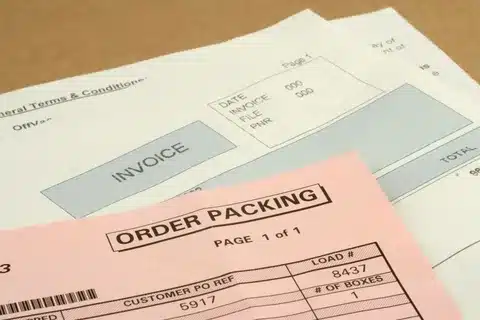
When the commercial invoice is concerned with the financial and the customs value, the packing list dwells on the physical features of your delivery. In this or that document, the packing of goods, their volume and weight, the way they are arranged in the shipment are detailed. It is used by freight forwarders to organize the loading and estimate freight costs, warehouse operators to handle receiving and inventory, and is used by customs officers to inspect cargo throughout the shipping process. to ensure that physical goods are as described on declarations.
A structured packing list will name each package or container in separate sequential numbering (or identification mark). Each package contains the specifications of the items within, including important details necessary for shipping. , in adequate detail to identify without opening, the gross weight and net weight, dimensions (length, width, height), volume or cubic measure, and any special handling instructions. When several items are loaded in a pack, the list splits up the items in each carton, providing quantities and descriptions necessary for freight shipping. That is linked to the commercial invoice.
The distinction between a packing list and an invoice is simple yet significant; the former generally does not contain any prices or values and instead concentrates on purely physical characteristics and structure. This can enable it to be used in operations without raising eyebrows or exposing commercial information to entities that deal with it, and may not require knowing the financial aspect of the exchange. Nevertheless, the descriptions should still be in line with the commercial invoice, as it is an important shipping document. so as not to create an impression that there is a difference, which may lead to customs holds.
Clarity tips would be: Place entries in a logical order (by package number, by type of product or by destination where different orders are consolidated), use consistent units of measure across all, any hazardous item or item that needs special treatment should be marked, any distinct marks or numbers that will be placed on physical packages and summative weights and volumes should all be correct. A detailed packing list is particularly essential to shipping less-than-container-load (LCL) freight and for meeting the requirements of the importer security filing, since your shipment will be moved together with the freight of other shippers and needs to be identifiable to be deconsolidated at the destination.
3. Additional and Special Documents (When Required)
Certificate of Origin: Unlocking Trade Agreement Benefits
A certificate of origin is a formal, undocumented statement that testifies to the country of manufacture or production of your goods. Although this may appear as a mere proclamation, it has serious monetary consequences since most countries have special treatment at tariffs as part of free trade agreements or generalized systems of preferences. Providing a valid certificate of origin will help to lower or waive import duties, which will save you a lot of costs that enhance your competitive advantages or improve profit margins.
The issuance of the certificates of origin is subject to the type and destination. Chambers of commerce, trade associations, or occasionally exporters on company letterhead issue non-preferential certificates of origin, which are merely statements of origin of goods made without any claim of special treatment. Preferential certificates of origin that appeal to the benefits of certain trade arrangements, such as USMCA, EU trade arrangements, or ASEAN arrangements, must be provided by authorized bodies or through authorized procedures for international shipments of self-certification. In every trade agreement, there are rules of origin which determine what is considered to be of the member countries’ origin, hence in most cases, minimum local content or a high level of transformation is required.

There are several occasions under which certificate of origin is mandatory: where the importing country insists on them on all imports, or where the importing country insists on them on certain product lines, where the buyer is required to provide them in his letter of credit, or where the importing country is under the legal obligation to provide them to have his products cleared through customs. Some African and Middle Eastern countries often demand that certificates of origin be consul-legalized for border protection purposes. and a customs bond be secured. and this introduces additional steps and leads to document preparation.
Formatting and content requirements. When issuing certificates of origin, some formatting and content are mandatory depending on the issuing authority and destination country. You will be required to properly present the description of the goods in terms that are equivalent to your commercial invoice, the HS number, and make a declaration of the country of origin according to the relevant rules, and in many cases, have supporting documentation, such as manufacturing documentation or bills of materials supporting the claim of origin. With such a duty savings on the line, be careful to make sure that your products do qualify under the terms of any trade agreement you are invoking.
Insurance Certificate: Protecting Your Investment in Transit
An insurance certificate is a documental action which gives the understanding that your goods are insured in the event of loss or damage during transit internationally. Though not always, insurance is imperative when transporting valuable goods, taking a path known to be risky, or where your terms of contract (such as CIF or CIP Incoterms) are on the line and you have to arrange the insurance. Letter of credit banks usually insist on insurance certificates in order to make payments, and buyers would also like to know that their purchase is safeguarded.
The insurance certificate should expressly state several essential points which are: description of the accurate products and that is in line with other documentation, the insured value (usually, the CIF or CIP value plus a percentage markup, usually 110 percent to cover other charges and possible profits), the details of the voyage such as the vessel or the flight, ports or the airports of reception and discharge, the kind of coverage such as ICC A, B, C clauses that are used to insure cargo or other common terms. The certificate is to be issued or endorsed according to the order of the buyer or the bank when it comes to payment of the letter of credit.
The awareness of the nature of coverage serves to prevent unpleasant surprises. ICC Clause A encompasses any and most external causes of loss or damage, subject to typical exceptions of inherent vice, delay and insolvency. ICC Clause B offers so-called named perils coverage of less widespread risks including fire, explosion, collision, and general average. The provision at Clause C under ICC only provides minimum coverage to large casualties. The cover needed is also dependent on the goods in question, the value of the goods, vulnerability to damage and the risk profile of the shipping route. Needless to say, delicate electronics must be covered in more detail than mass produce goods.
When you need insurance certificates differ with number of factors. When selling on FOB terms, the buyer insures you and you need not issue a certificate to him/her. CIF, CIP or any other name where the seller is insured CIF We shall require you to issue a notice of coverage. Where the financing is taken by means of letters of credit, however, the banks will usually insist that the package of document contain insurance certificates. Or even a prudent seller, when not required to do so, will have at least a basic liability to protect his own interests pending their being sold to the buyer. Utilise the services of the experienced marine cargo insurers who are familiar with the international trade and will provide certificates in a format that would otherwise not be necessary in your destination country.
Other Essential Documents Based on Your Cargo
In addition to the basic and typical documents, international shipping may also involve specialized documentation based on what you are sending and where it is being shipped. Controlled goods such as military goods, dual-use technology, some chemicals, and products that have export restrictions are subject to export licenses and permits. Countries have lists of control which define what needs licensing and transporting controlled goods without an appropriate license is a significant breach of the law. Get your export clearances early on before your shipping schedule, since it may take weeks or months to get an approval.
Phytosanitary certificates confirm that plants, plant products, and some agricultural products are not infested with pests and diseases. Published following inspection by government agricultural departments, the inspection certificate is vital for compliance. These certificates are usually required of fresh produce, seeds, timber, and other plant products. Health certificates also play a comparable role with animal products, meat, dairy, and food products by ensuring that the products are healthy and safe according to the requirements of the importing country. Without these certificates, border officials simply reject agricultural and food shipments, regardless of the quality of other documentation.
When shipping dangerous goods, the declaration of such goods is irrenegotiable in case of transporting anything that is considered to be hazardous material, such as chemicals, batteries, aerosols, flammable liquids, and a variety of industrial products. The International Maritime Dangerous Goods (IMDG) Code in sea freight and the International Air Transport Association (IATA) Dangerous Goods Regulations in air freight define rigorous documentation, packaging, labeling, and handling requirements. The UN number, proper shipping name, hazard class, packing group, and emergency response information must be stated in a dangerous goods declaration. Not declaring hazardous cargo in a proper way can lead to huge fines, criminal responsibility, and disastrous crashes.
Shipments of textiles and apparel to some markets might still need visa or quota paperwork despite the termination of the Multi-Fiber Arrangement, especially where the products are being delivered based on special access programs. In the countries where third-party verification is required, pre-shipment inspection certificates ensure quality, quantity, or price. The destination country issues import permits, which allow the entry of restricted items such as pharmaceuticals, medical equipment, or telecommunications equipment. Explicit supplementary documentation required will be based on your type of product and country of destination policies, and it is therefore important to do a lot of research before exporting.
Best Practices and Tips to Avoid Delays

Consistency: The Golden Rule of Documentation
The most important principle in international shipping documentation is absolute consistency of all the documents. The names of the parties, description of goods, values, and quantities, and any other information which will be found in different documents should be the same. A shipment in which the commercial invoice indicates that the shipment contains a lot of cotton t-shirts, whereas the packing list indicates that it contains a lot of cotton shirts raises a question.
Having a different spelling in the bill of lading compared to the commercial invoice of a consignee can create a problem with clearance. Visible inconsistencies will put the customs people on alert that something might be wrong and they will do a full inspection, which will delay the delivery of your products.Standard formats and descriptions of your products will be defined and used in all the documentation and in every shipment.
Specify a list of product descriptions (acceptable) which are associated with a specific HS-relevant code. Maintain a list of customer names that can be approved with the exact legal names and addresses. Prepare a template on all types of documents which require the relevant fields, and fill the template with the operators. Compare all papers with each other and then make a final decision on any paper before it becomes a problem so that differences are noted in time.
Embracing Digital Documentation
The world trade community is gradually shifting to using electronic rather than paper-based documents and this shift has tremendous advantages. E-documentation saves on processing time, reduces the errors created by inputting data, provides access to all members of the supply chain instantly and also provides version control and audit trails. In many countries, analogous to the use of paper documents, electronic bills of lading, commercial invoices, and certificates are now being accepted as a form of securing and authenticating documents and stamping documents. Some of the big carriers have developed e-documentation systems where shippers are able to create, upload and process shipping paperwork via the web. However, it is not introduced completely yet- not every country and every kind of document requires paper based documents or certified copies. Be sure that your destination country is not a problem with electronically submitted documentation, and that you are not missing any documentation you require before moving to shun the paper all together. Store paper backup systems until the day when e-documentation becomes a universal standard.
Getting the Technical Details Right

Three technical aspects contribute to the disproportional number of documentation problems: Incoterms, units of measure, and HS codes. It is the use of harmonized System codes to classify products based on tariff and statistical purposes, and selecting the wrong code can result in a wrong determination of duty, and even rejection by the customs or penalties against misclassification. You should also check the correct Hs code of your products based on tariff schedule of your country, consult the customs brokers where in doubt and note that different countries have slightly different codes and they are occasionally reviewed.
Units of measure are also to be clear and should not be confused. When trading with foreigners, it is good to make sure that the quantities are in the metrical or imperial units, and do the conversion where necessary. The 1,000 pieces when you mean 1,000 dozen or weight in pounds when you mean kilograms not only confuses but slows down as well. Always include the units in, but do not rely on them to be self-evident.Incoterms determine who is in charge and who is liable to pay the price between the buyer and the seller and who is to arrange the transportation and insurance.
Incorrect use of Incoterms brings discordance on payment of what and can affect the customs value. Ensure that the Incoterm which you are carrying in your commercial papers is the same Incoterm that was settled in your sales contract and ensure that you fulfill your part of the bargain as set forth by the Incoterm. Remember that Incoterms are updated periodically-Incoterms 2020 are in force and the parties must specify the version to be applied.
Leveraging Professional Expertise
International shipping documentation and shipping practices are complex and country-specific, product-specific, and mode of transportation-specific. Hiring the services of professional freight forwarders and custom brokers is one of the best risk avoidances, except in cases where you possess immense in-house knowledge. These employees understand the requirements of the destination nation, can identify issues with the documentation in time that it will not hold up the work, are likely to have templates and frameworks that can ensure completeness and precision, and can react promptly when issues are identified.
Choosing service providers that have a good track record in your industry and trade lanes. Get references and check their record of obedience and trustworthiness. Establish an effective communication policy about how different types of documents are prepared depending on how the shipping will be conducted. This policy must indicate the person preparing each document and a person to review and then submit. Professional support could add to the cost, but will always be cheaper than any mistakes you make in documentation. Consider these professionals as part of your supply chain and not as dealers providing a service under commodity export regulations.
Templates, Checklists, and Quality Control
Using standardized templates to name the document types will prevent omissions and will ensure that you have all the information you need and that you have formatted it correctly. Fields that are needed should have prompts and drop lists where the drops are similar items (such as ensuring that totals are added properly). The templates should contain built-in validations where necessary (e.g., make sure that everything adds up right). Templates should always be revised and updated because regulations may change or you may have learnt new avenues of doing things.
Checklists are required quality control tools. Prepare a master list of the respective destination markets, so that you have all the necessary documents, special considerations and timing. The checklist should be used to check out any kind of shipment that is to be made to ensure that any final decision of sending the shipment is made is subject to review to make sure all the documents are comprehensive, accurate, and consistent with each other. Sharing responsibility- assign individuals who will write documents, individuals who will read documents and individuals who will give final approval before document submission.

Costly confusion is avoided due to version control. Where the documents are to be revised or reissued, version numbers and dates need to be highlighted clearly, and the revised versions supplied to all the parties. Also, have well-organized filing systems (physical or electronic) where you can easily access document sets of certain shipments when queries come along weeks or months after sthe hipping carrier.
Common Mistakes and How to Fix Them
Mismatched Values and Descriptions
A common customs clearance error is the inconsistency in the description or value of goods in different documents. This occurs when various individuals make various documents without cross-checking, when changes are made in one document but not in others last-minute, or when standard descriptions are altered a bit to serve different purposes. Customs officials consider discrepancies as possible indications of fraud, undervaluation, or even smuggling, even when the discrepancies are innocent mistakes.
The solution to the remedy would be to employ systematic review procedures. Any document set should be compared line by line before any document is turned in, ensuring that product descriptions are word for word, that values are reconciled, that quantities are the same or that they have an explanation as to why they are different, and that names of parties are the same. Develop a reconciliation checklist that specifically lists the most frequent areas of mismatch and has to be signed off, saying that they have been checked by the customs broker.
Missing Signatures, Stamps, and Certifications
Formalities are usually signed by authorized personnel of the company, stamped by government agencies or certified by authoritative organizations. These requirements are not followed to the letter when it comes to shipping deadlines. The signature and stamp of the carrier on a bill of lading are worth nothing. Such a certificate of origin will not be accepted without the official seal of the chamber of commerce. Even online files could need to have electronic signatures from those involved.
Avoid this error and incorporate signature and certification requirements into your document preparation process for international commerce. Do not consider documents finished until all necessary signatures and stamps are received. Give a lead time to documents that need to be certified by a third party- the chambers of commerce, Consulates, inspection companies, and government agencies will stick to their schedules and not yours. Know these entities and what they are going through so that you can plan on the same detailed document.
Expired or Missing Licenses and Certificates
Some of the documents, such as export licenses, inspection certificates, or phytosanitary certificates, are not valid indefinitely. Working on documents that are expired or only to realize that some of the necessary permits are not renewed leads to severe delays since there is no way to legally ship until the right documents are received. Certain certificates have to be emitted on the spot and are not available very long before the shipment, which poses timing problems for the packing slip.
The answer is in active tracking and renewing systems. Keep a diary with expiration dates of all licenses, permits, and standing certificates that your company is operating on. Place the alerts a minimum of 60-90 days before expiration to start the renewal procedure. Where particular deliveries need special permits or time-sensitive certificates, determine these needs during the sales negotiations and order confirmation, not the day before scheduled shipment. Add additional time to your shipment time in order to deal with documentation delays.
Incorrect or Outdated Incoterms
Improper use of the Incoterm or failing to specify which version of Incoterms to apply results in conflict and affects the recording of free sale. Similarly, the term FOB should be used rather than FCA (the correct Incoterm about container shipment) since this is likely to create confusion over the place of delivery and who bears the insurance. To resolve this, the simple application of Incoterms 2010 to the supposed Incoterms 2020 cases could lead the parties to disagree on who does what to establish all the details, as well as by clearly stating the version and type of Incoterms (e.g., Incoterms 2020) in all business records. Provide training to sales and logistics staff about what each of the Incoterms entails and when each of them applies. Select checks Selections of incorporated terms as your documentation quality control measurement when shipping internationally to ensure that they match the actual service that you are providing and the agreement you entered with buyers.
Late Submission and Incomplete Document Sets
Meeting shipping deadlines may lead to filing some documents at a time or delivering incomplete sets of documents but later commitments of delivering the outstanding parts to the shipping destination. This introduces delays in clearance processes since customs are unable to receive shipments until all documentation is received, carriers are unable to release goods without appropriate documentation, and banks are unable to receive letters of credit until all sets of documentation are provided in the required time.
The root cause is that they should plan better and prepare documents earlier. Instead of commencing documentation when goods are prepared to ship them, commence when orders are realized. Determine all the necessary papers as soon as possible and initiate the acquisition of those with long lead times (export licenses, certifications, etc.) immediately, freight forwarder. Design and proofread documents such as commercial invoices and packing lists prior to goods being manufactured so that only final quantities and dates would be required to be changed. Add buffer time into your shipping schedules, and this will allow you to wait on documentation problems without missing vessel sailings or flight bookings. Ensure you make on-time and complete documentation a performance measure for your logistics team and other shipping documents.
Conclusion
Not only is the knowledge of international shipping documents an administrative concern, but it is also a tactical skill that directly impacts your bottom line, customer satisfaction, and business image in the international markets. The difference between efficient and fast cross-border transportation and costly delays, penalties, and frustrated partners proves to be the precision, thoroughness and consistency of paperwork. This knowledge of what every document is, what role it serves and how to get it right has made documentation a competitive advantage rather than a liability that must be incurred to make the world trade operations reliable and economical.
Start by comparing your existing documentation process with those discussed on this site under the best practices and determine the missing points and weak areas and implement systematic corrective measures that will help in reducing errors and reducing the time on clearance. You may also wish to download a complete documentation checklist to assist in shipping or, perhaps, if you require the expert assistance of managing your supply chain operations, communicate with knowledgeable individuals who may audit your routine and propose particular remedies. Share this guide with other colleagues and partners in your supply chain network- errors in documentation at any point of the chain can lead to problems affecting all those involved, and raising the standards across the trading community will do all a favor.