
The higher storage rates are long term storage fees levied on products stored within a warehouse over a specific time usually 30, 60 or even 90 days. Lots of sellers are considered to be a burden to the long-term storage charges. As a matter of fact, they are stepped down pricing systems, meant to deter stagnation on the inventory.
None of their long-term storage charges are fines, they are only cost indicators that inventory is moving at a sluggish rate. Stagnant inventory means that the fulfillment cost per unit would still be high despite the sales not decreasing.
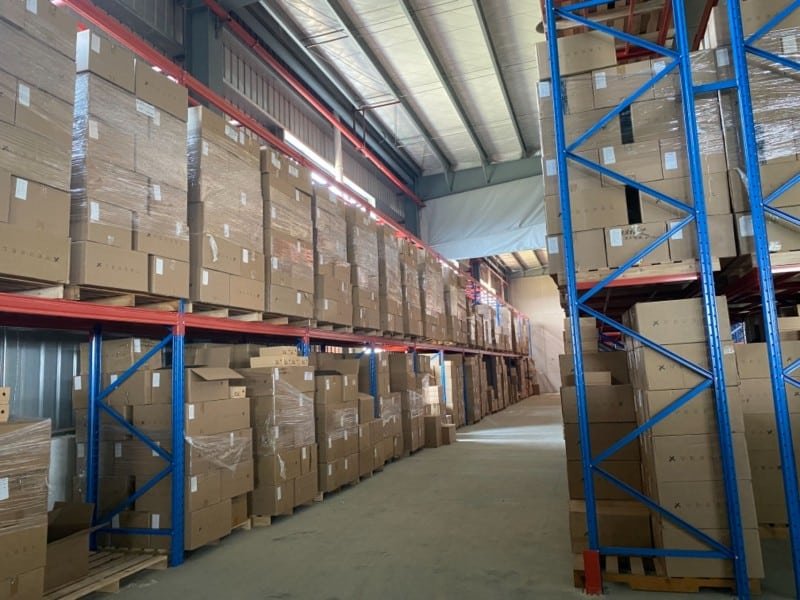
How Long-Term Storage Fees Work in 3PL Warehouses
The 3PL warehouses charge long-term storage with a tiered pricing scheme that is highly organized, predictable, and tabular to imply the actual expense of holding space within a period of time.
Storage is billed by most providers on a monthly basis either in cubic meters (CBM) or by pallets. The rate remains on the base level within the first 30 days. Once that rate is met, the rate automatically increases. This will generate transparent pricing levels of warehousing storage that establishes swift movement.
Here is a typical structure:
| Storage Duration | Typical Rate Adjustment |
| 0–30 days | Base rate |
| 31–60 days | +10–20% |
| 61–90 days | +20–40% |
| 90+ days | Significant increase |
Such modifications are not arbitrary. They take into consideration opportunity cost – the room used in slow-moving stock cannot be utilized in fast moving stock that brings in higher revenue per square meter. Knowledge of long-term storage charges 3PL organization enables operations departments to predict holding costs, rather than find them on the monthly bill.
Why Slow-Moving Inventory Becomes Expensive
Stagnant inventory value fills the layers that most ecommerce factions fail to consider until the marginal effect is reflected.
The most evident level is the level of storage tier escalation itself. More than that, the capital is held in non-moved items, which do not allow it to reinvest in faster moving SKUs. The coverage of obsolescence increases with each additional week on stocks, particularly in the case of electronic, fashion, or seasonal products. Complexity further increases to handle it, old stock might need additional repacking, sorting or have to be returned.
There is another invisible cost space opportunity cost. Each pallet of slow stock occupies space that can accommodate new arrivals which have better turnover.
| Cost Factor | Impact on Per-Unit Cost |
| Storage tier increase | Higher cost allocation |
| Reduced turnover | More months billed |
| Dead stock | Zero revenue, ongoing cost |
A combination of these factors causes the inventory holding cost as an ecommerce to multiply significantly over and above the base storage cost. As turnover reduces, each unit bears its larger portion of the fixed cost of the warehouse.

How to Calculate Long-Term Storage Cost per Unit
Proper storage cost per unit calculation will give the capability of providing the operations planners with the visibility to make an informed decision on replenishment.
The simple equation is given below:
Storage Cost per Unit =(Monthly storage Fee × Months Held)/Units sold.
Consider this example:
- 2,000 units received
- Monthly storage fee: $1,000
- Held for 3 months
- 1,500 units sold
Total storage paid: $3,000
Storage cost per unit sold: $3,000 ÷ 1,500 = $2.00
Had the same stock submitted in 30 days, the price per unit would allow it to fall to about $0.67. This variance of 1.33 unit goes directly to the bottom line – or decays it when ignored.
With the addition of the tiered rate increases, inventory cost modeling is amplified even further. The monthly fee could increase by 50 percent after 90 days and this would hike unit cost to a superb heights and is where inventory planning is required.
Real Example: Fast vs Slow Inventory Turnover
The inventory turnover rate in ecommerce draws the line between an operation that is making a profit, and one that is simply bleeding to death due to storage cost—understanding this metric is crucial for cost control.
Scenario A – Fast Turnover (30 days)
2,000 units arrive. All are sold within a period of one month at base rate. Storage unit cost is minimal.
Scenario B – Slow Turnover (90 days)
Same 2,000 units. There are only 1,500 selling after three months, and now it has the highest level. The cost of storage per unit is tripled.
| Scenario | Storage Duration | Storage Cost per Unit |
| Fast Turnover | 30 days | $0.67 |
| Slow Turnover | 90 days | $2.15 |
The difference of 1.48 per unit might not appear big until it is multiplied by thousands of units and number of SKUs. No other single factor can define the efficiency of storage than inventory turnover.

How Long-Term Storage Fees Affect Fulfillment Cost per Order
Storage cost, like other hidden storage costs, is artificially and silently added to fulfillment costs per order, squeezing margins without shifting the pick-and-pack line item on the invoice.
Consider a standard demand of base cost of fulfillment of 7.00. As sluggish inventory causes a shift in storage allocation of the based cost of storage of $0.20 to 1.00 per unit, the real landed fulfillment cost per order increases to $7.80 and above. The increase of 0.80 is done automatically and without saying in all the orders that include the aged stock.
The effect compounds. Advertising efficiency reduces as the same amount of ad expenditure is now maintaining low net margin. Ecommerce margin planning should incorporate a complete fulfillment cost breakdown including modeled storage cost per unit, and not just the outbound shipping and handling. Otherwise, it is a gradual process, profitable looking products turn into a killer of the margins.
Products Most at Risk of Long-Term Storage Fees
There are categories of products which bear greater risk of storage and hence require greater funneling of inventory.
Seasonal goods are on the list first — the holiday decorations or summer clothes can lie months after the time of high demand is over, creating peak season storage pressure.Trend-based products become obsolete quickly once the style switches, requiring careful apparel inventory management. The high SKU counts become cumbersome, and the low demand variants in terms of color or size just hang around.Large products occupy inappropriate space, which will speed up the amount of tiers. Successful lines have low-demand variants which tend to be the hidden cost drivers.
| Product Type | Storage Risk Level |
| Seasonal products | High |
| Trend-based items | High |
| Oversized products | Medium-High |
| Low-demand variants | Medium-High |
| Large SKU assortments | Medium |
Identifying these trends before they occur enables us to make such adjustments early before reaching long term storage costs.
How to Avoid Long-Term Storage Fees
Improving inventory holding cost begins with a purposeful operational practice as opposed to a problem-solving behavior.
Such practical strategies are:
- Upgrading demand forecasting where there is a rolling review of 90 days that takes into consideration seasonality and market pattern.
- Optimizing logistics operations through smaller, more frequent loads to ensure that on average, days-in-warehouse are not more than 30
- Minimizing SKU complexity through dropping or packaging slow variations chronically.
- Developing promotional packages wherein slow movers are accompanied by items that can sell within a short period of time.
- Assessing inventory aging reports every week and automatic alerts at 45 days.
- Reducing reorder level of products with early preliminary indicators of reduced velocity.
All these enhance the inventory turnover and hold the majority of stock in the free or free-base rate range.
Free Storage vs Long-Term Storage — Understanding the Transition
Most of the 3PL providers offer free storage periods that are limited in time, normally by the first 30 days of receipt, before transitioning to tiered pricing.
After such a window, it is automatic and neither negotiable to move to long term storage fees. When a seller considers the free period a buffer space that is practically free, he or she soon realizes the difference in cost when the bill comes due. Inventory-scheduling to be around the specific transition date – to have inbound shipments, which are synchronized with projected sell-through figures, will eliminate most of the unnecessary charges.
Common Inventory Planning Mistakes
Some of these repeated errors continually cause the incurrence of long term storage charges in ecommerce operations.
- Purchasing too much inventory without safety-stock insurance.
- Frowning on the fluctuation in demand and assuming average sales as the minimum certainty.
- Keeping excessive inventory in terms of SKUs without reviewing assortments frequently.
- Not keeping up with getting old inventory and allowing fees to skyrocket.
- The cost of warehouse storage is assumed to be a fixed and unavoidable cost, but not variable, reacting to the turnover.
All these mistakes keep accumulating with time and leave manageable inventory as costly dead stock.
Conclusion — Inventory Speed Determines Storage Cost Efficiency
Storage costs are fully foreseeable when long-term storage rates are viewed by operations departments as cost indicators and not as shocking. Storage efficiency is the result of turnover rate than any other. Forecast Growth The cost of storage per unit has to be theorized into each replacement choice and not post-hoc.
The slow-moving inventory is silent erosion of margin whereas a rapid-moving stock is defensive. Inventory management is not only preventing stock out, but also about the managing of the storage time. Turnover is closely monitored and proactively adjusted by the sellers who ensure the flexibility of operations and control the costs of fulfillment remains within the limits, regardless of product lines and sales quantities.