Introduction
The world has never experienced a more complex supply chain environment. The current studies have shown that 90 percent of the Fortune 500 companies have come to rely on the third-party logistic service providers to assist them in conducting their supply chain business, owing to the high cost of operation, the unending labor shortage, and the ever-evolving customer demand in terms of enhanced delivery periods. As companies continue to report more instances of supply chain interruptions as an aspect of business or a business killer in a world where same-day delivery has become the new business norm, businesses are moving away from depending on more than at any previous time on third-party logistics companies and their partners who specialize in logistics.
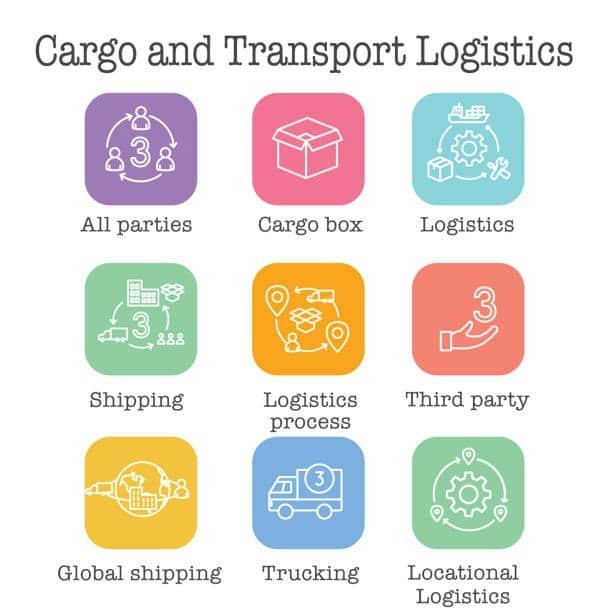
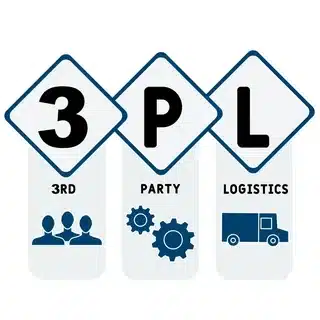
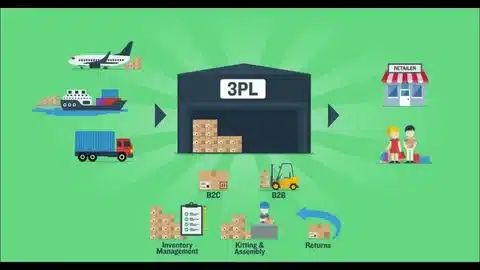
A third-party logistics provider (3PL) is simply an outsourced business operation that handles all or most of your logistics operations within a supply chain, including warehousing and inventory control, transportation, and fulfilling orders. These experts can provide businesses with the knowledge, infrastructure, and technology necessary to compete in the highly competitive business environment without having to invest the colossal capital that is necessary to develop these facilities internally.
It is a one-stop shop to all the needed information on 3PL providers, including how the core works and a comparison of the different service models to acquire the right partner, and pitfalls to avoid. Whether you are a growing e-commerce company looking to grow or you are a mature company with the objective of optimizing your fulfillment center and supply chain, this post will help you make good decisions regarding the utilization of third-party logistics services.
The Basics: What is a 3PL?
Detailed Definition
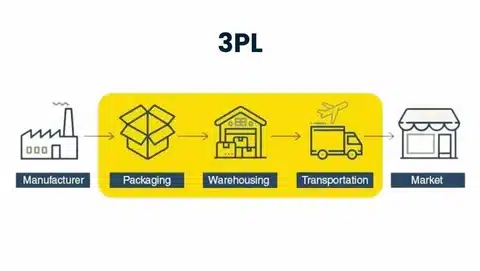
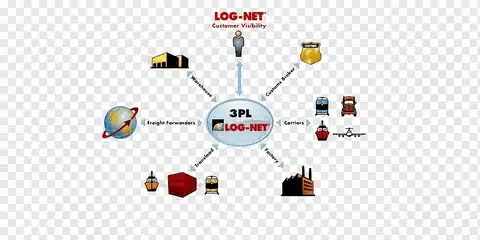
A third-party logistics (3PL) company is an outsourcing company that offers complete logistics and supply chain services to firms. Unlike in the old logistics deals where the company was supposed to take care of its own warehousing, transportation and distribution, the middlemen in the 3PL deals are the third who helps the business move between the former and the latter, i.e., a supplier/manufacturer and a customer/retailer. These types of providers have the potential to typically offer integrated solutions that can include warehousing, inventory management, order fulfillment, shipping, and other value-added services. services.
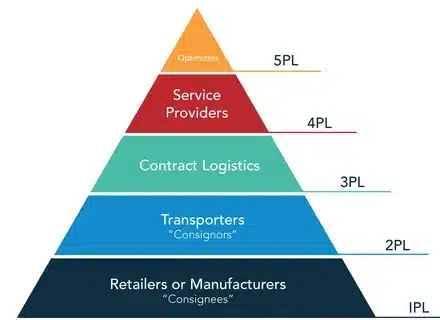
How 3PL Differs from Other Logistics Models
| Logistics Model | Description | Level of Service | Control | Typical Users |
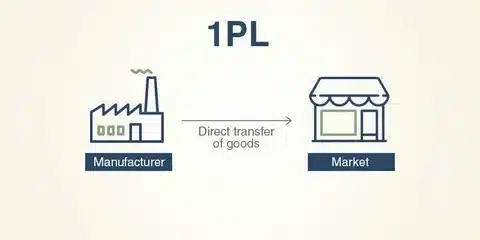
| 1PL (First-Party) | The company handles all logistics internally | Basic in-house operations | Full control | Small businesses, manufacturers |
| 2PL (Second-Party) | Traditional carrier services (trucking, shipping) | Transportation only | Moderate control | Companies needing basic transport |
| 3PL (Third-Party) | Comprehensive outsourced logistics services | Full supply chain management | Shared control | Growing businesses, e-commerce |
| 4PL (Fourth-Party) | Supply chain integrator managing multiple 3PLs | Strategic oversight and coordination | Limited direct control | Large enterprises, complex networks |
| 5PL (Fifth-Party) | Network orchestrator using digital platforms | Technology-driven optimization | Minimal direct control | Tech-forward companies, startups |
Key Components of 3PL Services
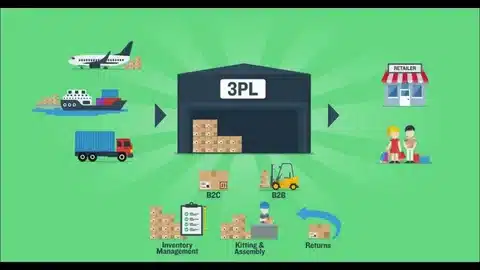
The latest 3PL vendors provide various services aimed at streamlining the whole supply chain, such as warehouse space optimization:
Warehousing and Storage: Climate-controlled, highly advanced inventory management with the prospect of a short- and long-term duration of storage and real-time access to the quantity of stocks.
Transportation Management: The handling of downstream and upbound, intra-city and intercity deliveries, including full truckload (FTL), less-than-truckload (LTL) or last-mile delivery services.
Order Fulfillment: Full pick and pack, and ship operations, such as same-day operations, automated sorting systems, quality control systems, and a streamlined fulfillment process.
Inventory Management: Advanced inventory management with complex forecasting, demand planning, and optimization of inventory based on complicated algorithms and real-time data analytics to manage inventory.
Reverse Logistics: Returns of products, trading, and recalling products are the processes that require efficient processing systems, which are cost-effective and give maximum benefit as a recovery value.
Why Businesses Use 3PLs
Cost Advantages
One of the best reasons why businesses outsource to the 3PL providers is the high cost savings. By turning fixed cost into variable cost that grows with their business, companies able to find it expensive to compete in the market can save millions of dollars by not having to invest in building their own warehouse, transportation, and specialized machinery and also by being in a better position to negotiate a lower price with the carrier and utilize the routes and loads more effectively than those companies that only serve a single client.
Using the example of a 3PL having 50 customers, he will be able to maintain higher utilization levels in the warehouse and receive volume discounts that will result in a 20-30% reduction in cost relative to those firms that manage their logistics internally.
Flexibility and Scalability
The constantly shifting demand patterns, seasonal fluctuations, and rapid growth pace, with which the modern enterprises are forced to operate, can exert a toll on the internal logistics potential since the 3PLs can conveniently mobilize new resources, non-permanent employees, and longer working hours, particularly during the peak seasons, like Black Friday or holiday operations. Conversely, low productive seasons leave the business in a situation where they only pay for what they utilize rather than paying the cost of utilities of the facilities and workers that are not utilized.
Access to Expertise and Technology
Needs and implements the specific expertise in the field of regulations, carrier networks, requirements associated with international trade, and latest technology, i.e. 3PLs invest into utilizing logistics specialists and introducing the newest warehouse management system (WMS), transportation management system (TMS), and real-time tracking technology, i.e. artificial intelligence and robotics, and apply them to their clients, which would be terribly costly to develop internally.
Focus on Core Competencies
Companies can outsource their logistics processes to experts in the industry so as to refocus their resources and effort on the main business processes – product development, marketing, customer service, and strategic growth processes. This attention frequently results in better competitiveness and speed to the new products and services.
Risk Mitigation
The companies can use 3PLs to reduce the numerous operational risks such as regulatory compliance, infrastructure disruption, labor strike, as well as natural calamities. Established providers, including various freight forwarders, normally have several plants in various geographical locations, which mitigate the effects of localized setbacks. They are also abreast with emerging rules and regulations as well as compliance limits, mitigating legal and operational risks on behalf of their clients.
What Services Do 3PL Providers Offer?
Transportation Services
Full Truckload (FTL): This means that the truck is dedicated to one load and has less handling, less transit time, and a better relationship with shipping companies.
Less-Than-Truckload (LTL): This type of shipping puts small packages on a single trailer with packages from other customers to save money, but it doesn’t guarantee that their services will be reliable.
Intermodal Transportation: The last part of this supply chain is the most complicated and expensive. It involves combining trucking with rail transport to create a combination that is cheaper and faster than ocean transport.
Warehousing and Distribution
The contemporary 3PL warehouses are highly developed facilities that include automated storage and retrieval systems, climate-controlled buildings, and high-tech security. Such facilities usually provide:
- Inventory monitoring and control in real time.
- The ability to cross-dock quickly, moving goods.
- Pick and pack services with 99.5 percent or more accuracy.
- Quality inspection and control services.
- High-value product or sensitive product storage security.
Order Fulfillment and Reverse Logistics
Full Fulfillment services involve the processing of orders, the allocation of inventory, picking, packing, labeling, and shipping arrangements. High-tech providers provide one-day processing of orders that are received before certain deadlines, multi-channel delivery in case a company sells products in multiple channels, and advanced returns management.
Reverse logistics services deal with the returns, exchanges, warranty, and end-of-life product disposal of the products, and in many cases recover high value through refurbishment, resale, or recycling of their products.
Value-Added Services
Custom Packaging and Kitting: Assembly and design of product packaging, promotional inserts, and wrapping of the products so that they add to the customer experience and marketing efforts.
Labeling and Compliance: The labeling of products to meet retail requirements, labeling to meet regulatory requirements, and specialized handling to meet products with certain certifications or documentation requirements.
Quality Control: Incoming inspection services, product testing, and quality assurance programs, which will guarantee that products are delivered within specifications to the customers.
Technology and Tracking
Top 3PLs also offer end-to-end technology platforms with:
- Shipment visibility and real-time shipment tracking.
- Integration APIs to have a smooth connection with e-commerce and ERP systems.
- High-tech analytics and reporting boards.
- Orders Information, automated notifications, and alerts about the level of inventory and shipment status.
- On-the-go logistics management mobile applications.
Types of 3PL Providers
Asset-Based vs Non-Asset-Based
Asset-Based 3PLs have their own transportation, warehouse, and material handling devices. This model has been used to have more control of service quality, capacity, and cost, yet capital investment is very high in this model. This group of providers may provide more reliable services and be capable of managing special needs.
The Non-Asset Based 3PLs are intermediaries that organize services using networks of partner carriers and facilities. This model is more flexible and can be less expensive; however, it can lead to less control over the quality of services. They are masters in shipment optimisation and consolidation of shipments among more than two clients.
Specialized 3PLs
Cold Chain Logistics: Services that offer food, pharmaceutical, and other temperature-sensitive products transportation and storage services under a temperature-controlled environment. These processes demand special machinery, surveillance, and adherence to the stringent regulatory standards.
Hazardous Materials: Experts in the handling of dangerous materials, chemicals, and controlled materials are certified and involved in safety measures that are necessary in such risky shipments.
E-commerce Fulfillment: The service providers specialize in direct-to-consumer delivery, with quick delivery, adaptability in packaging, and the ability to interact with leading e-commerce solutions and marketplaces.
Global vs Regional 3PLs
Global 3PLs are companies working in several countries and these continents, and they are providing a wide range of international logistics services such as customs brokerage, international freight forwarding, and trade compliance. They are the most suitable providers in companies with complicated global supply chains.
The 3PLs of the region specialize in certain geographical regions, and their service is usually more personal and has more specific knowledge about the local markets, local regulations, and carrier networks. They usually provide competitive prices to the local distribution and can have quicker implementation schedules.
Full Service vs Niche Providers
Full-service 3PLs provide end-to-end supply chain solutions, including warehousing, transportation, fulfillment, and value-added services. They act as one-stop solutions to every logistical requirement.
Niche Providers have expanded to offer incredibly specialized services or industry segments to support ecommerce businesses, and they are incredibly knowledgeable and skilled in several areas like delivery of services to last mile or returns, or industry-specific logistical needs.
How to Choose the Right 3PL
Key Criteria for Evaluation
Geographic Coverage and Location: Determine the location of the facilities of the provider that will be used in relation to your customers and shipping needs. Positioning can also have a great influence on the delivery times and cost of shipping.
Specialization of the Industry: Find the providers who have experience in the industry, awareness of the applicable regulations, and a history of working with similar products or business models.
Technology Capabilities: Evaluate the technology platform, integration skills, real-time visibility tools, and reporting capabilities of the provider. Make sure that their systems are compatible with your current platforms.
Scalability: Test the capacity of the provider to cope with an increase in volume, expansion in geographic location, and seasonal changes. Take into consideration their resource allocation processes and capacity planning.
Financial Stability: Check the financial health, the insurance plans, and the risk management measures of the provider so as to make sure that they are capable of offering long-term service reliably.
Essential Questions for 3PL Evaluation
Some of the most important questions that need to be asked when conducting a review of the potential 3PL partners include:
- What is your average order accuracy rate, and how do you work it out?
- How fast can you expand operations in high seasons?
- What are your backups when there is a technology failure?
- What is your policy towards product damages and insurance claims?
- What are your standard level performance guarantees and service level agreements?
- What is your process for inventory variability and inventory cycle counting?
- How do you deal with customer service-related cases?
- What do you do to keep the data safe and abide by privacy laws?
The Performance Assessment Framework
Comes up with key performance indicators (KPI) to measure 3PL performance:
Operational Metrics:
- Order accuracy rate (target: 99.5%+)
- Performance of the on-time delivery (target: 95%+)
- Inventory accuracy (target: 99%+)
- Damage rate (target: <0.5%)
- Processing time of returns (target: 24-48 hours)
Cost Metrics:
- Cost per shipment
- Storage costs per unit
- Labor efficiency metrics
- Optimally, transportation costs.
Service Quality Metrics:
- The score of customer satisfaction.
- Response time to inquiries
- Problem resolution time
- Effectiveness of accounts management.
Challenges and Risks of Working with a 3PL
Hidden Costs and Contractual Issues
Among the most frequent problems that business leaders have to deal with when collaborating with 3PLs, one can distinguish hidden expenses that were not defined in original proposals, such as unexpected costs related to packing materials supply chain operations. These may be added handling charges, over-storage fees, special packaging charges, or high-season charges for distribution services.
To eliminate these risks, ensure that all the terms of the contracts and fees are reviewed. Ask them to explain all possible fees in detail and develop clear procedures for switching the costs or extra services. Negotiate limits to some of the variable costs or shared savings where both the company and the employee gain through increased efficiency in shipping costs.
Loss of Direct Control
The essence of outsourcing the logistics operations implies a trade-off in the direct control of the operations. This can be a challenge to companies that have been accustomed to managing all the activities that they engage in with a third-party logistics company.
To address this problem, ensure that you have well-defined service level agreements, that you conduct regular performance reviews, and that you have free flow of communication between you and your 3PL partner. Many strategic alliances involve viewing the 3PL as part of your staff rather than an outsourcing partner.
Communication and Integration Difficulties
Successful relationships of 3PLs require proper communication, and system, process, and company culture disparity can become a problem affecting the whole supply chain. Poor communication may lead to discrepancies in inventory, mistakes at the shipping stage, and customer service issues in the management of inventory.
Introduce regular communication processes like meeting every week, once a month, and three times a year, board meetings. Ensure both teams possess their appropriate escalation mechanisms and contact points with the freight forwarder regarding different types of issues.
Technology Integration Challenges
Setting up the 3PL systems on top of the current enterprise resource planning (ERP), e-commerce, and other business systems could take a lot of time and effort. Before reaching a 3PL relationship, the management of the inventory fulfillment center may have problems with data synchronization, system compatibility, and delays in integrating systems.
Make sure that data formats, rates of data revision, and error handling processes are all the same. Look for 3PLs that have strong APIs and have experience connecting their warehouse management software to your existing systems.
Case Studies and Real-World Examples
Small Business Success Story
A skincare company in the form of a boutique was failing to cope with fulfillment as they experienced a growth in online sales between 50,000 to 500,000 each year. Being at the stage of inventory management in their garage and taking 20+ hours a week to pack and ship was restricting their time to develop products and market their own warehouse.
Through the collaboration with a specific e-commerce 3PL, they saved 30 percent in the cost of fulfillment, brought the order delivery time down to 1-2 days as compared to 3-5 days, and attained 99.8 percent order accuracy. The founder was in a position to channel 20 hours per week back to business development, resulting in a 150 business increment in 12 months of the partnership.
Mid-Size Company Optimization
The company was a consumer electronics business that made $10 million a year. It had three regional warehouses, but they had trouble with their inventory being out of balance, shipping costs being low, and demand changing with the seasons.
They were able to move three facilities to a strategic location on two sites with the help of a national 3PL company. This cut their logistics costs by 25% and their inventory turns by 40%. The 3PL’s tools for optimizing inventory and predicting demand helped cut stockouts by 60% and the total investment in inventory by 20%.
Enterprise-Level Transformation
The cooperation with a 3PL provider on a global basis enabled a large manufacturer to control the logistics with the assistance of a complex network of local suppliers, which caused uneven service quality, a lack of visibility, and excessively high administration costs.
The use of a single logistic system, universal processes, and technology platforms to be exploited, and general reporting were enabled. The change resulted in an additional 15 percent reduction of costs, 30 percent in on-time delivery performance, and 50 percent in saved time by the administration in the handling of the warehouse location of the logistics provider.
Cautionary Tale: When 3PL Partnerships Fail
A company that offers subscription boxes and had one of the most rapidly growing services contracted a 3PL that seemed perfect on paper due to the competitive prices, excellent reviews, and stunning tours around the premises. The provider, however, had been recently acquired and was integrating the system.
Three months later, the partnership began to fail. Inventory discrepancies increased to a high of 15 percent, the quantity of orders delayed shipping increased to a record of 40 percent, and customer complaints increased to a record. The challenge of technology integration of the 3PL prompted the formation of data synchronization problems, and its customer care department was crippled with operational problems.
Key Lessons Learned:
- Carry out due diligence on new changes in the organization.
- Swiftly introduce pilot programs.
- Develop performance measures and early warning mechanisms.
- Have contingency plans and other provider associations.
- Do not compromise technology integration testing.
- Trends and the Future of 3PL
Trends and the Future of 3PL
Technology-Driven Transformation
The 3PLs are a fast-technologically developed industry that changes the way logistics services are provided:
Artificial Intelligence and Machine Learning: Advanced algorithms are streamlining route, demand, and inventory optimization. AI-based systems will be able to anticipate maintenance requirements, detect inefficiencies, and change operations automatically in response to real-time changes.
Robotics and Automation: Warehouse robotics are also changing the way order fulfillment works, with autonomous mobile robots (AMRs), automated storage and retrieval systems (ASRS), and robotic picking systems making work more efficient and cost-effective.
Internet of Things (IoT): Interconnected sensors and gadgets offer unprecedented access to supply chain processes, allowing tracking of inventory, environment, and equipment performance in real time.
Live Tracking and Visibility: High-tech tracking systems can now offer end-to-end shipment visibility with accurate location information, estimated delivery times, and active exception messages.
Sustainability and Green Logistics
The environment is causing some big changes in how 3PLs work:
Carbon Reductions: 3PLs will use electric vehicles in their fleets, make their routes more efficient to cut down on emissions, and buy green energy sources to power their warehouses.
Sustainable Packaging: The most important thing is to use packaging that can be recycled, breaks down naturally, and is the right size. This will not only cut down on waste, but it will also keep products safe.
Circular Economy Projects: It is important for them to use green energy to run their warehouses and to make their reverse logistics better.
E-commerce Growth and Last-Mile Pressures
The further development of e-commerce is causing innovation in the last-mile delivery solutions:
Micro-Fulfillment Centers: Smaller, automated hubs that are relocated closer to a city allow faster delivery and minimize transportation costs.
Other Delivery Opportunities: The use of drone delivery, autonomous vehicles, and locker networks is under testing and implementation to solve the problem of the last mile.
Same-Day/On-Demand Delivery: The demands of consumers to receive goods in a faster time are driving 3PLs to create ultra-fast deliveries.
Global Supply Chain Evolution
Near-Shoring and Regionalization: The pressures and disruptions in the trade environment are pushing firms to diversify their supplier base and relocate production to a closer proximity to the end markets, which are presenting new opportunities in regional 3PL providers.
Trade Policy Adaptation: 3PLs are deploying trade compliance issues, customs brokerage services, and free trade zones to assist their clients with adapting to evolving international trade regulations.
Resilience and Risk Management: More focus on supply chain resilience by diversifying the carrier networks, more facility locations, and implementing risk monitoring mechanisms.
How to Start with a 3PL
Step-by-Step Implementation Process
Phase 1: Needs Assessment (2-4 weeks) Start with the thorough evaluation of your present logistics business, determining the areas of pain, cost base, and performance issues. Record your shipping quantities, SKU sets, seasonal trends, and customer care necessities.
Phase 2: Goal Setting and Requirements Definition (1-2 weeks) Set specific goals of the 3PL relationship, which may be cost-cutting, improvement of services, scalability, or expansion of the geographic scope. Establish certain service needs, performance standards, and success indicators.
Phase 3: Provider Research and RFP Process (4-6 weeks) Research prospective 3PL partners, solicit proposals with qualified providers, and conduct extensive provider assessments such as facility tours, reference investigation, and technology demos.
Phase 4: Contract Negotiation and Finalization (2-3 weeks) Negotiate terms, service level agreements, pricing structures, and implementation timelines. Make sure that contracts have performance requirements, reporting requirements, and termination.
Phase 5: Pilot Program Implementation (4-8 weeks) Starting with a small line of products or geographic area that will be tested to determine the partnership and also to identify any integration problems before full deployment.
Phase 6: Implementation and Scaling (8-12 weeks) Stepwise shift all the operations to the 3PL partner with close monitoring and some adjustment in case of necessary changes.
Essential Data Preparation
Before joining potential 3PL partners, prepare detailed data packages comprising of:
Volume Information:
- Shipment volumes on a monthly and seasonal basis.
- Order size distributions
- Peak period requirements
- Growth projections
Product Details:
- Number and attributes of SKU.
- Dimensions and weights of the products.
- Storage needs (temperature, humidity, security)
- Special handling needs
Service Requirements:
- Delivery time expectations
- Geographic coverage needs
- Service requirements: Value-added services.
- Expectations concerning returns processing.
Current Performance Baseline:
- Existing logistics costs
- Service level performance
- The metrics of customer satisfaction.
- Existing issues and problem areas.
Integration and Onboarding Best Practices
Effective 3PL onboarding must be thoroughly planned and implemented:
Technology Integration: Coordinate with your IT department and the technical team of your 3PL to have a smooth flow of data between the systems. Complete testing of all integrations should be done.
Process Documentation: Document all operational processes, quality requirements, and customer service in order to make sure that service delivery is consistent.
Training and Communication: This is to make sure that 3PL employees are aware of your products, brand norms, and customer expectations. Introduce regular communication procedures and performance review.
Performance Monitoring: The extensive use of monitoring and reporting systems will allow monitoring KPIs and identifying areas of improvement from the first day.
Conclusion
Third-party logistics has proved to be an important ally to companies that seek to streamline their supply chain procedures to reduce costs and improve service delivery to their customers. The 3PL sector is evolving fast because of the influence of innovation and the dynamism of the global supply chain, as well as evolving consumer needs. Effective 3PL relationships all come down to proper provider choice and setting of the expectations of the performance, not to mention maintenance of the relationship.
Companies are the ones who take time to carefully evaluate their needs and approach the process of onboarding employees more methodically, as the companies that are most likely to achieve their logistical objectives are those that require the need to reduce their costs, improve the quality of services, gain knowledge of a specific field, or coordinate their logistics across the globe.
With such a wide global network, 3PL providers have been known to offer scalable services to small businesses that need to expand their operations, to mid-size companies that need to leverage their wide range of services to manage costs, or to large A decent 3PL house would assist you in the attainment of these objectives and concentrate on your core competencies: serving your customers and expanding your business.
Debate the existence of 3PL in your business? It begins with an adequate analysis of your current logistics operations, a specific set of goals, and an investigation of vendors focused on your business and service requirements. The efficiency and cost-saving, and customer satisfaction may be the pay-off of the cost of determining the proper logistics.
FAQ Section
What is the difference between 3PL and 4PL?
A 3PL (third-party logistics) company is a company that provides particular logistics such as warehousing, transport, and fulfillment. A 4PL (fourth-party logistics) company is a supply chain integrator controlling numerous 3PLs and other suppliers to supply end-to-end supply chain services. Consider 3PL to be a service provider and 4PL to be a supply chain consultant and coordinator.
How much does a 3PL cost?
The cost of 3PL service is highly dependent on services, volume, and complexity. The common pricing models are:
- Fulfillment: $2-8/ order and storage charges.
- Storage: 0.5-2.00 a month per cubic foot.
- Transportation: 10-20% carrier rate markup.
- Implementation cost: $1 000-10,000 setup fees.
The total costs may be between 6-12 percent of product revenue; however, it may achieve total savings of 15-30 percent over internal operations.
Is my business big enough to benefit from a 3PL?
The 3PL services can be exploited by most businesses that ship 100 or more orders every month. Key indicators include:
- Working on fulfillment for more than 10+ hours per week.
- Facing rapid growth, which puts pressure on existing operations.
- The requirement to have specialized services (cold chain, international shipping).
- Aiming at penetrating new geographical markets.
- Desiring to decrease fixed costs as well as make operations more flexible.
The 3PLs can be of help to even the small businesses, particularly with specialized services or peak season assistance.
How do 3PLs handle returns and damages?
Professional 3PLs normally provide full reverse logistics services that include:
- Returns Processing: Inventory, sorting, and disposing of returns.
- Refurbishment: Cleaning, repacking, and rebating of appropriate items.
- Damage Claims: Insurance claim handling and paperwork.
- Disposal: Does the disposal of damaged or unsaleable items occur correctly?
- Reporting: Analytics of return rates in detail, reasons, and recovery rates.
The majority of providers get 60-80% recovery of returned merchandise using effective processing and refurbishment schemes.
What happens if my 3PL partner fails to meet service levels?
The 3PL contracts, which are reputable, must have service level agreements (SLAs) and stipulated performance measures and sanctions in case of violation. Common remedies include:
- Missed performance targets are credited to services.
- Free services as a way of compensating for mistakes.
- Right to terminate contracts due to incessant failures.
- Transition support to change operations to other providers.
It is best to negotiate clear SLAs at the very beginning and to have systems in place to monitor performance to spot problems promptly.