
When it comes to B2B fulfillment, your warehouse is more than a place to keep things, it is the pumping heart of your supply chain. Huge orders, frequent ones and frequent customization to wholesale customers also mean that any ineffectiveness in the process in the warehouse will be spread to delays, higher costs and disappointed business partners. As the world warehouse market is expected to become approximately 869 billion by 2025, guided by e-commerce and supply chain pressures, it is no longer a choice to optimize your setup, but a must-have to remain competitive.
B2B fulfillment warehouse management is concerned with accuracy, speed and scalability as a means of managing bulk movements of goods without glitches. When it is managed poorly, stockouts, errors or wasted space may occur, but when it is done right, it will increase client satisfaction and resilience in operation. The article presents the best practices that have been proven to take your warehouse to a new level with references to the industry experience to make your warehouse a better base.
Why Warehouse Management Is Critical in B2B Fulfillment
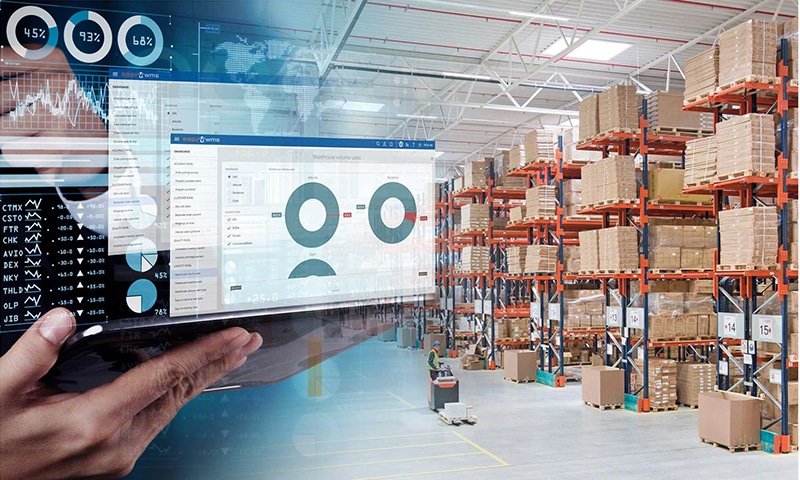
The management of the warehouse is the key to the success of any business B2B activity when the stakes are greater than with the consumer-facing models. The B2B orders are usually of large quantities, extended lead times and stringent compliance requirements and organization is paramount here. Properly organized warehouse will guarantee a good time delivery, which is important because, delays may ruin long term business relationships and create a loss of business contracts.
Ineffective B2B warehouse management can lead to latent costs: an erroneous inventory can prevent the capital investment in overstock, and chaotic layouts slow down the picking and packing processes, increasing the labor costs. Labor in itself is 45-55 percent of the total cost of operating a warehouse and due to an average turnover of 43 percent, it only aggravates the problems. Conversely, good management will increase the inventory visibility, minimize errors and efficiency in fulfilling clients, which leads directly to client trust and repeat business.
Warehouse excellence in global logistics is a better scalability since cross-border shipments introduce additional complexity such as customization and tracking. As an example, customer service metrics measuring the real-time visibility, which is a priority among 72% of warehouses, can be improved by 20 percent. Finally, it is about making your warehouse a cost center a strategic resource that helps a company to grow and survive.
Core Best Practices for Modern B2B Warehouses
Warehouse management can be used to upgrade a chaotic warehouse into a well-organized hub by applying leading practices. These are the main B2B fulfillment strategies that are backed by industry trends and steps to follow.
Optimize Warehouse Layout and Flow
The efficient warehouse layout design is based on being thoughtful. Begin by zoning your space: mark distinct areas where inbound receiving, storage and picking happen, packaging and outbound shipping will occur to minimize cross-traffic and minimize waste of movement.
Assign slotting analysis to place high demand products nearer to packing stations-so-called ABC slotting, with the A (fast-movers) getting the best assignment. This will reduce picking by up to half in intensive B2B situations. Install broad forklift and ergonomic workstations to improve speed and safety.
Vertical storage systems such as mezzanines or high-bay racking are full of cubic space particularly where the usage of warehouse space is of critical concern due to rising costs. Layouts are optimized in China-based operation where customer can access manufacturing hubs at any time resulting in speed of the global shipment.
Implement Robust Inventory Management Systems
Days of manual tracking are over; a contemporary Warehouse Management System (WfMC) is required in real-time inventory tracking. By 2025, more than 90 percent of warehouses will have WMS or intend to have it, which will allow them to update automatically and avoid the stockout.
Connect your WMS to ERP or eCommerce through APIs to streamline the exchange of data, and is compatible with services such as Shopify, Amazon, and WooCommerce. This will make inventory accuracy close to 97.7, which decreases the carrying costs that may consume between 20-30% of inventory value.
In the case of B2B, it is better to pay attention to warehouse inventory optimization by using cycle counting and demand forecasting. The 65% of warehouses, those that are using predictive analytics are managing bulk stock effectively reducing the obsolescence and capital tie-up.
Standardize Receiving and Put-Away Processes
Unity begins at the entrance. RFID or barcodes scan Start scanning quantities and conditions at receipt to display discrepancies in real-time. This creates confidence in your data in the first place.
Use perishable or dated products or similar order batch picking to simplify put-away using FIFO (first in first out). These practices are used in 3PL warehouse management in China, where it is necessary to comply with international standards, eliminate mistakes in fulfilling the cross-border delivery.
The accuracy is reinforced by frequent training on these processes and this ensures the high standards that are maintained by B2B clients.
Maintain High Order Accuracy and Quality Control

There is no bargaining in order accuracy in B2B logistics slips in bulk shipments can lead to significant problems. Install systems of doubled checking, such as pick-to-light or voice directed pick systems, to ensure near perfect rates.
Quality assurance in delivery is through pre-shipment inspection and random audit. As an example, the in-warehouse services offered by BM Supply Chain would perform visual checks and sampling to identify defects, which would result in 99% and above accuracy.
Measuring KPIs such as error rates and returns (which are down to 20-30% in e-commerce but might be improved in streamlined B2B arrangements) to narrow processes down constantly.
Leverage Automation and Smart Technology
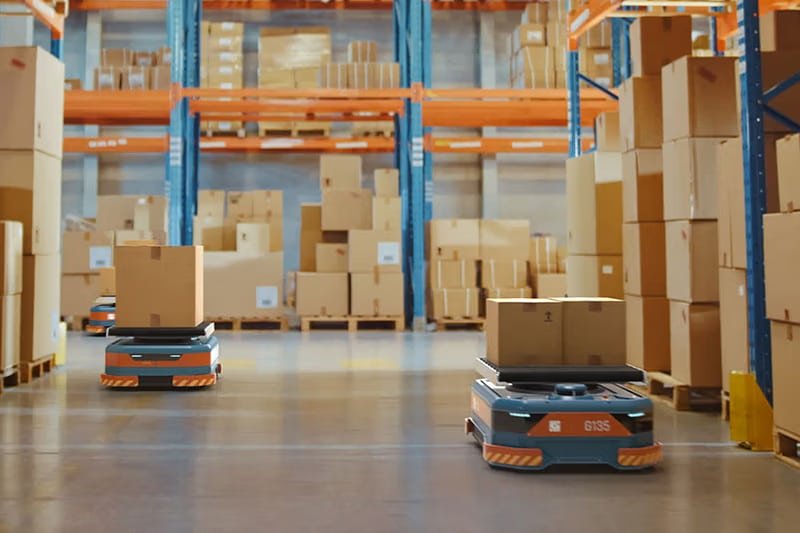
The automation systems of the warehouse are pioneers, and the market will reach $24 billion by 2025 and more than 4 million robots will be used worldwide. Automated guided vehicles (AGVs), or cobots, can be used to perform repetitive work, such as sorting and packing, which will then reduce labor costs by 25-30 per cent.
Improved routes and forecasting demand based on AI powered analytics save time and resources, and real-time monitoring of the situation is possible with the help of IoT sensors. This technology also facilitates scalable operations in B2B, 78 percent of the facilities are adding robots.
Focus on Safety and Compliance
Safety is not a choice, but an aspect of productivity. Regular training, with visible signs, and maintenance of equipment are requirements, with 4.8 injuries per 100 workers.
In the case of B2B global fulfillment, make sure that packages, labels, and hazardous substances are met. Green initiatives are adopted by a majority of companies (48 percent) such as energy efficient lighting, and this contributes to sustainability.
Continuously Analyze and Optimize Performance
Keep an eye on such KPIs as speed of fulfillment (target 24 hrs), inventory turnover and accuracy of orders. Get insights with data visualization tools, and perform routine audits to find out what is improved.
Cross-docking which is applied by 49% of the warehouses accelerates the movement of time sensitive B2B orders.
How BM Supply Chain Implements These Practices in China
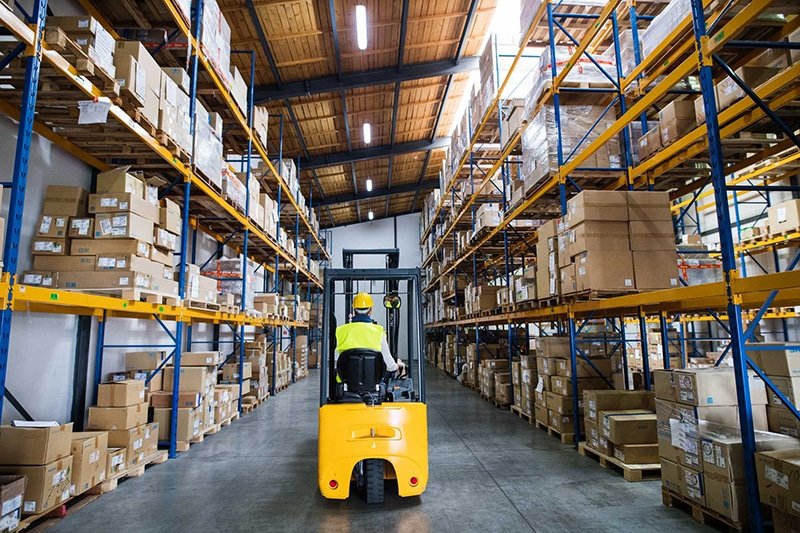
In BM Supply Chain, all these best practices are reflected because we are the leading supplier of supply chains in China, and we combine superior resources in factories with those of the customers. Our developed WMS is a solution that provides real-time inventory and API connectivity with such different platforms as Shopify and Amazon, which is why there is a smooth data flow and an order accuracy of 99 percent.
Maximum 30 days free storage means that we are relieved of cash stresses and we are streamlining layouts in our Shenzhen facilities to ensure efficient flow. Barcode scanning and automated mechanisms deal with incoming and put-away, our quality checks covert the problems at the earliest stage.
Transparency and custom packaging, labeling, and consolidation services are B2B-specific needs offered with the option of one-stop tracking. An American clothes brand, as an example, improved their order mistakes by one-fourth once they ascended our Shenzhen network, owing to predictive analytics and slotting.
Knowing that we are a reliable 3PL warehouse management company in China by basing our operations on safety and compliance, including eco-friendly solutions.
Common Mistakes to Avoid in Warehouse Management
It is as important to avoid pitfalls as best practices are. The neglect of regular stock audit results in inaccuracy and the use of manual spreadsheets as a substitute of WMS fosters errors- 93 percent of warehouses rely on WMS today, and there is a reason.
Unoptimized layouts or poorly identified SKUs will waste time, and disconnects due to the failure to integrate sales and fulfillment data. Ignoring training of employees increases risks, ignoring the KPIs is a way of leaving optimization opportunities.
Conclusion
Warehouse management makes fulfillment a profit center, allowing B2B brands to be reliable and expand with ease. Through layout, automation, accuracy and data priorities you establish a robust operation that can cater to the current needs.
BM Supply chain provides tech-based, seamless warehouse and fulfillment solutions that enable B2B brands and eCommerce to expand internationally. Ready to optimize? Let our experts in China design specific strategies.