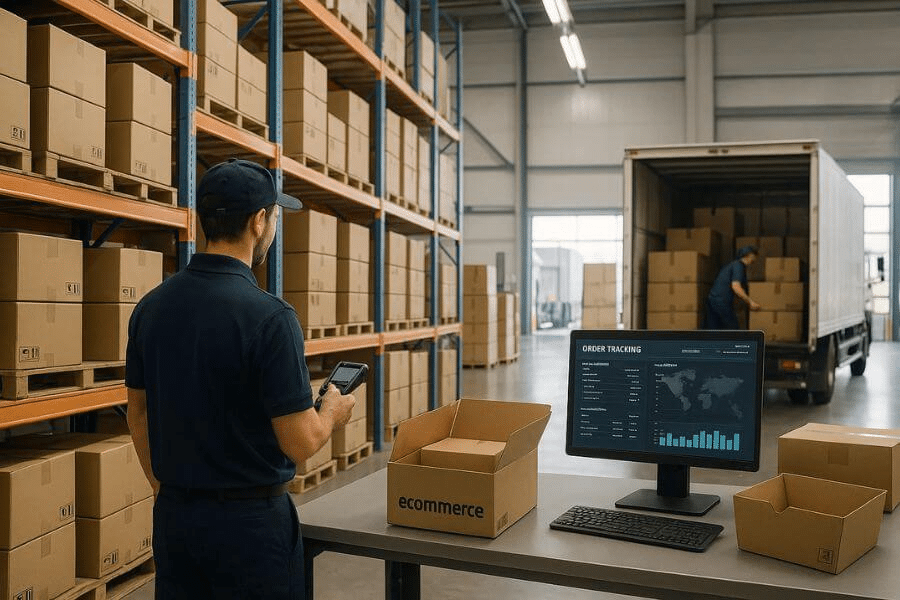
By 2026, ecommerce fulfillment will not be shipping anymore, it will be a complete system of operations which will dictate customer satisfaction, delivery times, and brand scalability. Fundamentally, ecommerce fulfillment involves inventory, picking, packing, shipping and processing of returns. With the changing logistics expenses, the need of blistering delivery speed, the ability to handle orders across multiple channels, and the use of AI to make the ordering process automated, the brands are pressured to make this connection even more critical. In expanding ecommerce companies, fulfillment may turn out to be the most significant source of pain, and delays or mistakes can destroy trust and hinder growth. The right fulfillment system and partner generate the speed of sustainable growth, which allows smooth operations under these changes.
Why Ecommerce Fulfillment Matters More Than Ever in 2026
Ecommerce fulfillment has ceased being a back-office requirement to a strategic differentiator particularly with global markets becoming more aggressive. We can deconstruct why it is critical to success in the next year.
1. Customer expectations are higher than ever
Customers in 2026 will require fast delivery, sometimes on the same day or next day, and precision and instant tracking. The missed one package can destroy reviews and loyalty. Brands with high repeat purchase such as the ones on Shopify or Amazon perpetuate their success since their delivery service is flawless and they build trust and get customers to make a repeat purchase without any hesitation.
2. Multi-channel ecommerce creates operational complexity
The ability to sell through Shopify, Amazon, Tik Tok, Etsy, and WooCommerce implies having to cope with various regulations, including inventory synchronizations and different return policies. Orders through these channels can cause mayhem without streamlined fulfillment where there is a stock out in one location where inventory is lying in a dormant state in other locations.
3. Logistics cost is the biggest expense for global sellers
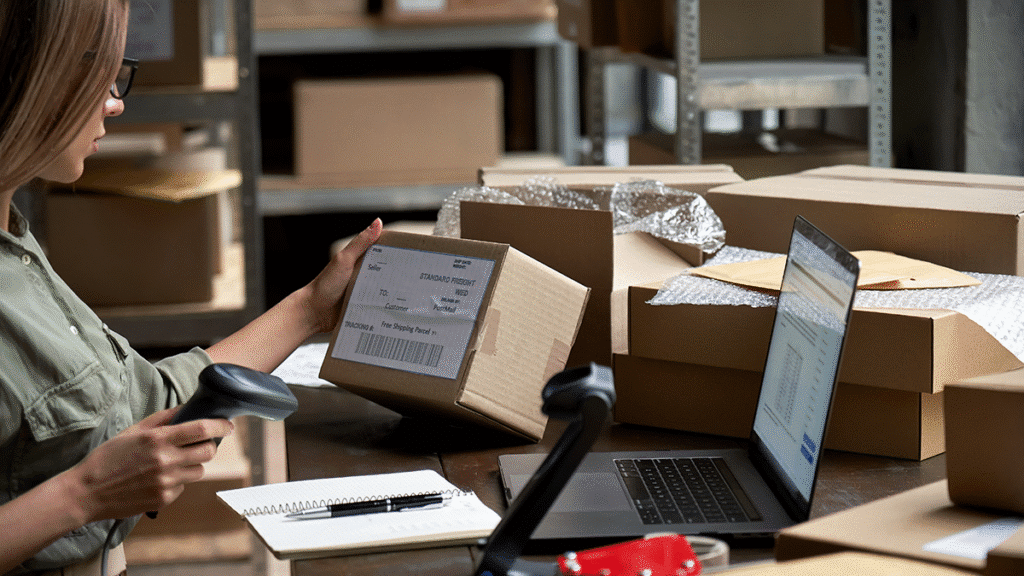
In the case of cross-border sellers, cost structures are directly influenced by fulfillment and they tend to consume 20-30 percent of the total cost. Management worsens the fees by introducing inefficiencies, whereas optimization of ecommerce delivery minimizes waste and gets lower rates with carriers.
4. Faster competition cycles require scalable fulfillment
Ecommerce is fast and the viral trends are surging demand by the night. Scalable ecommerce fulfillment offers scalability to these bursts, managing kitting, bundling and campaign bursts without disrupting operations.
What Exactly Is Ecommerce Fulfillment?
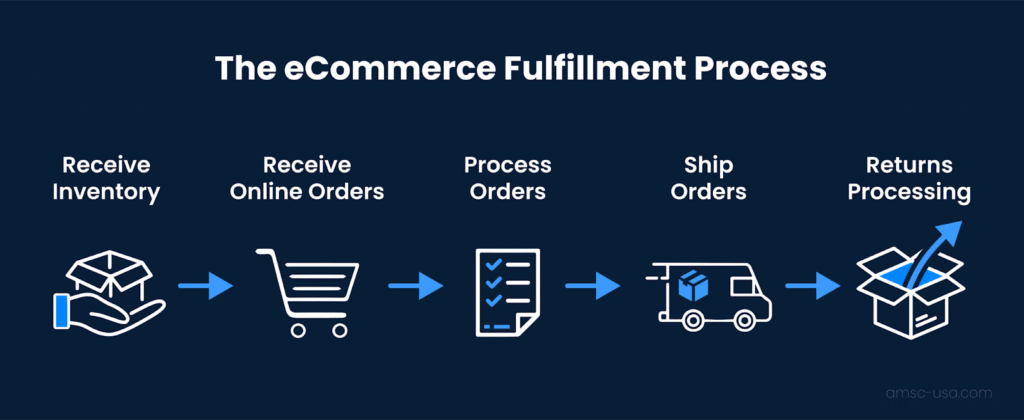
The end to end process that ensures that products reach the customers in a cost effective and intact manner is ecommerce fulfillment. It is not just logistics, but an orchestrated sequence, combining computerized technology and human supervision to ensure security. This is the basics in a manner of speaking.
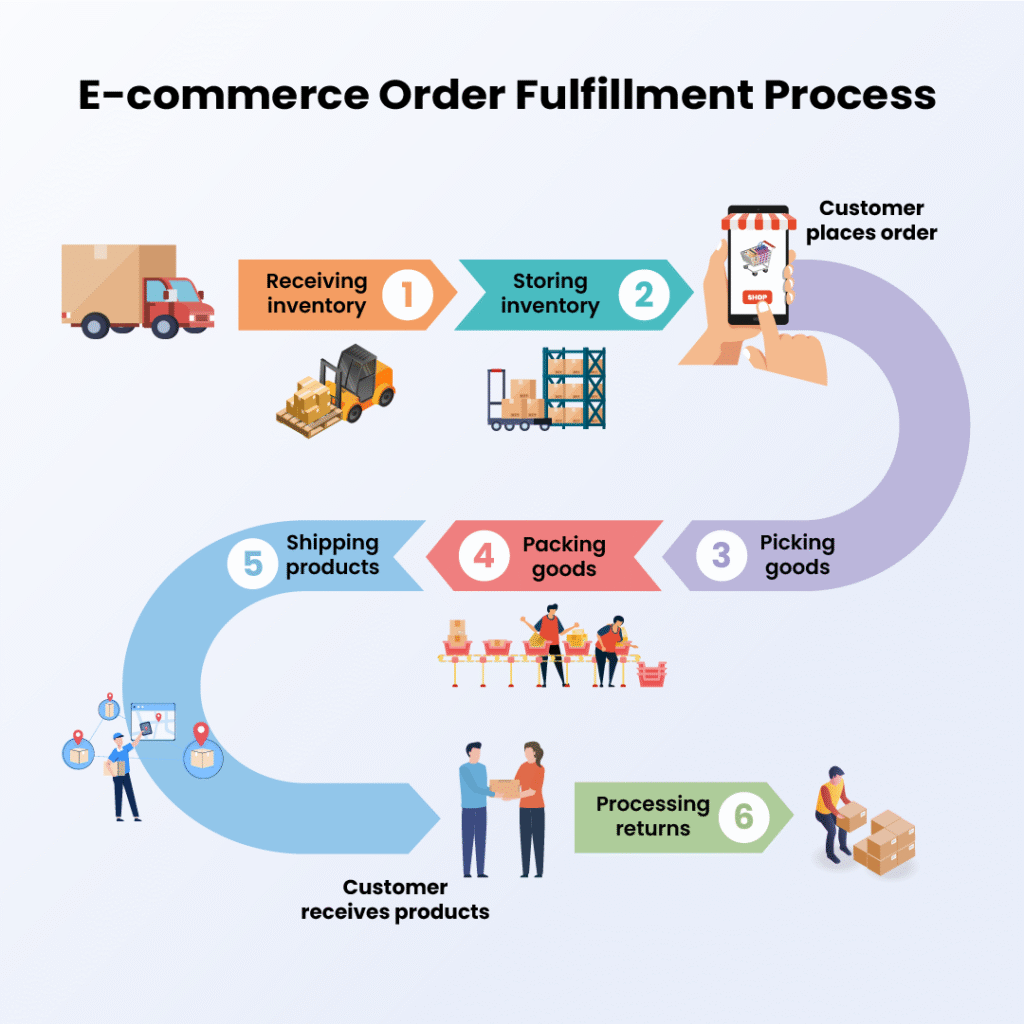
1. Inventory receiving & inspection
Suppliers issue Advance Shipping Notice (ASN), which notifies warehouses of approaching products. On arrival, products are carefully inspected as to damage, quantity and quality and finally, barcode and SKU standardization is made to ensure future mistakes are avoided.
2. Storage & real-time inventory management
Warehouses apply Warehouse management systems (WMS) to monitor the stock in real-time to maximize space with initiatives such as multi-warehouse distribution to achieve faster transport across the world. This reduces overstocking and guarantees inter-location visibility.
3. Order processing & picking
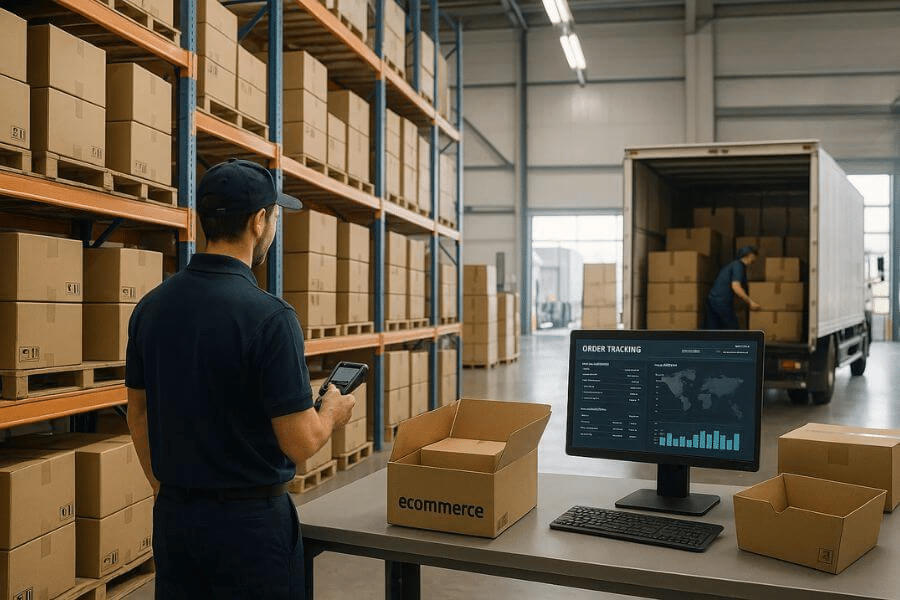
After an order gets hit, the system automatically produces pick lists. It ensures that workers scan goods in order to prevent errors, and the tool of efficiency such as zone picking is used to pull out goods in large volumes.
4. Packing & branding
Packing is not only a protecting factor but is also a branding experience. Personalized boxes, inserts, and bundling can be valuable, making it an amazing experience when customers unbox and increasing their devotion to the company.
5. Shipping & tracking
Some of these include express carriers, which are fast, postal, which are cheap, special lines, which are efficient across borders, and Delivered Duty Paid (DDP), which offers an easy time positioning products across borders. Customers are updated automatically, which saves on queries.
6. Returns processing
It is unavoidable that returns will be received, professional management would be to check them, replace those that are not expired, or to repair them and be resold. Fast solutions ensure a high level of satisfaction and salvage value of reversed sales.
An appreciation of this fulfillment process shows the interdependence of all of the steps in the one step failure will spread across the chain, and the whole logistics of ecommerce.
Types of Ecommerce Fulfillment Models
The model is determined by your business level, size, and objectives. The following is an overview of the typical strategies of ecommerce brands in 2026.
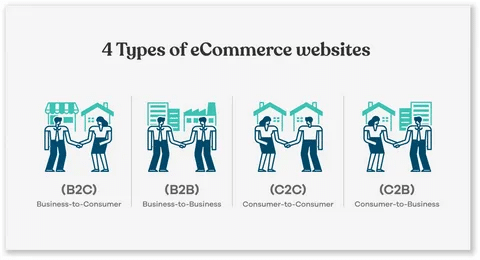
1. Self-fulfillment
This home-built strategy entails doing everything internally. Pros are that it entails complete control and reduced preliminary expenses; cons are upper limits of scalability, as well as excessive labor. It is best used by new companies, which have less than 100 orders per month but it becomes cumbersome as the volume increases.
2. Third-party fulfillment (3PL)
Most mid-sized sellers are best served with outsourcing to a fulfillment partner such as a warehouse service that is specialized. It also provides cost saving by economies of scale, automation and expansion capability leaving you to concentrate on product development and marketing.
3. Dropshipping Fulfillment
In this case, the suppliers deliver the products to the customer without the necessity to hold on to inventory. Advantages: minimal start-ups and risk; disadvantages: reduced quality and time control. Ideal when the new sellers are experimenting with light-asset models in the markets.
4. Hybrid fulfillment
Self-fulfillment of the core products plus 3PL overflow can be a good combination in case of Tik Tok virals or when products are in high season. It has a balance between control and flexibility to provide scalable ecommerce fulfillment without committing resources.
How Ecommerce Fulfillment Works (Step-by-Step)
Going further into the fulfillment process, we will map out the way it works in the practice of DTC brands and multi-channel sellers.
1. Inbound receiving
The cooperation with the suppliers makes sure of the smooth arrivals. Upon entry, goods are scanned to compare with ASNs so as to early identify discrepancies.
2. Putaway
Warehouse management system is used to allocate the optimum shelf position to items depending on their size, rate of turnover, and demand projections.
3. Inventory sync & multi-channel integration
APIs can integrate platforms, such as Shopify, Amazon, and Tik Tok to auto-synchronize orders and inventory to avoid overselling and allow real-time tracking.
4. Order creation & picking
Orders are automatically picked on instruction, and scanners are used to achieve high-volume requirements of 99 percent plus.
5. Packing & quality control
Teams can also pack reasonably by following specifications and they can include kitting or bundling. Last-mile checks are done to ensure the integrity of orders and improve brand experiences.
6. Shipping & delivery
Channels are different, depending on urgency (e.g. $10-20/package), economy (postal $5-10), special cross-border (8-15), or DDP to take care of duties. Fee structures include weight, distance and speed.
7. Post-shipment updates
Automated tracking mails inform the customers which reduces support tickets by up to 40% due to proactive communication.
This step-by-step perspective demonstrates the fulfillment of ecommerce to facilitate its operation particularly in the case of cross-border fulfillment.
Key Benefits of a Professional Ecommerce Fulfillment Partner
The benefits of collaboration with a trusted service could not be achieved by DIY, especially in case of international activity.
1. Lower cost structure
Bulk bargaining saves manpower, warehouse and transportation expenses by 15-25, streamlining total ecommerce logistics.
2. Faster delivery & better customer experience
Being close to the customer through the multi-warehouses saves days in transit, increasing the repeat rates through increased satisfaction.
3. Ability to scale with demand
Manage viral spikes: such as a TikTok phenomenon that leads to 10x growth orders can be met with the help of flexible staffing and space.
4. Multi-channel automation
Hand-free, seamless integrations are performed to order products with less error within platforms.
5. Better inventory accuracy & fewer mistakes
High-technology WMS has almost perfect stock control, which reduces expensive returns and stock outages.
Cost Breakdown: What Ecommerce Fulfillment Typically Costs
Price transparency will aid in budgeting. The following is a realist ecommerce fulfillment cost estimate based on industry standard in the year 2026 in mid scale operations.
1. Receiving fees
Above per cubic meter (CBM), per pallet, 10-20, or per carton, 1-3, as an unloading and first inspection fee.
2. Storage fees
Monthly charges: $0.50-1 CBM, $5-10 small items per bin or 15-25 per pallet with discounts on long-term or high volume.
3. Pick & Pack
Base of $2-4/order, additional cost of 0.50-1. Branded packing adds $1-2.
4. Shipping cost
Depends on the method: express 10-30, postal 4-12, special line 6-18, by DDP 15-40 including duties, will depend upon the weight and area.
5. Additional services
At prices of $1-3 per bundle, inserts at $0.20-0.50 each, returns processing at 3-6 per item, includes reinspection and restocking.
These numbers are based on the activities in the U.S. or China, which does not represent the actuals when it comes to scalable ecommerce fulfillment based on volume and location.
Real-World Scenarios: How Brands Use Fulfillment
The effect of fulfillment is depicted using real brands. These are three examples of issues, solutions, and outcomes.
Case 1 — A Shopify clothing brand scaling with seasonal spikes
A middle-sized clothing retailer had a problem with 500+ SKUs and complicated sizing in the holiday season and resulted in stockouts and delays. They synchronized multi-channel data by collaborating with a 3PL to have automated inventory through WMS. Outcomes: The speed of delivery increased 30% and the cost decreased 20 percent due to efficient picking and accuracy was 98 percent allowing a 2x growth seasonally without insanity.
Case 2 — A beauty brand expanding globally
The packaging standards required to preserve the delicate shape of cosmetics resulted in the breakages and low unboxing feedback in the cross-border sales. The use of a fulfillment partner to implement branded packing and quality controls facilitated the process. Results: The rate of returns was reduced by 25 percent and the level of world shipping satisfaction increased by 15 percent and the cost was at 15 percent lower to justify entering new markets such as Europe.
Case 3 — A TikTok viral gadget brand dealing with sudden demand
The viral video of a gadget maker created order explosions which hit self-fulfillment with mistakes and backlog. Going to hybrid mode and outsourcing to 3PL on peaks offered scalable labor. Benefits: 8x surges with 99% accuracy, 40% less fulfillment time and 18% lower costs with optimized logistics transformed the virals into a sustainable stream of revenue.
Common Mistakes Businesses Make With Fulfillment
These are pitfalls that should be avoided to save on unnecessary expenses in the process of fulfillment.
1. No SKU standardization
Poor labeling results in errors of picking and missing stock.
2. Choosing price over reliability
Inexpensive providers are also associated with delays, and SLAs are worth more than bottom prices.
3. Lack of forecasting
Ineffective demand forecasting leads to overstocking/understocking that inflate storage expenses.
4. No documented packaging rules
Poorly defined guidelines lead to ineffective branding and increased rates of damages.
5. Mixing Amazon + DTC inventory without planning
Stocks not synchronized generate inaccuracies making multi-channel management a lot harder.
Best Practices for Ecommerce Fulfillment in 2026
Adopt these to have an optimized operations based on the proven strategies.
1. Automate everything possible
AI in WMS picking and forecasting reduces errors by half.
2. Keep SKU data clean
The multi-channel setups are accurate because of audits conducted regularly.
3. Test shipping channels quarterly
Assess carriers in terms of cost-speed in international freight.
4. Invest in packaging experience
Personalized features enhance post purchase joy and brand loyalty.
5. Monitor analytics & SLA monthly
Monitor such measures as OTIF (on-time in-full) to optimize operations.
6. Use hybrid fulfillment for peak seasons
Flexibility in surge times through blends, to guarantee scalable ecommerce fulfillment.
Conclusion: Fulfillment Is the Backbone of Ecommerce Growth
Finally, ecommerce fulfillment is the cornerstone of brand growth, a combination of efficiency and customer orientation. Best systems are characterized by faster scaling, high repeat business and reduced operating costs. Do you want to become a better one in 2026, invest in professional fulfillment early, it will save you time, save you money, and open all the potential of your brand.