
Engaging Introduction
You have sent your goods to the other side of the ocean, and you are now staring at your inbox, and every hour you are checking it, hoping that a Bill of Lading will come through. Sound familiar? This one document is the key to all of this–the key to clearing the customs for international shipment and serves as commercial proof to collect money from buyers, and to show that your cargo belongs to you. But there are so many shippers in purgatory who do not know when this vital legal document is going to reach their hands.
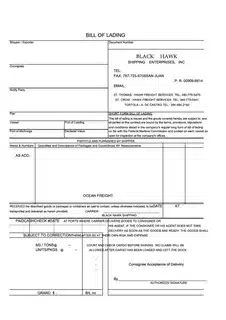
The date of a bill of lading issue is not a small administrative matter. Any delay can have a domino effect: your goods are idle at the port, they are paying demurrage fees, your buyer is getting impatient and refuses to pay, and your cash flow has suffered a blow. Every individual in international shipping must understand the main functions of the Bill of Lading, when you are expected to receive this document, and what may delay it.
We shall demystify the whole process of issuance of the Bill of Lading in this comprehensive guide. You will find out precisely what this document is, the typical schedule that you can anticipate, the frequent causes of delays, and some actionable measures that you can take to ensure that this document is on track. We will also provide effective techniques that can make the process faster and prevent expensive delays for paper bills. By the time you are through, you will have a clear road map to help you ensure that your bill of lading gets to where you want it and at the time you require it.
What Is a Bill of Lading?
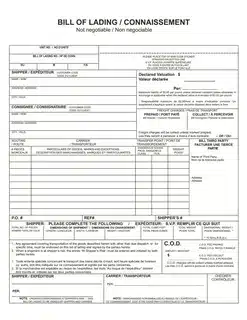
The Bill of Lading is one of the most significant documents in international trade which can also be called B/L. A carrier merely passes on a document that is legally binding and spells out the type, amount, and destination of goods being moved. To call it a shipping receipt is to underrate it as a title document by a long way, since it has a variety of purposes.
There are three functions of the Bill of Lading. Firstly, it is a receipt of goods, which determines that the carrier has received the cargo in the mentioned condition. Second, it is a title document, i.e., whoever has the original Bill of Lading and the receipt issued has the right to legal possession of the goods and demand it in the port of destination. Third, Third, it is applicable to permit the acceptance of the contract of carriage between the shipper and the carrier, presenting the terms and conditions of the transportation, especially after the document is issued.
The general flow is a multi-party flow. The carrier or shipping line, i.e., ocean freight line or its authorized representative, will issue the ocean bill of lading to the shipper or his freight forwarder. The person sending the goods is referred to as the shipper, and the one at the receiving end as the consignee, who forms the contracting parties in the transaction. The bill of lading is normally sent to the banks of the shipper or the banks of the buyer during the transaction of business, particularly in letter of credit transactions. The timely and correct issue of the B/L becomes critical in this kind of multi-party participation, as a result of which all operations are carried out smoothly.
Standard Timing: When You Should Receive It
In a normal situation, shippers are supposed to get their ocean bill after 48 hours when the vessel has left the port of origin. This has emerged as the industry standard; some carriers can issue it quicker, especially where electronic systems are involved.
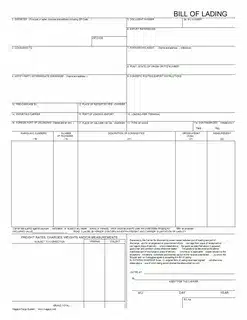
This schedule is not automatic, though. The carrier is not going to hand out the bill of lading until a variety of conditions are met. Unless the credit terms have been arranged, freight charges and other payable fees must be paid. A full description of correct shipping instructions should have been given to the carrier, containing all the information needed about the shipper, consignee, description of cargo, and instructions of delivery, since they are essential to lading.
The problem of issuing in suspension can be attributed to any mistake in documentation or missing information. Rather, we could refer to a hypothetical timeline. Suppose your ship sails out of Shanghai on Monday at 6:00 AM (Day 0). As long as you have paid all the fees and made complete shipping instructions before the time of departure, the documentation department of your carrier begins the processing of the Bill of Lading on Monday. You should receive the draft bill of lading either on Tuesday evening (Day 1) or on Wednesday morning (Day 2).
When you are sure that you are right, the last original documents are completed, or a telex release is completed and sent out. When you have decided to use physical originals, then an additional 3-5 days will be added to the courier delivery time, depending on the location. The Electronic Bills of Lading are ready the moment the approvals are received. It is interesting to note that some carriers do offer an agreement of service levels that assure faster services (even in 24 hours) with higher levels of service. Also, always check the policy of documentation of your specific carrier and ensure the commitment.
Common Causes of Delay
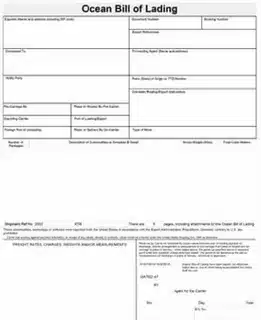
Bill of Lading delays are irritatingly frequent, although there are such things as good intentions. Knowing the common descriptors, such as those related to the freight bill, you will prevent or soon overcome such cases.
Charges or fees without payment are at the top of the reasons behind delays. In situations where balances are outstanding, even very minor balances, two documents are required for the release of bills of lading by carriers. This involves ocean freight, terminal handling fees, documenting fees, and any surcharges. The issue worsens when there is confusion on whether the payment should be made by the shipper, consignee, or third party.
Lack of shipping instructions or partial shipping instructions poses a great bottleneck. In the case where there is no required information in your submission, such as for insurance purposes, the documentation team would need to contact you to clarify. Every back-and-forth communication increases the time of the process in hours or days.
Another common problem is the administrative and processing backlog in shipping companies. Documentation departments are overloaded during the best seasons for exporting goods, such as the pre-Chinese New Year or the eve of major holidays. Processing time can also be slowed due to staff shortages, system upgrades, or the movement between software platforms.
Any documentation mistakes or corrections that are necessary will put the process on hold. In case of a gap between your shipment instructions and the loaded cargo, or if information misaligns with the needs of customs, then adjustments are needed. These problems can be found only during the quality control review by the carrier and lead to unexpected delays.
There are external forces that are out of control sometimes that come in. Normal operations can be affected by force majeure events or other documents, such as natural disasters, strikes at the ports, or geopolitical events. The customs authorities can hold some of the shipments pending further examination. Even such technical problems as failures in the carrier system or an electronic documentation platform can cause short-term delays.
How to Monitor and Get Notified
Active surveillance will significantly decrease anxiety and assist you in identifying possible problems early enough. A majority of present-day carriers have various options on how to monitor the progress of your Bill of Lading.
Firstly, register yourself for automatic email or SMS notifications in case your carrier offers such. Most inland shipping companies are now providing a notification service that will automatically remind you about critical milestones: when the ship has left, when the bill of lading is issued, when you must acknowledge receipt, when the ship is available to see, when originals are sent, etc. These alerts should be configured during booking to keep one up-to-date without having to manually check these alerts.
Tracking portals have gotten more advanced online. Access the customer portal of your carrier with your shipment number, booking reference, or container number. These websites normally display live status updates of your documentation. Find areas marked Documents, Bill of Lading Status or Shipping Instructions Status.
Preparation is important when you have to get in touch with customer support directly. Be ready with your important details: the full shipment number or booking reference and the name of the vessel and vessel number and name of the port of loading and discharge, as well as the container number. This enables the support staff to track your shipment and give you the right data within seconds. Most carriers today provide case management tools where you may place a request and follow up on it—often it is faster than the phone during rush times.
Certain freight forwarders and logistics vendors have their own tracking capabilities, which consolidate information across a number of carriers. When dealing with a forwarder, ask him/her whether they offer an integrated dashboard to track all of your shipments and documentation through the various shipping lines.
What to Do If the Bill of Lading Is Delayed
When you do not receive your bill of lading within the time frame you are supposed to get it, then immediate and quick action is needed.
The first thing to do is to contact the customer service or documentation department of your carrier. Be able to articulate the situation and give all the pertinent information. Give details of the time of departure of the vessel and the duration of waiting. Inquire specifically about any pending matters that may be preventing the issue of issuance—unpaid charges, missing documents or information, or documentation mistakes.
In case the first point of contact fails to stop the problem in the first 24 hours, escalate it the right way. Ask to see a manager or documentation manager. The urgent documentation cases have many carriers with dedicated case management teams. Any reference to any service level agreements or commitments made by the carrier on the timing of issuance of the bill of lading.
The following is an example of a message template:
Dear Mr. Smith,
Subject: Urgent: Delayed Bill of Lading – Booking [Reference Number].
Dear Documentation Team,
I confirm receipt of this Bill of Lading, booking reference [number], vessel [name], voyage [number], which sailed out of [port] on [date]. Under the usual procedures, I was supposed to be receiving the B/L within 48 days after departure, and now it is [X] days without receiving it.
This time lag is leading to [specific effect: customs clearance problems, delays in payments, demurrage problems]. Could you please:
- Check the present position of B/L issuance.
- Detects all outstanding requirements or missing information.
- Give an approximate date when the final B/L can be received.
All the payments have been made as per the invoice [number]. Full shipping instructions were sent in on [date]. Please recommend any further steps on my part.
I appreciate your prompt attention to this urgent matter.
Your name and contact information, [Your name and contact information]”
In the circumstances when the issuance of a traditional Bill of Lading turns problematic, think about alternatives. An express surrender bill offers quicker release mechanisms, but is usually more expensive. Electronic Bills of Lading remove the delays incurred by the courier altogether and are gaining more acceptance. A seaway bill (non-negotiable) may be suitable on specific trade routes as well as in situations where the buyer consents so that the consignee can take possession of goods without producing original documents.
Related Issues and Clarifications
The issuance of the cargo description on the Bill of Lading is associated with several points that can be confusing to shippers, especially to the new entrants in international trade.
The tradition to issue several originals, usually three, has certain historical origins. When there was no modern communication, a copy of a message was delivered through two or more routes to make sure that one reached safely. Nowadays this is used as a security measure. The cargo can be claimed using one original bill of lading, and when goods are released against one original, then the rest are void. This system keeps off document loss but must be handled with caution so as to avoid fraud.
It is very important to understand the type of document to use, which can be done by understanding the difference between these types of documents. The typical bill of lading is a negotiable document of title that is wholly negotiable and able to be purchased, sold, or transferred, including scenarios where a straight bill is utilized. A seaway bill cannot be negotiated; that is, the named consignee is the only one who can claim goods, and it is convenient but less flexible. A switch bill of lading permits the original B/L to be returned and a new one with new details to be issued frequently when the cargo has a new buyer on board.
Bill of Lading timing risk and liability are quite high. Without this paper, your consignee cannot collect goods at the destination, and this results in demurrage and storage fees. Banks will never issue payment without due documentation in the case of letter of credit transactions. Loss of negotiation power with buyers can be experienced in case of delays in documentation.
When you misplace the original bill of lading, things get complex and costly. An indemnity bond will have to be procured by you with a bank or an insurance company, and it can be a percentage of the value of the cargo. The carrier might demand a lot of ownership and identity documents. It may take weeks to settle this process, and in the meantime, your cargo is sitting in the port, being charged lading documents.
Tips to Avoid Delays
There is never a better option than prevention with regard to Bill of Lading delays. These best practices related to your export documentation and shipment bill will help you to minimize the risk of documentation holdups and ensure you receive payment more quickly.
Send full and correct shipping directions in good time—preferably with your booking, or at any rate a few days before the ship’s departure. Contain all the necessary information: correct names and addresses of shipper, consignee, and notify party lading document; description of the cargo (weight, volume, and commodity codes); correct container and seal numbers; special handling instructions; and terms of freight payment. The errors made during vetting will lead to a delay since once it gets on the ship, it cannot be reversed.
Make all payments and expenses on time from the loading port and as per the agreed-on terms. In case you are qualified to be given credit terms, make sure that your account stays in good health. Install automatic payment reminders in order to avoid any deadline. Any billing disputes should be resolved promptly and not allowed to build up and cause a stalemate in documentation.
Select platforms or carriers that have transparent tracking and notification systems. In the carrier selection process, inquire about their paperwork procedures, average time of issuing Bill of Lading, and monitoring facilities. When carriers invest in customer-facing technology, they are also likely to have more efficient back-end processes.
Adopt the use of electronic documentation, including an airway bill, where either of your trade lanes recognizes it. Electronic Bills of Lading will save time on courier delays, minimize the risk of losing documents, and simplify the whole process of ordering bills. They are also environmentally friendly and gaining strong backing among major carriers and legal systems in the world, just as the inland bill is recognized. Get acquainted with such platforms as Bolero, essDOCS, or WAVE that support the electronic trade documents transportation company.
It is important to stay inseparable and proactive with your freight forwarder or carrier. Waiting to get into trouble is not a good idea. Provide a consistent check-in frequency of shipments of significance. Establish contacts with certain people within the documentation department who are aware of your business requirements master bill. Effective communication can also contribute to quick resolution of problems in case problems arise.
Conclusion
The bill of lading is the backbone of global shipping, and knowing when you are to receive it will provide you with a tremendous benefit in supply chain management. Although the 48-hour post-departure schedule is intended to be a general rule of thumb, your experience in that matter heavily relies on fulfilling the preconditions, such as the payment on time and the proper submission of documentation. You can also foresee some of the issues that may arise in your business and mitigate the consequences before they affect your business by understanding the typical causes of delays, including unpaid charges and administrative delays. Keep in mind that you do have influence in this process; active oversight, effective communication, and the selection of carriers with resilient systems will provide you with more power over the time of documentation. It is quite often that the distinction between seamless proceedings and the expensive delays is determined by the preparation and understanding of interactions. Become the owner of your Bill of Lading process today, apply the best practices mentioned here, and turn what could be the cause of stress into a smooth component of your shipping process.
Related FAQs and Further Reading
To further enlighten you on bills of lading and other shipping documents, you might want to find out about these related subjects. Why Are There Three Original Bills of Lading? justifies this common practice historically and practically, and how to work safely with multiple originals. What Is a Switch Bill of Lading, and When Should You Use It? discusses this type of specialized document when the ownership of cargo is transferred in transit. Complete Guide to Seaway Bills: When Non-Negotiable Documents Make Sense can help you learn about alternatives to the traditional Bills of Lading. The essential information required on a bill of lading will help keep a comprehensive checklist on which your shipping instructions remain complete. Electronic Bills of Lading: The Future of Shipping Documentation discusses electronic solutions that can do away with most of the timing problems mentioned here. The article “Understanding Demurrage and Detention: How Documentation Delays Cost You Money” links the timing of documentation with the financial effects of delays. Lastly, Letters of Credit Transactions: How Bills of Lading Affect Payment is a must-read for exporters who deal with the payment terms of documentary credit of payment. These subjects will expose you to an in-depth understanding of the whole shipping documentation landscape and make you look forward to the most sophisticated international dealings with ease.