
The Evolving Landscape of Private Label Brands
In the busy e-commerce environment, the sellers of the private label have found themselves a niche that is profitable and highly competitive. Consider it: Brands that used to be side hustles on Amazon are now going to multi-million-dollar businesses, using platforms such as private label Amazon to produce products to fit niche markets. However, as these brands experience their lifecycle, which are that of ideation and launch, growth and optimization, their supply chains tend to show some cracks behind the scenes. Based on the brand lifecycle modeling, early stage private labels can boast of agility but when demand becomes overwhelming, inefficiencies in the logistics may halt the process.
I have witnessed this trend within the industry whereby sellers do not forecast the interrelations between sourcing, manufacturing, and fulfillment. A China fulfillment partner is not just an extension of logistics; a strategic pillar that relates to the principle of value-chain of contemporary e-commerce. By incorporating upstream activities such as FBA prep China within the ecosystem, the sellers will be able to reduce risks that lead to loss of profits in the long run. This is not a case of quick fixes, rather it is a matter of reevaluating the whole chain in a bid to create sustainable growth.
Value-Chain Vulnerabilities in Private Label Operations
The use of the value-chain analysis by Michael Porter to the group of people who sell under the label of private label reveals a startling truth that the key activities such as inbound logistics and operations are usually the least strong points. To most, the process begins with sourcing the Chinese manufacturers, but without a China 3PL the chain breaks. Goods are delivered as lumpy shipments, quality is inconsistent and stocks are stored in inefficient warehouses and this results in what I would term as profit leakage; the unnoticed losses of profit in terms of extra tariffs, storage costs and delays in replenishing stocks.
Take an example of a typical Amazon seller who sells its own brand: they may have the electronics sourced in Shenzhen, and fulfillment is done in the country. The disconnection forms bottlenecks. Value-chain logic requires integration; a China fulfillment partner provides these components which combines the disjointed operations into smooth flow. In this perspective, we observe how how uncoordinated logistics not only add unnecessary expenses but also inhibit scalability where brands are forced to operate in reactionary instead of proactive expansion.
China’s Dominance in Global Manufacturing and Supply Chains

The contribution of China to the Amazon supply chain is not incidental as it is entrenched in decades of infrastructure creation and production capabilities. Being the factory of the world, it manufactures apparel to gadgets at volumes that cannot be compared with other countries. However, when it comes to the case of private label sellers, the actual advantage is derived through taking advantage of this ecosystem with a China fulfillment partner. It is demonstrated via brand lifecycle that in the growth phase, availability of extensive supplier networks makes products iteration faster, enabling sellers to change direction based on market feedback, without having to begin anew.
This comes in a strategic way as it is possible to tap in to clusters of such commodities as Yiwu, or tech as Dongguan where a shorter lead time is achieved due to proximity. However, in the absence of a vendor familiar with the workings of the private label fulfillment China, sellers will be left to walk this tricky ground alone to deal with language barriers, compliance challenges, and unpredictable quality. The lessons of the supply chain resilience models illuminate how the 3PLs based in China create buffers against disruptions to continue operating in the face of disruptions in the world such as tariffs or pandemics.
Scalability Through Integrated Fulfillment Strategies
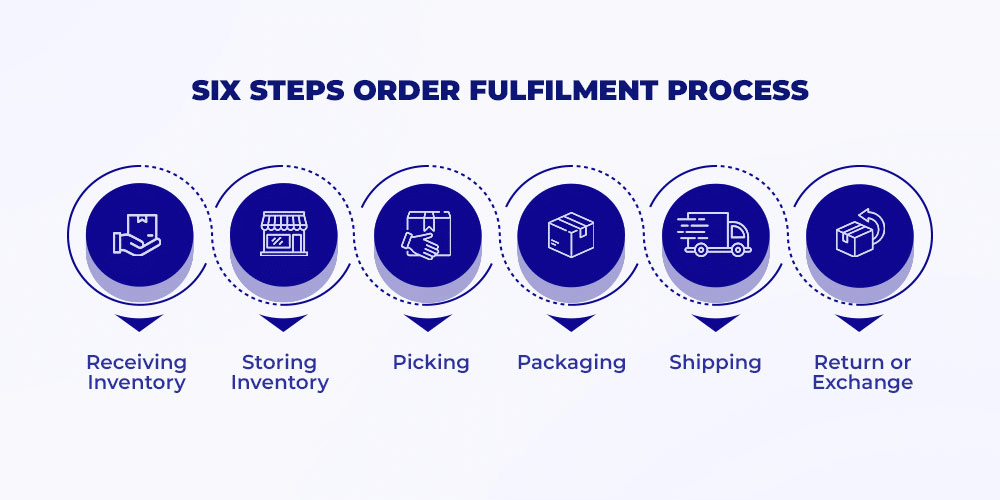
The development of a private label brand is not linear and it is exponential and requires logistics that grow in parallel. In this case, the logistics of brand scaling are in the focus. This is made possible by a China fulfillment partner that provides flexible warehousing and order fulfillment that can meet demand spikes. Consider the case of a beauty brand that introduces a viral product; in the absence of scalable infrastructure, stockouts will be a certainty, hurting customer loyalty, and causing a drop in search results on such websites as Amazon.
Based on value-chain, the mapping of how upstream integration, that is, sourcing, prepping and shipping in China, enhances outbound efficiencies, can be created. This is not cost-cutting it is about bringing elasticity to the chain. As an example, the Chinese warehouse management systems can conduct real-time inventory synchronization to avoid the overstocking and understocking traps. This model in my experience has resulted in sellers achieving a 2030 percent increase in operational agility, which places the seller in a competitive niche dominance over the long term.
Upstream Quality Control and Consistency
Quality is not a point of review, it is interwoven in the value chain. This is usually learnt the hard way by the sellers of the private labels when the returns soar with manufacturing variances. In a China fulfillment partner, quality control (QC) is integrated into the source whereby inspection is made prior to the products leaving the factories. It is an upstream method, which is based on the frameworks of total quality management, and it has consistency which cannot be achieved by downstream fix.
Consider it in terms of models of profit leakage: every single defective unit does not just cost us on returns, but also destroys the brand trust, halting the lifecycle stage of the growth phase to the maturity phase. Through the collaboration with a China 3PL, the sellers can have access to professional auditors who are well-informed about international standards and defect rates are decreased, as well as the reliability of their product is improved. This level of strategy makes QC an active investment rather than a responsive cost, protecting margins and the creation of a repeat business in the cutthroat Amazon private label space.
Accelerating Replenishment Cycles
Speed is cash in e-commerce. Conventional supply chain dragons and 60-90 days replenishment time are reduced by a China fulfillment agent to 30 days or less using consolidated shipping and efficient routing. On the basis of brand lifecycle information, in expansion phases, the speed of replenishment is directly proportional to market share acquisition because sellers are able to respond to trends without having inventory gaps.
Value-chain logic in this case is focused on the interaction between procurement and distribution. Through FBA prep China in-country, the partners will package shipments, gain freight discounts, and speed up delivery through the customs process. This is not logistics alone, but it is a competitive moat. Sellers I have dealt with have cut lead times in half enabling them to beat competitors who use disjointed international delivery. Essentially, this acceleration drives agile scaling, making possible bottlenecks growth accelerators.
Cost Optimization and Profit Leakage Prevention
Costs creep silently but leakage of profits can be seen with the help of profit leakage models. In the case of the private label sellers, the disjointed supply chains drain margins via unnecessary handling, duties, and storage expenses. A China fulfillment partner negates this by converting operations under a single roof sourcing, warehousing, and shipping to minimize touchpoints and related costs.
This is strategic because it satisfies the principle of activity-based costing frameworks, in which each supply chain activity of the Amazon chain is evaluated in terms of value addition. The partners also present a free warehousing opportunity to a partner of up to 30 days in China by exploiting economies of scale that reduces the strain on cash flow during peak times. The result? Reduced landed costs and retained profit, which can be reinvested into the marketing or R&D. This model will not be optional in a 2026 world of increasing tariffs, but it will be mandatory in ensuring that competitive prices are achieved without compromising on quality.
Compliance Expertise in a Regulatory Minefield
Overcoming compliance is a strategic necessity, particularly, when private labels are becoming more mature. The brand lifecycle modeling cautions that regulation missteps may stop the growth, whether it is IP disputes or import controls. A China fulfillment collaborator will incorporate an in-depth understanding of the Chinese export regulations as well as the strict implementation policies applied at Amazon, so there will be no problems with adherence.
Value-chain analysis allows us to view compliance as an enabler and not a challenge. Partners process certifications such as CE or FCC on-source reducing expensive rejections on the border. This is in the area of sustainability mandates, whereby the brand can match the changing consumer demands of sourcing ethically. In the context of private label Amazon sellers, it translates to staying out of account suspension and developing credibility- important to long-term scalability in an ever-investigated market place.
Fostering Brand Lifecycle Growth
Brands do not grow alone, they flourish in ecosystems. This is fostered by having a China fulfillment partner who offers value added services such as custom packaging and bundle, which adds value and leads to upsells. Findings by brand lifecycle models indicate that at maturity stages, a differentiation in terms of logistics like branded inserts or greener materials confirm a market presence.
The integration is also strategic by enabling the diversification of the products sold by the sellers without necessarily changing the business processes. The partners can provide data-driven demand trends via analytics integrated into the chain and influence inventory choices and eliminate obsolescence risks. This holistic solution eventually sees the private labels not only survive but also grow to the top, thanks to the China 3PL capabilities to become resilient and adaptable.
The Strategic Imperative for 2026 and Beyond
Looking into the future of 2026, the message is simple: there is not a luxury to the private label fulfillment China, but the necessity. With value-chain analysis, profit leakage models, and brand lifecycle insights, we have unpackaged how a China fulfillment partner will strengthen all aspects of operations, including scalability and compliance. In a globalized world where e-commerce is rapidly developing, the ones who incorporate strategic logistics will survive the others.
To the interested private label sellers who would want to achieve sustainable success, collaboration with an experienced provider such as BM Supply Chain opens the following benefits. Tailored solutions with procurement to delivery solutions are all about creating a chain as creative as your brand. The future is always ready–unite China with you to-day as a strategic ally.