The performance of a 3PL fulfillment partner in ecommerce and direct-to-consumer business has a direct impact on the revenues, customer satisfaction levels, and brand image. One failure in fulfillment, such as a slow delivery, incorrect order, and inventory shortage/excess, will have a trickle down effect of missing sales, returns, and even bad reviews. With no adequate knowhow on the operations of your third-party logistics provider, the problems may not be unveiled until it is too late, increasing risk of operations and financial liability.
The common belief used by many brands as a result of entering into the 3PL agreement is that it will ensure the performance will continue. Practically, internal alterations on the side of the service provider (attracting staff change, adjusting procedures, volume overloads and resource limitations) may cause a drift of the service levels. This is mitigated by the regular auditing which ensures that accountability is set in place as opposed to conjecture.
An organized 3PL audit scheme guarantees accountable accountability, transparency in operations, as well as consistency in fulfillment long-term validity. Equality In auditing your 3PL partner, distrust is not applicable (but rather, a matter of providing transparency in your operations, accountability in your performance, and stability in long-term supply chain operations).
Why Regular 3PL Audits Are Necessary
The ongoing audits are necessary owing to the fact that third-party logistics providers can experience operational drift automatically in the absence of governance. Even the well-motivated providers over time drift toward a service quality drift due to change of priorities or depletion of resources.
The factors shared across the board are erosion in processes discipline, increasing staff turnover resulting in inconsistent process performance, decline of inventory accuracy due to unregulated counts of the process cycle and minor inconsistency during operations, which cumulative in nature and amuse into a quantifiable problem. The financial risks that these changes cause include increased costs related to ecommerce returns management, faster shipping charges or lost stockout revenue.
Structured monitoring at an early stage prevents failure to escalate to complete service hiccups.
| Audit Reason | Risk Prevented |
| KPI tracking | Service decline |
| Inventory verification | Stock discrepancy |
| Process review | Operational inefficiency |
| Financial monitoring | Stability risk |
Key KPIs to Monitor in a 3PL Partnership
The right approach to good governance is the introduction of specifically defined and contractually binding Key Performance Indicators of the performance of 3PL which can be used as objective manifestation of fulfillment health. The metrics should be monitored on a regular basis and the benchmarks should be established at the time of the contract negotiation in order to be able to analyze the trends meaningfully.
Pay attention to these following central indicators, which are measurable:
- Order accuracy: Percentage that orders have been met right (the correct item, quantity, condition).
- On time shipping rate: The percentage of orders shipped within the agreed cutoff times.
- Inventory precision: Correlation of system records and actual inventory.
- Speed of picking and packing: Time taken since order got to readiness to ship.
- Return processing time: Time taken between receipt of a return to restock/refund prepared.
- Rate of damage: Percentage of orders received damaged.
Benchmarks are standards within the industry presented by the performing providers (usually 20242025 data):
| KPI | Target Benchmark |
| Order accuracy | ≥ 99% |
| On-time shipping | ≥ 98% |
| Inventory accuracy | ≥ 99% |
| Damage rate | < 1% |
| Return processing | < 48 hours |
These bases ought to be incorporated in your SLA. Escapes are an indication that root-cause analysis and corrective action plans are appropriate.
How to Conduct an Effective Warehouse Visit
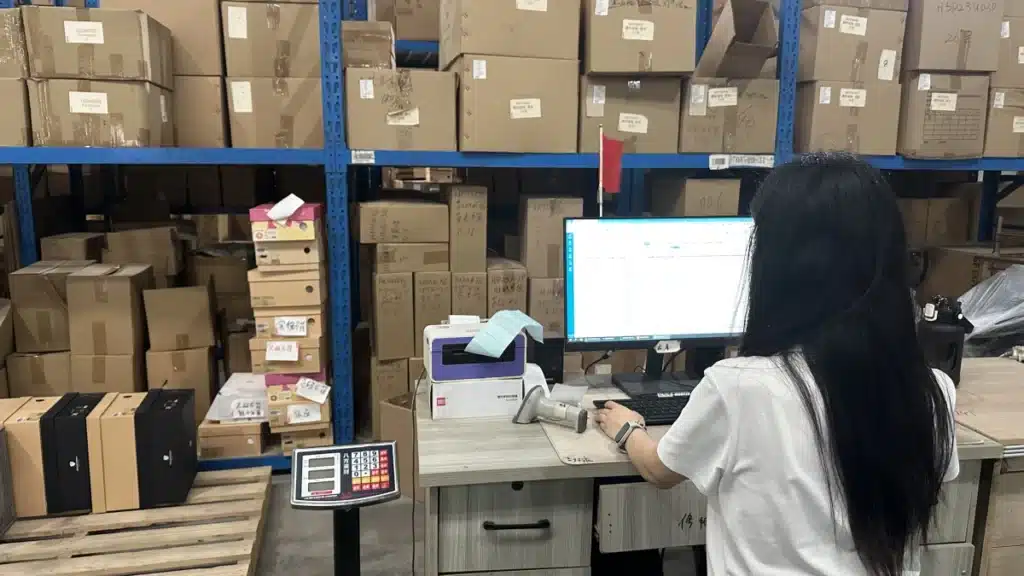
A visit to a warehouse is much more productive when it is done in the form of a professional examination rather than an unofficial visit. It is scheduled (periodically quarterly or bi-annually) and offers first-hand visibility of what is going on in the day-to-day running of operations that cannot be reported through reports.
The decision-vital areas to consider when reviewing 3PL warehousing are the state of the entire facility, efficient inventory placement, excellent security measures, staff distribution and training rates, WMS functionality examples, and physical counts to do a spot check of the system data.
During the visit, use a formal checklist, which would be used to make sure that the visit is consistent and documented.
| Inspection Area | What to Evaluate |
| Storage layout | SKU separation and zoning efficiency |
| Security | Access control and surveillance |
| Picking area | Process efficiency and error prevention |
| Packing station | Quality checks and packaging standards |
| System demo | Real-time visibility into order status |
Ideally watch activities at their busiest point, and ask the operation owner to explain the warehouse management best practices used for essential processes such as receiving, put-away, and order release.
Evaluating Inventory Control Systems
Effective inventory management forms the basis of credible delivery. An effective 3PL uses 3PL automation and processes that are capable of providing accurate traceability and reducing discrepancies.
Key capabilities are lot/batch tracking to manage a recall, SKU level tagging to pick the correct parts, real-time inventory sync with your platform and detailed accountability logs.
| System Feature | Risk Reduction Benefit |
| Lot tracking | Recall control |
| SKU tagging | Accurate picking |
| Real-time sync | Inventory visibility |
| Audit logs | Accountability |
Demonstrations of request system visiting include the way the discrepancies are highlighted and corrected.
Performance Review and Reporting Structure
Organized performance audits transform unprocessed information into governance. Build a rhythm which will balance finding in time and planning discussion.
The trends are tracked in monthly KPI reports, alignment and improvements are discussed in quarterly meetings, exception reporting indicates immediate problems, and SLA compliance reporting makes a difference and enforces the contract terms.
| Review Frequency | Objective |
| Monthly KPI report | Trend monitoring |
| Quarterly review | Strategic alignment |
| SLA audit | Contract compliance |
| Exception report | Immediate issue resolution |
Demand normal report forms that contain historical data, version clarifications, and corrective measures.
Financial Stability and Operational Risk Signals
Risk proactive identification involves surveilling the general stability of the 3PL. Before service actually goes down the drain, the financial pressures are usually felt.
Monitor slow payment to vendors (cash flow strains), unexpected redesign of fees, without any explanation of why staff have been laid off or turnover, and a decrease in responsiveness to queries.
| Warning Signal | Possible Risk |
| Payment delays | Cash flow stress |
| Fee restructuring | Financial pressure |
| Service decline | Operational instability |
| Leadership turnover | Structural disruption |
Such signals are to be further investigated with requests of financial guarantees or contingencies planning.

Role of a Transparent Fulfillment Partner
An excellent fulfillment partner develops governance via openness. Find effective providers who do not require prompting to include a transparent report of KPI, allow real-time tracking and API integration for direct connection to the system to verify, remain open to standard visits of the warehouse, and have well-documented SOPs.
An effective China 3PL must get quantifiable KPIs, be audited, report transpartially and accountable to performance, which fit the long term stability of global supply chains.
Common Mistakes in 3PL Auditing
There are numerous brands that jeopardize their governance activities with preventable mistakes.
- If reports are summarized, then there is a tendency to move on without checking the data.
- 19 forfeiting the benefit of the actual visit of the physical warehouse: opting instead to visit remotely with guarantees.
- The inability to establish particular KPI benchmarks in the contract.
- Failure to observe regular SLA deterrence and escape measures.
- Ignoring the initial indications such as a slight slippage of KPI or delays in communication.
These gaps are filled which enhances the level of control and minimization of exposure.
Conclusion — Governance Protects Fulfillment Stability
Accountability In what amounts to a natural continuation of your operation, auditing provides accountability and visibility of the warehouse through warehouse visibility reveals silent causes of trouble, and organized 3PL performance review processes make silent risks accumulation a thing of the past.
In the absence of such a layer of governance – using assumptions instead – the disruptions occur unintentionally. As disciplined way of auditing your 3PL partner will ensure the reliability of fulfillment, secure revenues and will guarantee long term customer trust.