
Price is not the most important factor to determine the best warehousing services to use when the business is eCommerce based but the speed of fulfillment, integration of the system, accuracy of stock and scalability. These directly influence the speed of getting orders to customers, how well inventory can be tracked, and how well your operations can scale to growth spikes.
The core of eCommerce logistics is warehousing. It affects the time of shipping, accuracy of orders, returns and customer experience. Most eCommerce companies invest heavily in sourcing and marketing of products and consider warehousing as a secondary concern. In practice, robust warehousing and fulfillment is also as important to the long-term success and can often be the difference between successful brands and those with high returns and negative feedback.
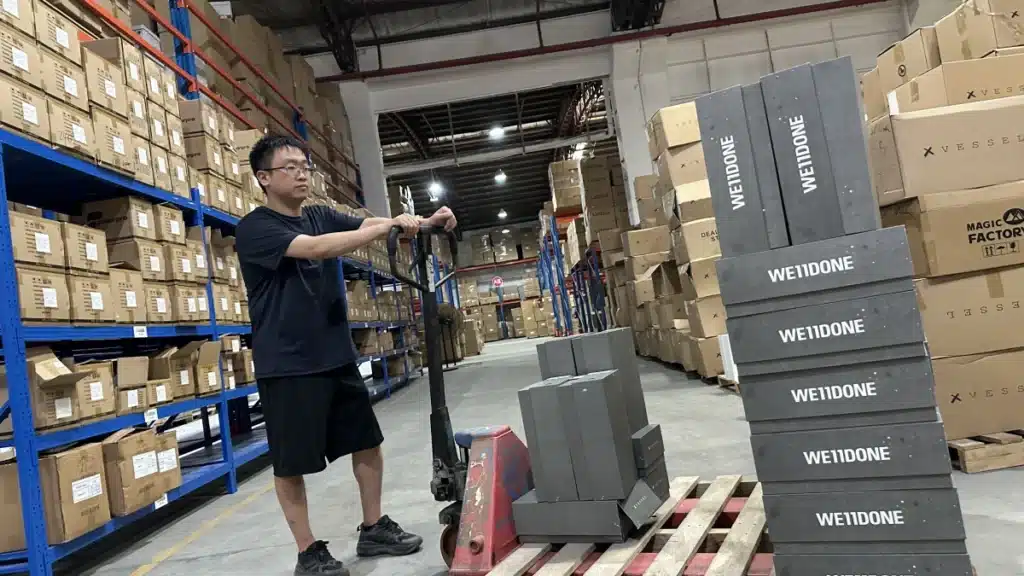
What Makes Warehousing Services Ideal for eCommerce?
Perfect warehouse service to eCommerce would focus on the efficiency of its operation which directly converts into improved customer results and the improved margin.
Turnaround time is among the best competitive advantages. Customers are no longer willing to wait weeks to deliver products but days. Brands can meet or exceed these expectations with the assistance of warehousing providers that can place stock in closer proximity to large markets and execute pick-and-pack operations in the most efficient manner.
Accuracy of inventory averts the expensive mistakes like overselling or stockouts. The system has advanced features of real time scanning and number of cycles that keep records accurate, eliminating instances of discrepancies which frustrate the sellers and buyers.
System integration eradicates manual data entry and delays. When your internet store, marketplace channels and warehouse management system are in sync, then orders will be automatically moved to the shipping label through checkout.
Scalability guarantees an expansion of the warehouse in line with your business. Peaks in seasons, viral marketing campaigns or international expansion must not blindfold an organization into incurring costs without planning.
The following is a brief description of the impact of these factors on eCommerce performance:
| Feature | Impact on eCommerce |
| Fast fulfillment | Better customer experience and higher repeat purchases |
| Inventory accuracy | Fewer order errors and reduced refunds |
| Integration | Automated operations and less administrative work |
| Scalability | Supports growth without proportional cost increases |
Ecommerce warehousing solutions are often used by businesses that seek to scale efficiently to streamline inventory management and fulfillment operations.
Key Features of the Best Warehousing Services
The eCommerce warehousing services are more than mere storage. They are active fulfillment centers that are online retail specific.
The basis is inventory storage. Quality providers have well-structured, climate managed areas with well-defined slotting plans to ensure that high velocity items are readily available.
Fulfillment speed is determined by pick and pack processes. Efficient layout, barcode or voice-directed picking and ergonomic packing stations reduce the time spent in handling, and increase the accuracy.
The order processing involves taking the received stock, quality checks and instant incorporation into stock available. Quick turnover in this case avoids congestions in the peak season.
Live tracking provides sellers and buyers with an eye on the order once placed until it gets to the door. Current systems provide an automatic updating of the status in various channels of sale.
The Returns management deals with the backwards logistics faced by all eCommerce brands. Specialized inspection, replenishment, and refund processes transformed the possible losses into the customer retention prospects.
These core capabilities normally show up in the leading services:
| Feature | Description |
| Inventory Storage | Organized product storage with proper conditions |
| Pick & Pack | Efficient order preparation using optimized workflows |
| Order Processing | Fast handling from receipt to outbound shipping |
| Tracking | Real-time visibility for orders and inventory |
| Returns Handling | Structured process for inspection and restocking |
Other value-added services like kitting, custom packaging, or labeling also make strong providers unique by aiding unique brand requirements without the necessity of in-house provisions.
Types of Warehousing Services for eCommerce
There are various models of warehousing that eCommerce businesses can follow based on their level of sales, product and level of growth.
Third-party logistics (3PL warehouses) provide third-party specialization and infrastructure. These vendors handle storage, delivery, and shipping of a range of brands, distributing fixed expenses and providing professional-level services even to smaller sellers.
Fulfillment centers are storage and high-speed order processing centers. They are concerned with quick pick, pack, and ship operations, and are oftentimes distributed to allow faster last-mile delivery.
Dropshipping warehouses are used with those businesses that want to have a minimum of inventory. Suppliers or specialized facilities can store stock and deliver to the customer when the order is received, but this model sacrifices some control to achieve reduced initial capital requirements.
A lot of emerging brands begin with a single model and develop into hybrid strategies as they expand channels such as Shopify, Amazon, and Tik Tok Shop.
Benefits of Using Warehousing Services for eCommerce
Professional warehousing services provide quantifiable changes in the main performance areas.
Rapid response positively boosts customer satisfaction and review ratings. Orders that come earlier make buyers feel that the services are of greater quality and they will be willing to buy again.
The reduced operational costs arise due to shared infrastructure, negotiated carrier rates and decreased in-house staff and equipment requirements. Such savings tend to enhance profit margins to a great extent.
The less workload enables founders and teams to work on product development, marketing, and acquisition of new customers rather than daily packing and shipping.
Scalability becomes seamless. With flexible space and labor resources, providers are able to handle a sudden increase in orders or consistent growth without causing you to scramble to find temporary solutions.
| Benefit | Result |
| Faster delivery | Improved customer satisfaction |
| Lower costs | Better margins |
| Reduced workload | Focus on growth |
| Scalability | Handle higher order volumes without disruption |
How to Choose the Best Warehousing Provider
Choosing an appropriate warehousing partner involves considering various realistic considerations that are in line with your eCommerce requirements.
Place is important in speed of delivery. Those who have warehouses in and around your major customer base or key shipping centers can reduce transit times and costs.
Operations are reliable on the basis of technology. Find powerful warehouse management tools that can be directly connected with your sales platforms and provide transparent dashboards to monitor inventory and orders.
The pricing must be clear and appropriate in terms of volume. Be aware of the base storage charges, pick and pack charges and other charges related to returns or special handling to prevent any surprises.
Fulfillment capability involves accuracy levels, average processing time and experience with products of similar nature like yours. Request references and performance indicators instead of just using promises.
Take into account scalability strategies and quality of customer support. The ideal partners become your business extensions as they are the ones who give guidance to your business as you grow.
Common Mistakes eCommerce Businesses Make
Even professional sellers do not infall in their own logistics performance by making unnecessary mistakes.
- Picking by price alone ❌ The cheapest will usually provide slower delivery or low precision and end up being more expensive in lost sales and refunds.
- Overlooking system integration ❌ Manual operations cause delays and errors that drive away customers and waste resources.
- Failure to think scalability ❌ — A provider that is effective at current volumes might not perform during peak seasons or during rapid growth periods.
- Overlooking fulfillment speed ❌ — Slow shipping directly impacts conversion rates and brand perception in a market where speed has become table stakes.
Who Needs eCommerce Warehousing Services?
There are various kinds of eCommerce operations which are likely to gain a lot by professional warehousing.
Expanding brands that leave the garage or home fulfillment soon hit the capacity limits. Outsourced warehousing offers the room and competence required to sustain the service levels in the process of expansion.
Dropshipping companies tend to employ dedicated dropshipping warehouses to enhance credibility, as well as to minimize the reliance on a single supplier.
To spread risk and to better serve non-Amazon channels, Amazon sellers often combine FBA with other 3PL support.
The providers with international networks and knowledge of compliance are beneficial to global sellers who deal with cross-border shipments.
The startup and scaling brands especially enjoy the benefits of transferring fulfillment load on to the specialist to enable them utilize the limited resources to product innovation and customer acquisition.
Conclusion — Warehousing Is the Backbone of eCommerce Logistics
The optimal warehousing solutions to eCommerce companies are a combination of efficient warehouse, proper inventory control and expedited delivery to facilitate long-term growth and customer satisfaction.
Acting as a strategic operational system, but not a cost center, warehousing leads to accelerated delivery, reduced error rates, and increased flexibility. These benefits are cumulative and enhance brand image and financial results.
Effective eCommerce players consider warehousing as infrastructure. Businesses can compete effectively in an ever-increasing demanding marketplace by concentrating on the right features, avoiding pitfalls, and selecting providers that can meet their needs now and in the future.