The success of crowdfunding fulfilments should not be explained by hypothetical goals rather practical examples.
Major Kickstarter fulfillment is only successful when there is initial planning, systems, and execution relationship.
We worked on end to end fulfillment of funded campaign that created 10, 000 backer orders in this instance. This was done by organizing receiving of inventory at the manufacturing end, kitting based on each variant, quality verification and shipping to different regions; however, the time line was very brief. The following is a chronological examination of how the operation went on, what were the actual constraints which we had to deal with and what actually occasioned on-time results.
To learn more about the organized strategy we use towards projects such as this, see our crowdfunding fulfillment process.
Project Overview — Campaign Scope and Fulfillment Challenge
Massive Kickstarter undertakings can quickly get out of control unless scope and logistics are under control on the first day.
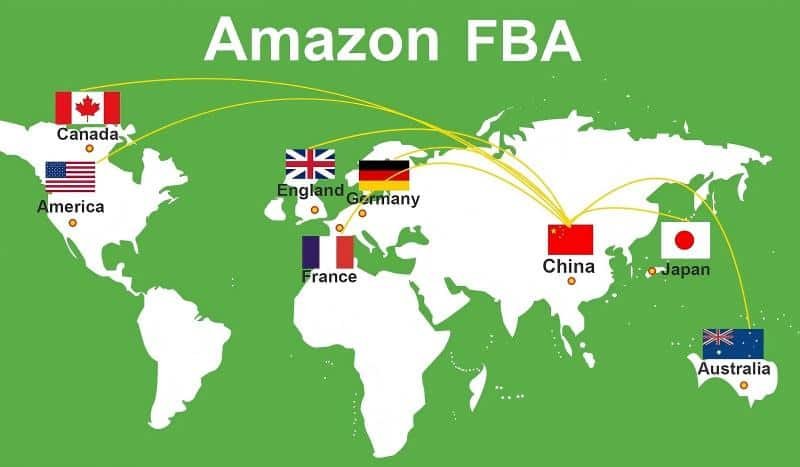
The context of the campaign was based on a consumer hardware product that had various levels of rewards that included entry-level packages, enhanced packages, and various add-on packages as well. Supporters pledged in dozens of countries which resulted in the need of the distributed distribution that is truly global.
Key parameters at a glance:
| Parameter | Details |
| Order volume | 10,000 units |
| Destinations | Several areas of the world ( North America = -0.45, Europe = -0.3, Asia-Pacific = -0.15, others = -0.1) |
| Reward complexity | Variants / add-ons (max. 8SKUs of each order in complex bundles) |
| Timeline expectations | Particular source of 4-6 months delivery time after manufacturing is done. |
Internet spread of reward customization and high order volume combined with the greatest competent strain was the biggest operational strain because the smallest failure of these chains along the path would roll into weeks of delays.
Pre-Fulfillment Planning and Risk Assessment
Hard completion begins way before the packing of the first box, most failures can always be associated with loopholes in the initial preparation.
Our initial step was to plot out each variable: the accuracy of backer data export, product variant definitions and regional shipping constraints and peak labor needs. The shipments of inventory came in batches longer than 6 weeks, therefore, we developed an allocation chain to avoid being short in regions of high demand.
Key risks and our way of mitigating them:
| Risk Area | Mitigation Strategy |
| Data accuracy | Voter verification regulations and backer survey address and add on checks. |
| Inventory allocation | Split of regions with per zone buffer stock. |
| Timeline pressure | Planned dispatch plan having weekly milestones. |
The absence of these controls would have increased re-shipments and erased trust caused by orders or stockouts that did not match well.
Fulfillment Execution — Receiving, Kitting, and Shipping
Execution is death and life on repetitive processes–when volume goes into the fives, pipe and smoke treatment begin to break down.
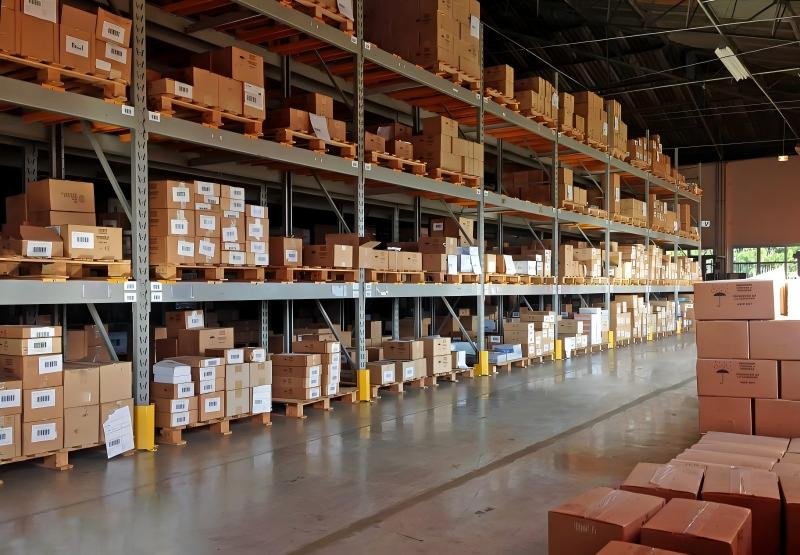
Purchases reached our warehouse in batches. Every inbound delivery was subjected to instant receiving (quantity, condition, variant matching). Then we proceeded to kitting: building kit-specifics based on order files that had been pre-validated.
The process was as follows:
| Step | Execution Detail |
| Receiving | Inventory check-in, QC sampling, batch labeling |
| Kitting | Tier-based assembly (pick-to-light for accuracy) |
| Packing | Special protective materials + logo inserts. |
| Labeling & QC | Final visual control + scan control. |
| Shipping | Destination-based multi-carrier dispatching. |
We had a daily pick/pack accuracy audit with a 0.5 percentage error target before attachments on the label. This field established downstream problems low.
Managing Global Shipping and Customs Complexity
It is not only the rates that matter in the international shipping, but the customs, documentation mistakes, and carrier capacity are the actual bottlenecks.
Europe brought forth VAT and sorting obstacles; the US was experiencing volume peaks that threatened cutoffs by the carriers; Asia-Pacific required a high cost control that would not compromise speed.
We have taken it by region:
| Region | Key Challenge | Resolution |
| EU | VAT & clearance | Pre-classification + IOSS registration |
| US | Peak volume | Staggered dispatch + carrier rotation |
| APAC | Cost control | Zone optimization + consolidated freight |
All shipments were followed by full commercial invoices, already verified Hs code, and tracking number sent to the backers instantly. This minimized hold-ups, and provided end-to-end visibility.
How Process Discipline Enabled On-Time Delivery
Consistency trumps complexity each and every time, exceptions will be treated when everybody plays by the same playbook.
We implemented SOPs in receiving, kitting, packing and dispatch. Early identification of problems in the day stand-up (address corrections, carrier delays), and our order status was always in one place of truth. Backer communication remained informative: projected ship windows, carrier availability times, resolution notices where necessary.
This construction transformed the possible anarchy to the orderly circulation.
Results and Key Outcomes
Results are more eloquent than descriptions of the process- this is what the figures were telling.
We shipped all 10,000 orders. The accuracy remained high, re-shipments remained low and deadline variance was managed even with batch delivery and the arrival of the customs.
Summary:
| Metric | Result |
| Orders shipped | 10,000 |
| Delivery accuracy | High |
| Re-shipments | Minimal |
| Timeline deviation | Controlled |
Most of them fell with the guaranteed bandwidth, and outliers were connected to stranded custom holds or events of force.
Lessons Learned from This Kickstarter Fulfillment Case

The mass realization of fulfillment tells ugly truths, as success is about doing things before things go wrong.
The most important: prior risk mapping, strict data verification, stage performance and preparing customs actively. The first category of mistakes creators do not always consider is how small errors at the top (poor addresses, ambiguous variants, etc.) can grow in number. Those also tend to underestimate the carrier capacity limits when it is in peak time.
In the case of the similar campaigns, focus on:
- Valid and clean backer information early.
- International reality buffer and stock.
- One operations owner that implements SOPs on a daily basis.
These are no glittery things, they make delivered and disappointed.
Conclusion — Execution Proves Fulfillment Capability
This example shows that large size Kickstarter fulfillment takes place under the guidance of systematic planning, executing in a disciplined manner, and maintaining the coordination process. Performance capacity gets eventually justified by performance and not promises.
Even with ten thousand order campaigns, when systems are well coordinated and teams are focused on the details that actually help the boxes move, even without covering 10,000,000 miles, the campaign can reach backers reliably. That is the only evidence which matters.