
China warehousing services are a combination of safe storage and improved fulfillment processes and international shipping. They extend way past mere inventory holding. To conduct international eCommerce businesses, such services facilitate centralization of stock to manufacturing centres, simplify order processing and facilitate quick and cost effective delivery to consumers across the globe.
Most international sellers continue to believe that warehousing in China refers to the cheap storage only. As a matter of fact, it is a strategic logistics solution. It incorporates inventory, pick and pack, value added customization and smooth coordination with carriers to conduct cross border deliveries. The combined strategy minimizes lead times, holding costs, and provides sellers with more flexibility to scale sites such as Amazon and Shopify.
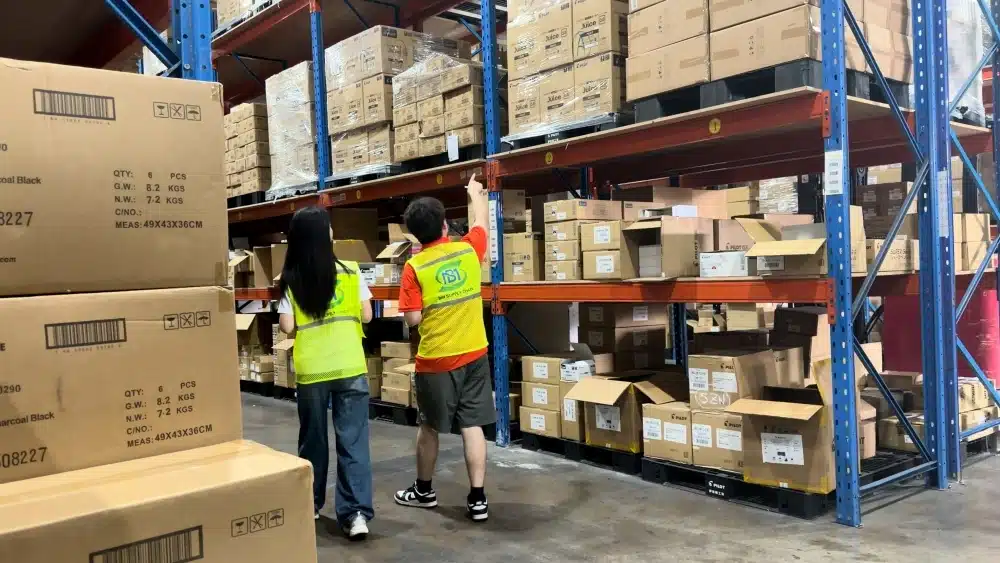
What Are China Warehousing Services?
China warehousing service is an advanced third-party logistics (3PL) services which handles goods at the warehouse to the point of delivery. The services are the core of the current global supply chains, particularly to businesses that source products to Chinese producers.
Centrally, they deal with physical storage, as well as end-to-end operational support. In the case of a warehouse, sellers deliver bulk products in factories to the warehouse, where they remain under professional management until a specific order is received to fulfill it. The most successful ones rely on cloud-based solutions to provide real-time tracking, automatic updates, and direct connections with the leading eCommerce systems.
The following is a good description of common elements:
| Service | Description |
| Storage | Secure inventory holding with optimized space utilization |
| Inventory Management | Real-time tracking, stock level monitoring, and reporting |
| Fulfillment | Order processing, picking, packing, and labeling |
| Shipping Coordination | Arrangement of global delivery options and carrier management |
These services enable sellers not to worry about the complexity of operating their facilities but be close to sources of production.
China warehouse and fulfillment services are used by many international businesses aiming to streamline their business and make logistics less complicated. This strategy will enable them to concentrate on sales and product development instead of daily activities in the warehouse.
Why Global Sellers Use Warehousing Services in China
The reason why global sellers resort to warehousing services in China is that the closeness to suppliers can generate operational benefits that can be easily measured and are not easy to duplicate in other locations.
In 2026, China is still the manufacturing powerhouse in the world. The warehouses built close to the major industrial belts in Shenzhen, Guangzhou, Yiwu and Shanghai ensure that transportation is quick and cheap between the production lines and storage. This arrangement promotes a shorter replenishment period and prompt reaction to the market demand.
The key benefits and their business impact are as follows:
| Advantage | Impact |
| Supplier proximity | Lower logistics cost |
| Efficient fulfillment | Faster shipping |
| Scalable operations | Business growth |
| Cost efficiency | Higher margins |
Competitive storage rates and flexible terms are also beneficial to the sellers, including free warehousing periods that help them to take the pressure off of cash flow during consolidation or seasonal peak periods. In the case of Amazon FBA sellers, fulfillment in China is usually quicker in terms of prep and replenishment and does not increase long-term storage costs. Similar benefits are enjoyed by store owners on Shopify through multi-channel routing of orders through a single central location.
What Services Are Included in China Warehousing
The basis is inventory storage and management. Products leave factories, are received and undergo receiving checks and are stored in climate controlled or general storage facilities. Warehouse management systems (WfMS) monitor all items in real time, updating inventory automatically and notifying teams when there is not enough inventory or expiring batches.
The essence of order fulfillment is taken care of by pick and pack operations. As a customer orders an item, warehouse operators select the specific items, package them based on brand guidelines or platform conditions (such as Amazon FBA prep), and add the required labels. Barcode scanning and optimized routing are some of the tools that enable high accuracy rates in this process.
Coordination of order fulfillment and shipping provides quick flow of orders within the warehouse to the end customer or to another fulfillment center. Providers handle the packing list generation to carrier booking of air, sea, or express packages.
The loop is completed by return handling. The returned goods are checked, re-stocked where appropriate, or refurbished or discarded, and can assist the sellers to reclaim value and keep precise records of inventory.
Capable providers are also distinguished by the value-added services. These may also involve kitting and bundling, special packaging, marking, placing of marketing literature, quality checks and even light assembling or personalization. With such services, sellers have the ability to differentiate their products without the need to have in-house teams.
How China Warehousing Supports Global eCommerce
China warehousing services are efficient in driving global eCommerce because it serves as an integration point that links manufacturing, inventory and multi-market distribution.
Cross-border shipping will be easier with inventory being located in China. The shipments are consolidated, compliant documents are prepared and arrangements made with the international carriers to deliver in the North American, European, Australian and other locations. This minimizes fragmentation and assists in managing cost.
Elimination of regional warehouses in early stages of growth as a result of inventory centralization. Sellers have a single central location of stock and channel-fulfillment. The WMS is integrated with Amazon, Shopify, and other platforms in real time to keep stock levels updated, avoiding overselling and stockouts.
Multi-channel fulfillment helps the sellers that are working at multiple marketplaces at a time. An order placed in any platform is automatically directed to the warehouse to be processed so that the branding and packaging are the same irrespective of the channel of sale.
One of the key advantages is scalability. Seasonal peaks, new product releases or demand spurts can be managed without much capital investment in new facilities. The providers merely increase and reduce the number of staff and the amount of space when the volumes change.
Key Factors to Consider When Using Warehousing in China
When deciding the warehousing partner to use in China, one must put into consideration a number of operational factors.
The location of warehouses is important. Plants located close to large manufacturing area or ports have quicker inbound logistics whereas the one with good international shipping networks has quicker outbound operations. When evaluating locations, take into account your key product lines and target markets.
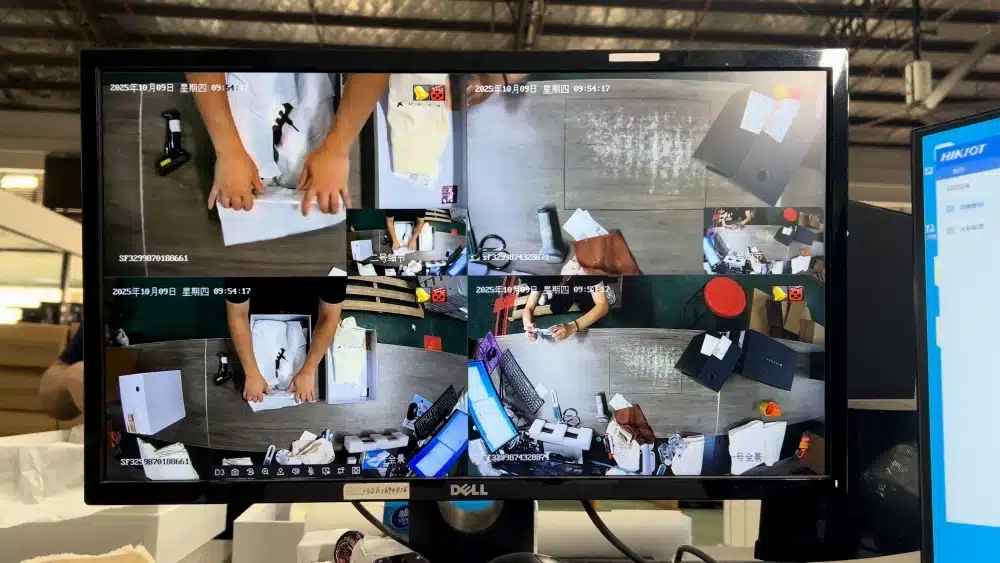
Visibility and efficiency are determined by technology infrastructure, especially the warehouse management system (WMS). Find cloud-based services that have API connections with your eCommerce websites, mobile scanning features, and a comprehensive reporting dashboard. Automated functions decrease mistakes and supply the real-time data required to make a decision with confidence.
The capability to fulfill must be in line with your volume and complexity of order. Consider speed of processing, pick and pack accuracy, value added services, and experience with your particular product types (fragile, apparel, electronics, etc.).
Price transparency is still a necessity. Demand transparent disaggregations of storage expenses, fulfillment expenses, value-added services, and any minimums or unseen expenses. Flexibility, e.g., in free warehousing terms, can make a considerable difference in cash flow of expanding businesses.
Common Challenges for Global Sellers
Collaborating with warehousing services in China comes with tangible benefits, but foreign sellers frequently face some operational challenges.
The language barrier and other differences in business can create barriers in communication. Having set, documented procedures and responsive account management curb the misconception.
The quality control must be continuous. Upstream supplier quality has a direct impact on what is received at the warehouse, even with professional warehousing. Brand reputation is secured by regular checks and standards accepted.
Time zone and cross-border logistics coordination complicates the situation. Delays in clearance of goods or transport schedules may affect delivery guarantees. These problems tend to be easier to handle by experienced providers who already have relationships with carriers.
The time zone differences imply that the response might not be received immediately. Establishing expectations at the beginning and updating via common digital platforms helps keep projects on track.
Best Practices for Working With China Warehousing Providers
Integrate systems like API-linked WMS to facilitate flow of data in real time and automatic processing of orders.
- Select providers who have a good track record in your industry and target markets.
- Integrate systems like API-linked WMS to facilitate flow of data in real time and automatic processing of orders.
- Keep up with inventory levels by using dashboards and scheduled reports to ensure a healthy inventory level.
- Allocation of inventory, strategy-based on seasonal demand, lead times and shipping routes to various regions.
Frequent feedback and performance appraisals enhance the relationship as time goes by.
Conclusion — China Warehousing Is a Strategic Advantage
The services of China warehousing give international sellers a strategic edge since they can have storage, fulfillment and logistics coordination in one effective system that facilitates scalable global operations.
These services lower the costs, lead times, enhance accuracy of inventory and save the precious time that could be used in the main business activities when applied in a thoughtful manner. As an international eCommerce supplier, Amazon and Shopify store owner, and sourcing team, which are planning to expand globally, professional warehousing in China is a viable method to create resilience and competitiveness in an ever-changing market.
With the realization of what these services entail in totality and the ability to assess partners in terms of location, technology and capabilities, and transparency, sellers can make warehousing a true growth driver and not merely a logistics cost.