Pick and pack fulfillment assists in managing small businesses to process orders at a better understanding by delegating the duty of picking, packing and delivering goods to an organized framework.
Manual fulfillment is used early on by many small businesses. But, with the growing order volume, it becomes time-consuming and error-prone to handle inventory, pack orders, and ship.
Assumptions many entrepreneurs have regard to the large size of companies: fulfillment solutions are appropriate only there. Practically, pick and pack fulfillment is frequently one of the most viable approaches to the small businesses to grow without burdening the operational complexity.
Pick and pack fulfilment allows the small companies to leave the artisan system of order processing and use scalable organised processes without introducing the new levels of complexity and overhead.
What Is Pick and Pack Fulfillment for Small Businesses?
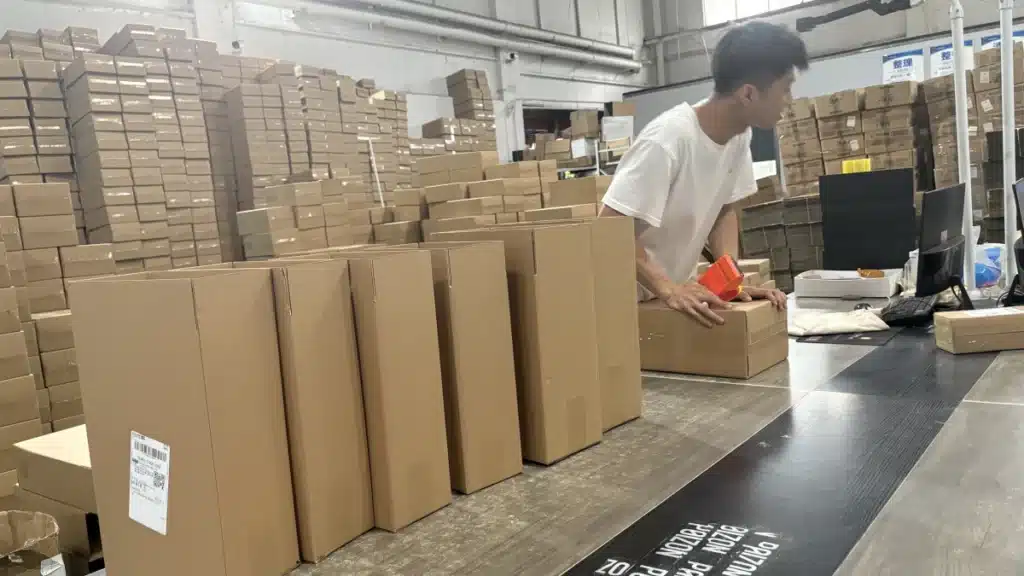
Pick and pack fulfillment is the outsourcing to the inventory selection process and placing the products in shipment. A fulfillment partner does all the work, instead of you or your team walking through storage space to collect order items during each order.
Core Process of Pick and Pack Fulfillment
This process is normally done in three steps all aimed at enhancing speed and accuracy:
| Step | Description | Benefit for Small Businesses |
| Picking | Selecting items from inventory based on order details | Improves accuracy and reduces missed or wrong items |
| Packing | Preparing orders with proper packaging and protective materials | Reduces damage during transit and creates a professional unboxing experience |
| Shipping | Dispatching orders with accurate labels and carrier integration | Saves time and often accesses better shipping rates |
In the case of small businesses (particularly those on Shopify or having graduated dropshipping to inventory maintenance) this step substitutes the disjointed manual order processing with a high-quality, repeatable process. Certain providers also are integrated with eCommerce so there is no data entry required into the warehouse because orders are automatically flowed into it.
Why Small Businesses Struggle with Fulfillment
Manual fulfillment is less efficient with the increase of the order volume. What begins as a trivial evening job to pack some orders soon turns into several hours of mindless work taking the eyes off product development, marketing, and customer relationship.
Common Challenges in Manual Fulfillment
The following pain points are encountered by small companies in eCommerce and young brands:
- Lack of storage area- Home garages or small offices often become overcrowded and this causes unorganized inventory and stockouts.
- Manual packing – It is perceived to take time and make orders turnaround slow and create the probability of mistakes or damaged products.
- Order mistakes — Missing, incorrect or wrong products cause customer distrust and result in returns or bad reviews.
- Time considerations — Owners spend nights and weekends taking orders to attend to other things as opposed to expanding the business.
- Scaling challenges — Manual systems are overwhelmed by sudden surges in sales (due to a promotion or seasonal demand), leading to some delays and stress.
The challenges are usually restricting the growth and operational efficiency. Most small business owners complain that they are stuck- they would sell more but are scared of the burden of running a business that will bring success.
How Pick and Pack Helps Small Businesses Scale
Pick and pack fulfillment enables small businesses to better manage growth through transferring the monotonous logistics role to the professionals with the space, systems and expertise to do it.
Key Benefits for Small eCommerce Businesses
The following are some of the most significant benefits:
- Improved automation and less manual labor – Orders are automatically synchronized and the warehouse workforce takes care of picking and packing, leaving you more time.
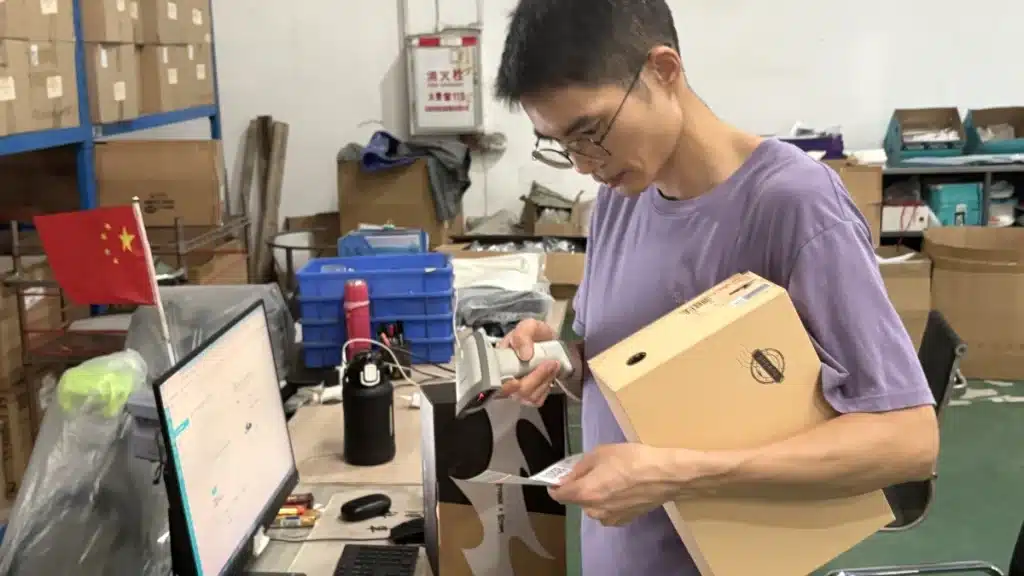
- With improved accuracy – The barcode scanning and verification systems help in reducing errors that are usually experienced in manual setups.
- More expedited order processing – Pro teams can get the orders fulfilled either on the same-day or the next-day, enhancing customer satisfaction.
- No costly scaling is required – You will not need to rent warehouse space or work full-time to grow your orders since scaling to dozens, then up to thousands of orders per month with ease.
- Volume Discounts and Pro Tools – Fulfillment partners are likely to offer volume discounts and allow real-time monitoring.
Small businesses usually use scalable pick and pack fulfisment in businesses because they need to scale away manual systems to structured systems. This change assists in the sustainable growth and the maintenance of the overhead at reasonable levels.
When Should a Small Business Start Using Pick and Pack?
Every company does not require fulfillment service right away. Eariness may be unnecessary and excessiveness leads to bottlenecks which are detrimental to customer experience.
Key Indicators It’s Time to Adopt Pick and Pack Fulfillment
Keep a watch on these practical signs:
- Increasing order volume- It happens when manual operations begin to require over a couple of hours each day or you are frequently making shipments of 50 or more orders a day.
- Late deliveries or wrong items — Increasing customer complaints of incorrect packages, broken packages or delayed deliveries.
- Little time to do core tasks –When product sourcing, marketing or business strategy is being pulled by fulfillment, you have limited time to execute it.
- Storage problems –Too much inventory in your present area or too hard to sort and locate.
- Seasonal spikes -With difficulty managing the demand surges without compromising on sleep or accuracy.
Outsourcing fulfillment at around 50-100 orders per day (or once it starts routinely consuming growth time) is often what makes the most significant difference to many small Shopify sellers and brands who are leaving dropshipping and switching to their own fulfillment model.
Cost Considerations for Small Businesses
Prices: Cost is one of the biggest concerns of small businesses considering pick and pack services. Knowing the breakdown will assist you to compare options and compute possible savings.
Main Cost Components in Pick and Pack Fulfillment
Typical fees include:
- Pick Fee — Paying a fee to select the first item (usually $1.50 -4.00 depending on the provider and amount).
- Pack Fee – Includes packaging, labor, and protective inserts (in some cases are included in pick fee).
- Storage – Charge per month depending on space occupied (shelf, bin, pallet); most storage providers have free storage up to 30 days.
- Shipping: The cost of the actual carriers security plus any handling fee; it might be dramatically reduced by shipping volumes.
- Other Services — Custom packaging, kitting, labeling or inserts (typically per-item or per-order services).
Though in short term there will be out-of-pocket expenses, outsourcing usually saves on total costs in the long-run with reduced labor time, reduced errors and returns, and per-unit shipment costs as carrier deals are negotiated. The small businesses must seek transparent pricing at low monthly lows or none at all to make it affordable at its early stages of growth.
Common Mistakes Small Businesses Make in Fulfillment
There are numerous small business faults that could be easily circumvented when dealing with fulfillment, resulting in stunted developmental growth or added time expenses.
Typical Mistakes to Avoid
- Spending too much time manually performing fulfillment, even once orders start to mount.
- Misorganised inventory resulting in a stock out or excessive stock.
- Disregard the efficiency of packaging with increases in rates of damage or unprofessional presentation.
- Calculating less than full shipping and fulfillment when making promotional/growth plans.
- Selecting solutions based on cost without examining integration, reliability or scalability.
By knowing what common pitfalls are to avoid, small eCommerce owners will be better placed to make smarter decisions sooner and create a more robust operation.
How to Choose the Right Pick and Pack Solution
To make the appropriate decision about the solution, it is necessary to consider a range of factors as well as not only the price.
Decision Criteria for Small Businesses
Consider these important factors when comparing providers:
- Integration – Automatic synchronization of orders and updates of the inventory with your eCommerce platform (like Shopify).
- Pricing -Open form format that has straightforward fees and no unexpected minimums that can create strains on cash flow.
- Scalability – Capacity to bear expansion, seasonal bursts and probable international shipping with significant inconveniences.
- Reliability – Established accuracy, speedy turnaround and good customer services.
- Value-Added Services – Their custom packaging, kitting or labeling options that suit your brand requirements.
Be sure to demand demonstrations, give references to similar-sized businesses, and begin with a small sample quantity, where feasible. The idea is to have a partner, which will develop with you, as opposed to a partner, which will generate new headaches.
Conclusion — Small Businesses Need Scalable Fulfillment
Pick and pack fulfillment is an efficient method that enables small businesses to enhance efficiency and scale up operations.
Instead of dealing with all the fulfillment procedures by hand, companies may consider integrating organized systems that minimize the workflow and enhance precision.
Likewise, a switch to pick and pack fulfillment is a significant move towards sustainable growth, as the volume of orders grows. It enables entrepreneurs to concentrate on their priorities, producing products, meeting customers, and promoting their brand, and logistics professionals take care of the remaining part.