
Ecommerce sustainable packaging is now completely scalable when the sourcing of materials, the structure itself, and the fulfilment processes are aligned in the first place. The developed manufacturing platform in China delivers a steady supply of certified goods with eco-friendly qualities that fulfill the requirements of high-volume online stores as well as facilitating effective warehousing and shipping.
The fact is simple; ecommerce packaging sustainability can only work when it is perceived as a supply chain decision and not a design choice. The main assumption that many ecommerce brands make at first is that environmental-friendly products can be more expensive and unstable in their supply. Practically, when the sourcing and fulfilment teams are coordinated at an early stage with efficient suppliers, such solutions not only provide a benefit to the environment but also operational predictability.
Sustainable ecommerce packaging is not merely the use of recyclable materials, but the management of sourcing of the materials, structural design, compliance standards and the fulfillment efficiency to eliminate the negative impact on the environment at the expense of cost control and operational stability.
Successful sustainable packaging in ecommerce is a unified supply chain approach to the sourcing of eco-friendly materials, structural package design, and fulfillment.
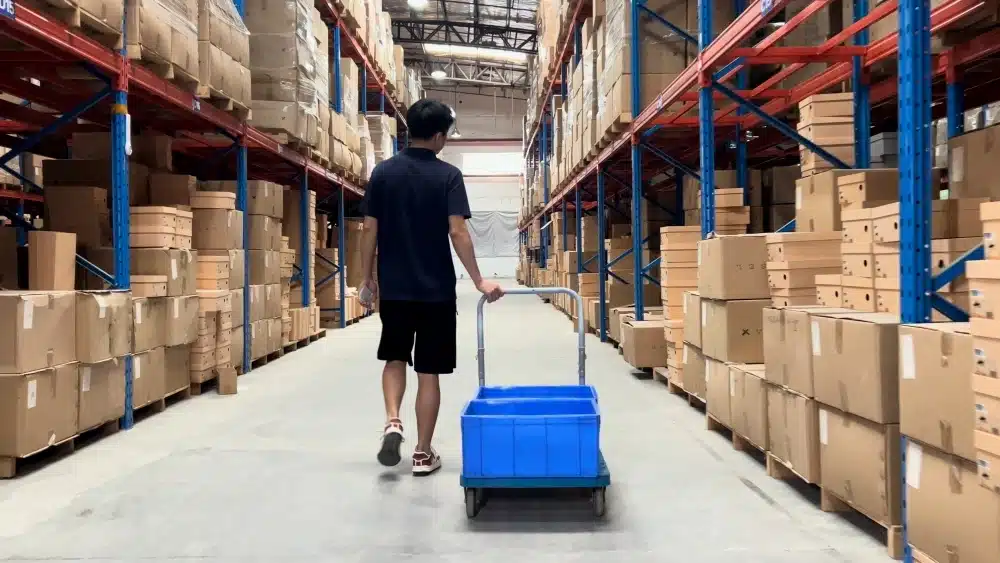
Why Sustainable Packaging Is Now a Strategic Ecommerce Requirement
Sustainable packaging is no longer an option of branding, but an irrevocable part of risk management and competitive positioning in ecommerce.
Regulatory Pressure
The Packaging and Packaging Waste Regulation of the European Union (PPWR) which came into force in February 2025 and became effective in August 2026 has binding requirements on the recyclability, recycled content, and waste reduction of all the packaging that is on the EU market. Brands into Europe would have to prove compliance or be blocked at access to market. Additional enforcement of the green packaging regulations in the express logistics in China supports further the necessity of the forward planning.
Consumer Expectations
Gen Z and millennial shoppers, especially in the US and the EU, are increasingly considering the sustainability of packaging in their buying behavior and loyalty to a brand. Open communication about material selection is a direct impact on the frequency of purchase.
Marketplace and Platform Expectations
Amazon is still broadening the demand on recyclable delivery packaging and frustration-free specifications, compensating optimized format with elevated visibility and reduced charges. Shopify and Tik Tok Shop brands are under increasing pressure of direct-to-consumer buyers, who demand clear sustainability credentials.
Operational Impacts
Well-constructed sustainable packaging will minimize losses of the product in transit, thus, minimizing the rate of returns and the reverse-logistics expenses. Dimensional weight is also optimized at the cost of direct reduction of shipping costs.
| Factor | Why It Matters in Ecommerce |
| Consumer expectations | Drives purchasing decisions |
| Regulatory pressure | Avoids compliance risk |
| Brand positioning | Builds premium perception |
| Return rates | Sustainable packaging can reduce damage |
| Logistics efficiency | Optimized structure lowers carbon footprint |
Eco-Friendly Packaging Materials Available from China
China has one of the most developed and scalable solutions of eco-friendly verified packaging and other materials depending on ecommerce volumes.
Manufacturers in the coastal provinces are capable of regular production of certified materials that facilitate both the high-quality unboxing experiences and top-throughput fulfillment centers. An advantage of brands that would be interested in eco friendly packaging in China is the implemented quality systems, such as the extensive FSC certified packaging supplier China networks and the latest production lines that would be able to deal with tailor made specifications.
Paper-Based and Fiber Solutions
Carton and mailer applications are dominated by FSC-certified paperboard and recycled kraft corrugated. These materials offer structural integrity in addition to complying with the global standards of recyclability.
Molded Pulp and Protective Formats
A sustainable plastic substitute is the Molded pulp, which uses sugarcane bagasse or bamboo as its material but then provides excellent shock protection to items that are delicate and do not contain plastic materials.
Compostable and Low-Impact Films
A replacement of the mailers and film can be made by compostable mailers and biodegradable film alternatives, which should be applied to clothing and lightweight products, where the flexibility is critical.
| Material Type | Sustainability Level | Best Use Case | Cost Impact |
| FSC paperboard | Certified sustainable sourcing | Premium retail packaging | Moderate |
| Recycled corrugated | High recycled content | Shipping cartons | Low |
| Molded pulp | Plastic-free protection | Fragile products | Moderate |
| Compostable mailers | Plastic-free alternative | Apparel | Moderate |
| Biodegradable film | Limited durability | Low-weight goods | Variable |
These plastic free ecommerce packaging solutions and ecommerce biodegradable packaging solutions are designed to be part of the current supplier ecosystem when specifications are established early.
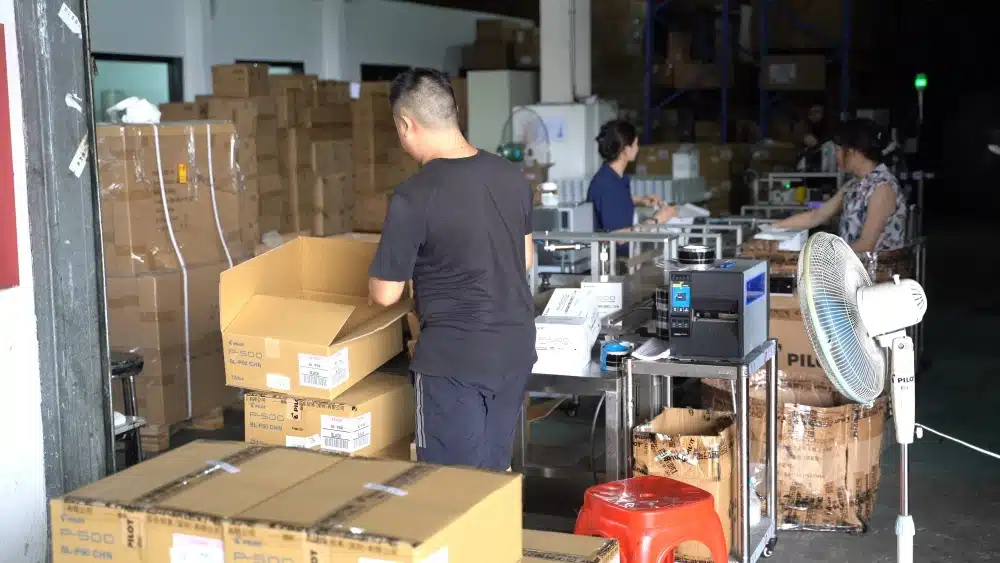
Plastic-Free and Low-Plastic Alternatives for Ecommerce
Low-plastic and plastic-free packaging formats have attained the performance levels that can be directly substituted in the workflow of most ecommerce.
The abandonment of traditional poly mailers and bubble wrap no longer involves significant tradeoffs with respect to protection or speed. Most shipping situations are now well addressed with the help of honeycomb paper wrap, paper-based void fill and reusable corrugated options.
| Traditional Option | Sustainable Alternative | Environmental Benefit |
| Bubble wrap | Honeycomb paper wrap | Plastic reduction |
| Poly mailer | Compostable mailer | Lower landfill impact |
| Plastic tape | Paper tape | Easier recycling |
| Foam inserts | Molded pulp | Fully recyclable |
Most of these plastic-free ecommerce packaging options increase the efficiency of the entire logistics when compared to dimensional weight and stackability.
Cost vs Sustainability: What Brands Should Realistically Expect
Sustainable online shopping packaging is not often cost-effective in the short term, but a strategic action can offset or even lower the overall landed prices in the long term.
FSC or compostable material premium usually falls between modest and moderate based on the volume and complexities of specification. Initial difference is often compensated by consolidated sourcing between multiple SKUs and structural optimization which minimizes material usage.
Practical Cost-Control Approaches
- Increased minimum order of core materials would entrap reduced unit prices as it would stabilize supply.
- Reducing material usage and dimensional weight costs through right-sizing cartons and mailers.
- Product line certification cost is distributed by buying standardized components in large quantities.
| Strategy | Cost Impact | Sustainability Impact |
| Switching to FSC | Slight increase | High brand value |
| Reducing packaging size | Cost reduction | Carbon reduction |
| Eliminating secondary plastic | Neutral | Strong eco perception |
| Bulk material sourcing | Cost control | Stable supply |
Skilled procurement departments regard the packaging sustainability as a total-cost-of-ownership approach as opposed to a line-item comparison.
Integrating Sustainable Packaging into Fulfillment Operations
The success of sustainable packaging is achievable only when it can be integrated in the day-to-day warehouse operations and global shipping needs.
Automated sorting systems, labeling adhesion performance, and stability of the stack during palletization are all dimensional compatibility issues that define whether a material change will enhance or disrupt operations. Before rolling out new formats, warehouse teams have to be tested in actual throughput conditions.
When Sustainable Packaging Fails
- substances that retard picking or packing rate.
- Formats that damage during transit.
- Surfaces that are incompatible and interfere with labeling of WMS.
When Sustainable Packaging Succeeds
- Solutions that do not reduce fulfillment velocity.
- Constructions that save the dimensional weight without compromising on the protection.
- Materials that can help in efficient order consolidation and multi-item packing.
The solution to sustainable fulfillment will be provided when the packaging engineer, warehouse operator, and sourcing team will work in alignment at the specification stage.
Common Mistakes Ecommerce Brands Make
Even good intentions of sustainability practices are faced with failure when some realities are ignored.
- Choosing materials provided by marketing arguments only without checking the certifications of the suppliers and audit trails.
- Adopting structural modifications without drop-testing in the entire distribution network.
- Extrapolating the true performance of compostable materials in different humidity and temperature states during international transportation.
- The eco-credentials of visual preference rather than performance in automated fulfillment settings.
- Switching suppliers often without stability checking on lead times and quality consistency.
The pitfalls can be prevented by a planned supplier qualification and pilot phasing programs.
Conclusion — Sustainability Requires Supply Chain Alignment
Ecommerce sustainable packaging is not a material solution that takes place once. It is an eco-friendly sourcing, structural packaging engineering, and integration of operational fulfillment process.
Companies integrating ecommerce packaging sustainability strategy in their sourcing and logistics planning realise quantifiable achievements in compliance preparedness, predictability, and brand recognition. The most effective implementations do not perceive a green supply chain China ecosystem as some extension but as packaging.
In cases where material and design choices, and meeting requirements are made at the outset, sustainable packaging provides sustainable operational and environmental benefits without reducing scalability and profitability.