
Viral traffic is a possibility on Tik Tok shop, it is just a matter of smooth inventory preparation and fulfillment stability otherwise it will soon be a liability to the performance.
Flash sale and viral spikes on Tik Tok Shop cannot be structurally comparable with the performance of the average ecommerce demand. Posts by influencers or even live sessions can increase the volume of orders by 5x-20x of normal volume in a few hours, with or without notice. This spike traffic causes severe pressure on operations: stockouts cause order cancellations, refunds spike, late dispatches increase, and seller metrics decrease at a rapid rate. A lot of sellers are making the assumption that exposure through the internet will automatically result in sales. The unready partaking in practice transforms the momentum into punishments. At Tik Tok shop, stock preparedness dictates how far a flash sale will gain momentum or result in a penalty.
The algorithm used by the platform is extremely sensitive to such performance indicators as Late Dispatch Rate (LDR), Seller Fault Cancellation Rate (SFCR), and the general Account Health Rating (AHR). Stocks out cancellation or any delay greater than 2 business days to dispatch may constrain volume of order, visibility, or enforcement. Spikes fulfillment speed is not a choice, it is a fundamental part of ensuring stability of accounts to continue the traffic flow.
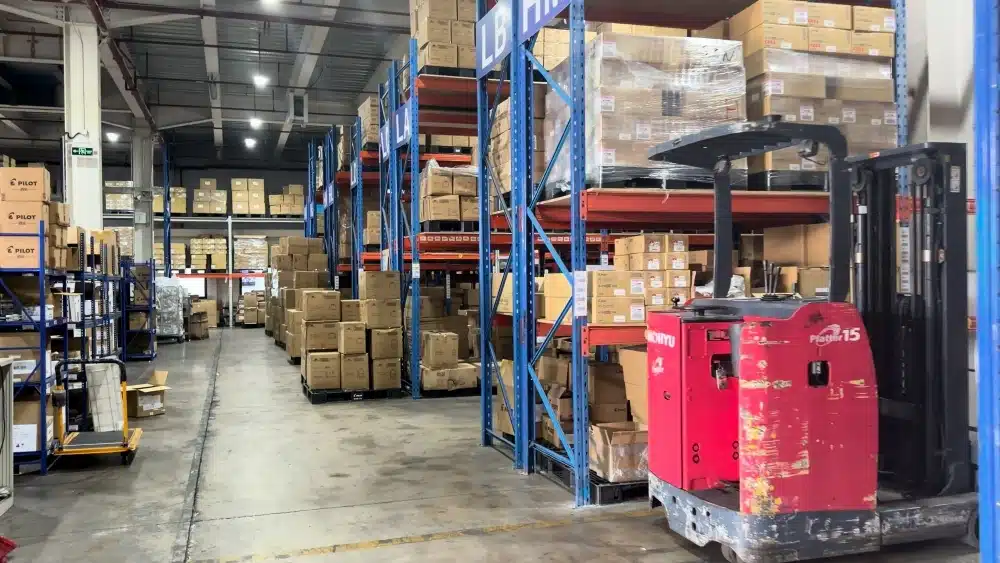
How Flash Sales Differ from Normal Ecommerce Demand
The economic forces behind Flash Sales on TikTok Shop are entirely different compare and contrast with consistent ecommerce platforms.
Tik Tok does not come in waves but spikes and thus the traffic is sudden and unpredictable. High conversion rates in compressed windows, which might be measured by innovation in only hours or a day, can be stimulated by the mention of influencers, livestreams, or promotions on the platform-wide, whereas demand flows are unstable and can only be predicted with certainty in the short-term.
Here’s a clear comparison:
| Demand Pattern | Traditional Ecommerce | TikTok Flash Sale |
| Traffic growth | Gradual | Sudden spike |
| Order volume | Predictable | Volatile |
| Inventory risk | Moderate | High |
| Fulfillment pressure | Stable | Extreme |
All these differences require proactive planning. Reactive restocking through gradual channels is possible, although the volatility of TikTok demands pre-positioned inventory and scalable systems in case of extreme pressure, which will not disrupt business operations.
What Happens When Inventory Is Not Prepared
Inventory not ready in the case of a flash sale creates a foreseeable ripple effect of negative impact on the performance of the sellers.
Stockouts cause orders cancelled immediately which swells SFCR and causes refunds. Slow replenishment results in late deliveries, which move LDR over the limits (usually 4 percent or more is an invitation volume limit or a penalty). The delays in tracking are due to manual processing overloads that lead to high damage returns and additional count of refunds.
It might be thought of as the organized subdivision:
| Inventory Failure | Immediate Impact | Platform Consequence |
| Stockout | Order cancellation | Performance metric drop |
| Delayed replenishment | Late shipment | Penalty risk |
| Manual processing overload | Tracking delay | Account flag |
| Inconsistent packaging | Damage returns | Refund rate increase |
These problems compound rapidly: an increasing rate of cancellations and decreased AHR, lack of algorithmic visibility and future traffic decline, a would-be growth point turns into long-term underperformance.
Inventory Forecasting for Viral Moments
The survival of TikTok flash sales is based on proper forecasting and the ability to take advantage of it.
Begin with a historical sales analysis in order to define the minimum demand. The influencer campaign layer is framed with the following information: previous performance of comparable creators, budget estimates of the ads, and reach multipliers estimates. Factor supplier lead time and production capacity to determine realistic periods of replenishment.
The important forecasting factors are:
| Forecasting Factor | Why It Matters | Risk If Ignored |
| Past performance | Baseline demand | Underestimation |
| Campaign scale | Spike multiplier | Inventory gap |
| Lead time | Replenishment delay | Stockout risk |
| Supplier capacity | Production speed | Inability to restock |
Take ownership: embrace the viral potential as a planned eventuality and not an unexpected occurrence. Use actual sales velocity data (as opposed to mere hunch) and develop hostage situations associated with various levels of spikes to make decisions about safety stock and positioning.
Inventory Positioning Strategy for Flash Sales
The greatest risks are softened by strategic positioning of the inventory when there are the outbreaks of a virus.
Pre-stock in the US (or its warehouses in the target market) to reduce fulfillment times and achieve dispatch SLAs. Pre-shipping of bulk before campaigns, bunching orders with the help of trusted China fulfillment center such as those, provided by BM SUPPLY CHAIN, where the process of checking, quality planning and pre- shipment as a batch occurs effectively before the shipment. The method decreases the variability in lead time and helps to restock with greater speed.
Buffer inventory is simply a calculated buffer against surprise surges whereas SKU simplifications (investing in fewer variants when there is a flash sale) reduces the complexity of picking, packing, and replenishment. It is designed to achieve preparedness: the position stock that can be dispatched in 2 or less business days, insuring measures during 45-minute pressure points.
Operational Scalability During Viral Spikes
Scalability is not a highlight but it is, what means the difference between penalty evasion and long-term growth.
Picking and packing become congested during the warehouse activities when there is a rush in orders. Without planning, efficiency of batch processing decreases, there are delays in carrier pickups and manual systems cannot keep up under capacity.
Some of the preparation strategies are:
| Operational Element | Flash Sale Risk | Preparation Strategy |
| Warehouse labor | Overload | Temporary staffing plan |
| Packing materials | Shortage | Safety inventory |
| Carrier pickup | Delay | Pre-book slots |
| Order processing | System lag | API automation |
Pre-campaign stress-test operations: to detect bottlenecks in carrier coordination, laboratory, and materials-based coordination, simulate the spike volumes of operations. APIs and plugins provide an automated flow of orders and prevents mistakes, as well as allowing them to track orders in real-time.
Buffer Inventory and Safety Stock Planning
The margin is obtained through the buffer inventory and safety stock which ensures that the variability in demand is not absorbed at the cost of overcommitting capital.
The simplest approach to calculating safety stocks begins with: Safety Stock = Z-score(desired service level as z-score) × Standard Deviation of Demand × √Lead Time (Fast Forward, 1990). Modify viral spikes by boosting the demand variability factor on the basis of campaign multipliers of the previous periods.
Reorder point =(Average Sales per day x lead time) + Safety Stock. Distribute throughout: retain core buffer in the US to dispatch quickly, with supply lines in China.
Excessively small buffer levels lead to stockouts and penalties; excessively large leads to the capital and holding costs. The balance is achieved through the calibration of data-based and running capital efficiency- use previous spike data to establish realistic margins.
Common Mistakes Sellers Make During Flash Sales
Even seasoned sellers make business mistakes that sabotage flash sale performance.
- An organization can create ads or influencer marketing campaigns without checking existing stock levels and renewal dates.
- Low ratings of influencer influence, thinking that reach is linear to the extent of reach.
- Disregarding the preparation of packing, which resulted in a claim of damages during the high volume.
- Using the method of slow cross-border delivery rather than local stock that has been pre-positioned.
- Lack of observing dashboard metrics on the spot, lack of detecting early pressure indicators.
These errors are multiplied: one missing step can increase LDR or SFCR, open the door to volume caps, and subject algorithmic trust-making to long-term recovery work.
Conclusion — Viral Traffic Requires Supply Chain Discipline
The opportunity and operation weakness are enhanced by flash sales via Tik Tok shop. It allows sellers to match their inventory discovery, warehouse location, and delivery capacity to better transform the viral traffic into sustainable expansion.
Ready is not fancy, but it is firm. The flash sales of TikTok encourages supply chain discipline rather than improvisation, which admires volatility planners reward metrics and their visibility, which carry the momentum throughout the spike of volatility.