
The high rate of returns on Tik Tok shop is not only a customer service problem but also a fulfillment, quality control, and stability operation problem. Most cross-border sellers at first ascribe too much returns to exacting consumers or unrealistic demands. But practically the statistics tell otherwise: the majority of returns are due to lapses in the sourcing, inspection, packing, and shipping of products.
The overwhelming source of the traffic of Tik Tok Shop is short-form video followed by impulse purchases. Consumers watch one 15-second video and experience the imperative of a trend or flash sale and make a purchase without extensive research. Balance cross-border shipping durations, which tend to vary between 7 and 14 days (or more during peak time) and you have a frustrator of disappointment in the event that the product is delivered spoilt, inconsistent with the video, or unusually late. This is worsened by packaging that collapses during transit, boxes are received in a crushed form, items within the packaging move or labels break off.
Tik Tok Shop will tend to experience high returns due to lapses in its operations, rather than the behavior of the customers.
These returns directly strike major metrics. Tik Tok tracks 60 day Non-Buyer Fault Return and Refund Rate (seller- or logistics-related damage or wrong item) which contributes to your Shop Performance Score (SPS). An increase in NBFR reduces SPS, which may inhibit product visibility in the recommendations, restrict eligibility to flash deals, affiliate campaigns, or Tik Tok-funded events, and renew interest in account health. When expectations are not verified, negative feedback builds up and the general traffic is suffering, the dispute rates go soaring. This is most easily experienced by sellers that are scaling through viral marketing: an influx of orders will uncover the weak spots in the growth of fulfillment and turn temporary gains into penalties.
How Return Rate Impacts TikTok Seller Performance
The return rates do not exist in isolation and they are part of the larger assessment of the reliability of the sellers by TikTok.
Tik Tok assesses the sellers by performance indices, such as return rate, refund rate, dispute rate and negative feedback. These enter into Shop Performance Score (SPS) and affect Account Health Rating (AHR) indirectly via compliance and customer experience signals.
| Metric | What It Reflects | Account Risk |
| Return Rate | Customer dissatisfaction (especially non-buyer-fault) | Visibility drop, lower SPS eligibility |
| Refund Rate | Order failure or unresolved issues | Seller score reduction, promotion limits |
| Dispute Rate | Unresolved claims or escalations | Account warning, restricted features |
| Negative Review Rate | Trust decline from poor experience | Conversion impact, algorithm suppression |
None of the Buyer Fault Return and Refund Rate is more sensitive to the algorithm as it identifies the issue on the seller end (damaged goods, misplaced item, failed delivery). Once this goes over category baselines, the SPS is declining and an organic reach drops and access to high-valued programs is restricted. The agents that disregard this cycle experience compounding effects: impressions reduce and begin to be desperate on which the ad is scaled, and upon doing it, it generates volume and weak fulfillment, further increasing rates.
Why TikTok Shop Often Has Higher Return Rates
The annual turnover rates of Tik Tok Shops are often higher than the search engines or the conventional ecommerce applications due to the way customers land up to the purchase.
The fundamental distinction is rooted in the buyer behavior: short-form video content makes people make impulsive purchases with little due diligence.
| Platform | Buyer Behavior | Return Sensitivity |
| Amazon | Research-driven (reviews, comparisons, detailed listings) | Moderate |
| TikTok Shop | Impulse-driven (video hooks, trends, FOMO) | High |
| Traditional Ecommerce | Mixed (search + browsing) | Medium |
Shopping in Tik Tok frequently occurs a few seconds after viewing one of the creators with a demo or live flash world sales. Having little time to read descriptions or to enlarge the picture and to look through a photo presupposes a formation of expectations based on the edited clips and not on the actual reality. The items that are driven by trends explode overnight, overloading unprepared supply chains. A further level of restraint is added by cross-border shipping: the US buyers are accustomed to the acceleration of Amazon but face delays in transit, and more aggressive customs, which breed impatience. The needless perception of risk at the point of sale is reduced by in-app checkout low-friction psychologically, and the disappointment over the discrepancy between expectations and reality rises.
Operational Causes of High Return Rates
The bulk of the payments in TikTok Shop arise not due to some particular product defects but due to problems in the structure of fulfillment.
When systems are not locked down, little mistakes would result to customer dissatisfaction.
| Operational Issue | How It Causes Returns |
| Poor quality inspection | Malfunctioning or erratic products delivered. |
| Inconsistent packaging | Goods get spoiled in transit changes. |
| Wrong SKU labeling | Wrong item/ variant of a product shipped. |
| Slow shipping | Impatience by customers results in request of cancellation/refund. |
| Tracking delay | Mistrust and premature quarrels. |
These have chain reactions. A lightly inspected production got minor flaws; video-hyped anticipations transform even minor problems into big problems. Poor packaging does not last in international handling process, resulting into squashed boxes. Variables lying Fixed SKUs (and variant lines: sizes/colors) cause mis-item claims. Lazy or hazy tracking destroys confidence, and the slightest delay is converted into total turnover. These gaps are only widened by the fact that cross-border sellers require a series of handoffs to be used involving factory to export to US last-mile, a series where the probability of errors remains high despite lack of strict control.
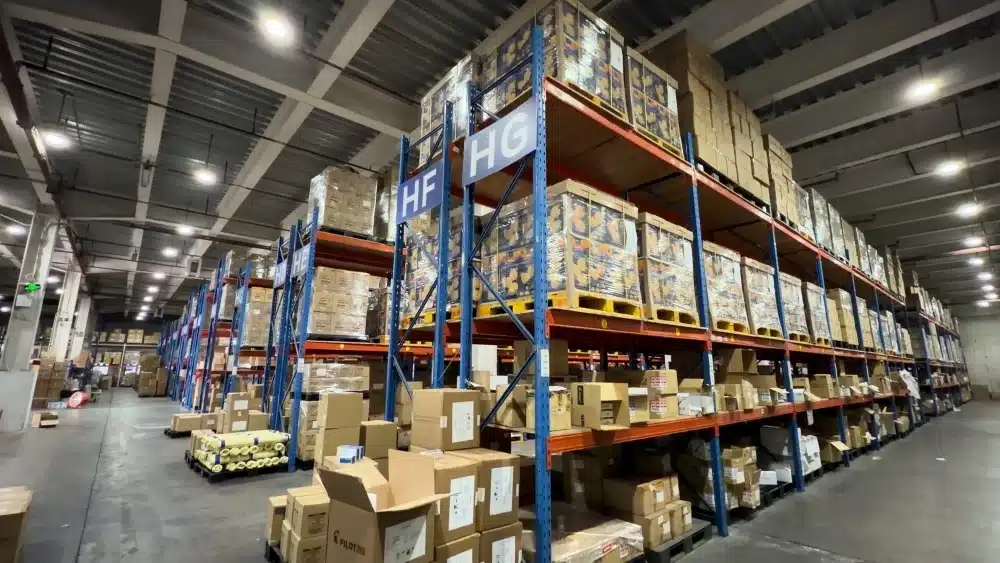
A systematic China fulfillment center can deal with most of these root causes with the centralization of inspection, labeling control and packaging uniformity before export which thus brings down variability common to fragmented supplier-direct models.
Packaging & Quality Control as Return Prevention
Protective packaging and large amounts of pre-shipment quality control are some of the most effective solutions to reducing frequency of returns.
Accustomed operators regard QC and packaging as inadmissible points in the delivery chain.
Defects are identified at the stage of pre-shipment- inspection-visual inspection, functional tests and batch sampling. Mix-ups are prohibited by SKU verification operation (barcodes scanning during pick-and-pack). The standard of protective packaging is massive when it comes to the cross-border: bubble wrap, corner guard, solid outer box, and void fill minimize damages posed by handling and vibration. The batch consistency will ensure that all components are the same as those approved by the sample presented in videos.
Integration of such steps to create fulfilled systems reduces the error rates significantly. In cases where outbound QC is stringent the returns on quality matters are reduced; in cases where packaging resists transport damages are reduced. This sphere of operation provides explicit aid to the lower NBFR and the higher SPS directly.
Reverse Logistics Strategy for TikTok Shop
Superior reverse logistics transforms returns of pure cost centers to manageable procedures that safeguard margins and buyer confidence.
The cross-border sellers have a decision to make; use direct China returns (slow, expensive) or establish localized handling.
| Return Strategy | Benefit | Operational Impact |
| US return warehouse | Faster refund processing | Better buyer trust, lower dispute escalation |
| Consolidated shipping | Lower per-unit return cost | Centralized control, easier tracking |
| Re-inspection | Identify resalable vs. damaged | Reduce waste, protect margin |
| Refurbish & restock | Recover value on lightly used items | Improve ROI, offset refund losses |
A US-based reply accelerates resolution (so important to SPS customer service metrics) and is an indicator of reliability. Concentrated shipping by the use of the preferred carriers reduces the cost and the go-around can be re-inspected centrally, to examine the condition, cleaning, repackaging where possible. Refurbish decision makes a trade off between recovery and resale risk; liquidation deals with unsalvageable inventory. The trick here is the balance of costs: US faster handling will make the handling side more trustworthy and quarrelsome, whereas the centralized control will make the reverse logistics effective.

How to Reduce Return Rates Proactively
To cut down on returns, it is necessary to change the presence of reactive returns to preventive actions.
- Make product descriptions more realistic adding correct sizing charts, information about materials and numerous real angles (no heavy filters and, therefore, misleading).
- Include actual expectation messages in listings and videos- state cross-border transit time, it may have some minor differences.
- Verify enhancing QC prior to export; multi-point check and photo records.
- To enhance package strength, simulate drops, reinforced material must be used on sensitive products.
- Introduce position inventory that is nearer to US market through local warehousing to reduce the length of delivery.
- To identify patterns (ex: sizing vs. quality), see all Seller Center monitors return reasons, and correct sourcing/inspection.
This prevention attitude views returns as warning signs, but not a cost of doing business.
Common Mistakes Sellers Make in Returns Management
Another common feature of Tik Tok sellers that harm their stability is their poor management of returns on the ground.
- Taking returns as a customer problem, rather than examining the root cause of the fulfillment.
- Left-hand functioning According to Data on Seller Center left-hand reason: Seller Center does not record data on return reasons.
- Failing to construct a US return handling system, which would subject the system to slow cross-border reverse flows that are detrimental to SPS.
- Blasting advertisements without stabilizing fulfillment also beforehand, throwing large masses on feeble ground.
- Creating inconsistent suppliers with inconsistent QC resulting in batch inconsistency.
These errors work together: uncontrollable root causes increase rates, which make it hard to see, leading to more scrappy scaling, which leads to more desperate scaling, which causes more root causes, which trigger higher rates, which reduce visibility, which causes more desperate scaling, which triggers it and causes more root causes, which causes higher rates, and creates a vicious cycle.
Conclusion — Returns Are an Operational Indicator, Not Just a Refund Event
Huge turnover is an indication of instability in the sourcing system, fulfilling systems, and logistic systems. By viewing returns as data feedback, sellers, which include finding patterns in returns, improving quality control, packaging, improving reverse flows, etc., enhance long-term performance much better than sellers that concentrate on prompt refunds.
Best Effective Tik Tok Shop returns administration must have organization, packaging discipline, quality control, and reverse logistics design, rather than responsive refunds processing. When those components maintain a match, the return rates stabilize, SPS becomes stronger and the health of the accounts constitutes sustainable scaling.