
The cost of warehousing in China is not a one-price fixed price – it is a price consisting of storage, handling, and fulfillment costs that depend on the volume of inventory, frequency of order, and the complexity of operations. Most companies believe that warehousing in China is cheap and easy but the actual situation is that the price is determined by the length of storage, the level of handling, and quantity of orders.
The sellers on Shopify, Amazon, or Tik Tok Shop, as well as dropshipping operators and procurement managers, tend to find that the clear vision of these layered charges can save them better budgeting and prevent unpleasant surprises. China is a great place to store with its sophisticated logistics system and closeness to the manufacturers, warehousing is a strategic alternative, so long as you are aware of the specifics of the pricing mechanisms.
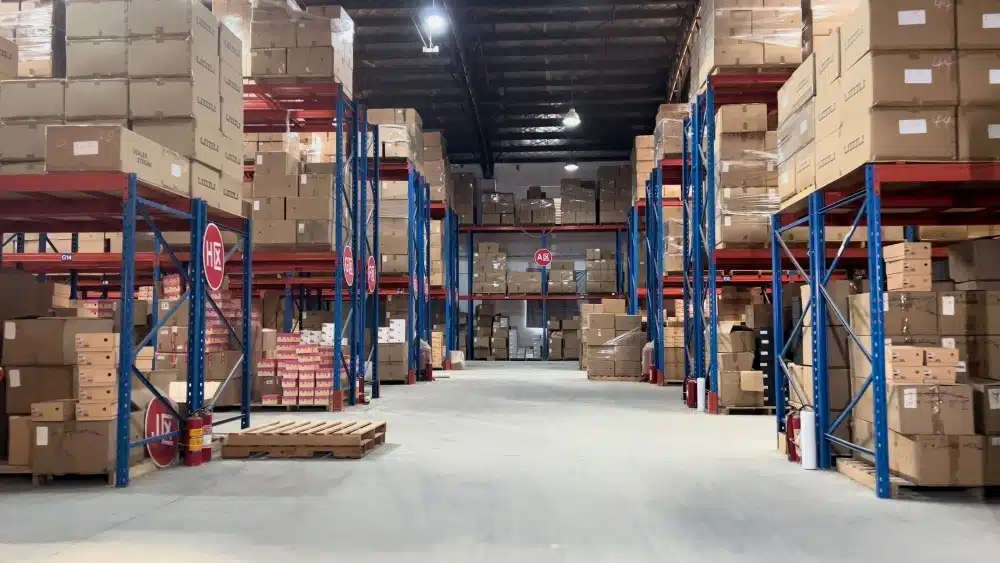
How Much Does Warehousing Cost in China?
Realistic warehousing pricing in China will vary according to location (coastal such as Shenzhen or Shanghai will be more expensive than inland), warehouse type (standard vs. fulfillment-driven), and service level. Although precise quotations will entail a close inventory evaluation, average ranges of 2025-2026 operations will appear as follows:
| Cost Type | Typical Range (Reference) | Notes |
| Storage Fee | $5–$25 per CBM/month or $8–$20 per pallet/month | Lower for short-term or bulk; higher for bonded or climate-controlled |
| Handling Fee | $3–$10 per inbound/outbound operation | Includes receiving and basic allocation |
| Pick & Pack | $0.50–$2.50 per order + $0.10–$0.50 per additional item | Varies with SKU complexity |
| Shipping Coordination | Based on destination, weight, and method | Often bundled with fulfillment services |
These numbers are used as reference points. The real costs may vary depending on the volume price breaks, duration of the contract, and value-added services.
Main Components of Warehousing Cost
The cost of warehousing in China can be subdivided into various fundamental components that can comprise the overall landed logistics price. Recognition of every element enables businesses to better compare providers.
Storage Fees
This includes the physical area that your inventory is taking with time. Small items are usually billed by cubic meter (CBM), pallet position or shelf/bin. The cumulative cost is raised by longer storage periods, and so fast inventory turnover is crucial.
Inbound Handling
Warehouses receive the unloading of goods, inspection, sorting and storage into storage when the goods are delivered by the factories or suppliers. This charge captures the work and machines.
Order Processing (Pick & Pack)
In case of eCommerce fulfillment, employees will collect products on shelves, pack them safely, and ready them to be shipped. The fees typically cover the first item with add-ons to extras, inserts, or special instructions.
Packaging
Custom or protective packing (materials (boxes, bubble wrap, tape), labor, etc.) are added to the total. Other providers provide environment-friendly or branded services as an added value.
Shipping Coordination
This involves the generation of labels, carrier reservation, and paperwork. This is combined with one-piece dropshipping or Amazon logistics preparing in many warehouses.
Companies that want to reduce their costs tend to consider warehousing cost options in China to strike a balance between efficiency and cost.
The following is a brief description:
| Cost Component | Description |
| Storage | Space used over time |
| Inbound Handling | Receiving and allocating goods |
| Pick & Pack | Order preparation and fulfillment |
| Packaging | Materials and labor |
| Shipping | Delivery coordination and documentation |
Key Factors That Affect Warehousing Costs
There are a number of operational variables that have a direct impact on your end warehousing bill in China. Early identification of them assists in proper forecasting.
Storage Duration
The later the inventory is, the more the cumulative storage fee. Promotion or free offers by professional providers can work to the benefit of short-term staging (less than 30 days).
Inventory Volume
Increased volumes may open up tiered prices or a more efficient use of space, which may reduce the unit cost although overall expenditure may increase.
SKU Complexity
The increase in handling and pick and pack charges, warehouse labor, and more labor space when picking and organizing dozens or hundreds of SKUs is necessary.
Order Frequency
High frequency, low volume orders will raise the processing cost of per order, and volume, predictable fulfillment may be eligible to receive volume discounts.
Value-Added Services
Such services as labeling, kitting, bundling or custom packaging are incremental costs but may save downstream costs in other parts of the supply chain.
| Factor | Impact on Cost |
| Storage Time | Longer = higher cumulative cost |
| Volume | More space used, but potential discounts |
| SKU Count | More complexity = higher labor cost |
| Order Volume | Higher volume may reduce cost per unit |
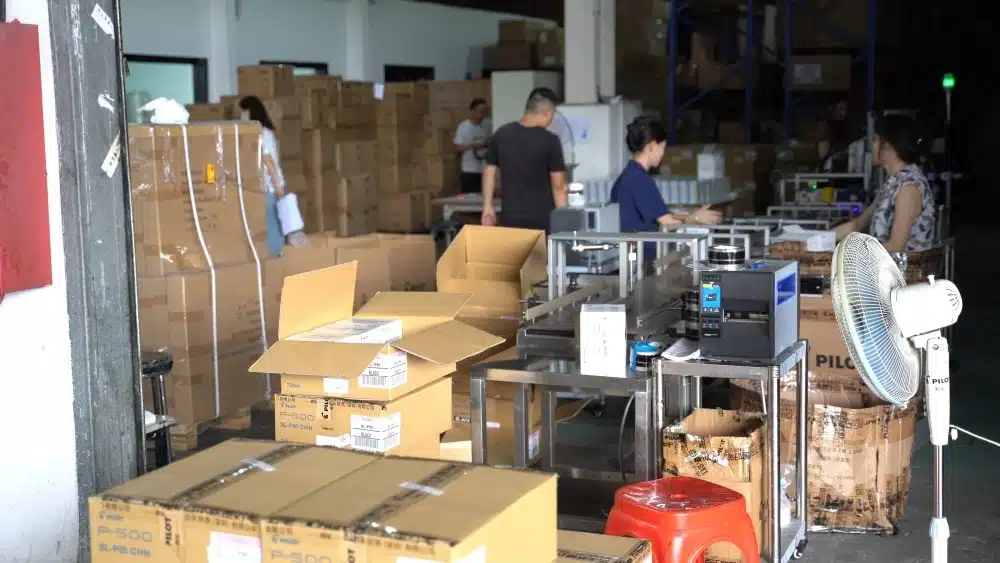
Warehousing Cost Models Explained
Chinese warehouses have various pricing models that are flexible to suit business models.
Per CBM
Best in non-homogenous or non-consistent inventory. You pay only the space occupied, so it is suitable for mixed SKUs or seasonal items.
Per Pallet
Fittest where to bulk or homogenous goods. Palletized shipments are very easy to forecast and price.
Per Order
Frequent within eCommerce fulfillment. Costs are proportional to actual order activity as opposed to fixed storage, which is appropriate to variable demand.
Subscription-Based
Other providers provide monthly or quarterly plans with limited storage and included features to predictable use.
| Pricing Model | Best For | Advantage |
| Per CBM | Flexible or mixed storage | Pay only for space used |
| Per Pallet | Bulk or uniform goods | Simple and predictable |
| Per Order | eCommerce fulfillment | Scales with actual activity |
| Subscription | Stable, recurring needs | Predictable monthly cost |
Hidden Costs in Warehousing You Should Know
Along with the more conspicuous line items, there are a number of less conspicuous charges that can shock unplanned businesses.
- Labeling and Repackaging Fees — There are additional costs in cases of label redesign, FBA prep, or consolidation of products.
- Returns Handling – There are different labor and processing costs on inspection, restocking, or disposal of returned items.
- Special Handling — Oversized, delicate, hazardous or temperature sensitive goods can be charged at a premium.
- Minimum Volume or Shortfall Fees — Other contracts have penalties in the case of storage below agreed levels.
- Peak Season Surcharges – Labor and space rates can have a temporary rise during peaks.
Reading the entire contract and requesting a full schedule of fees in advance can help prevent such surprises.
How to Reduce Warehousing Costs in China
Shrewd operational changes can have a significant impact in reducing costs without affecting service delivery.
- Maximize inventory turnover through reduction of reorder point and better demand forecasting.
- Rationalize SKUs – concentrate on the best performers.
- Enhance prediction of demand by utilization of previous sales and market trends to prevent overstocking.
- Combine integrated fulfillment services that involve storage, pick and pack as well as shipping to achieve combined efficiencies.
- Once you start to see patterns, negotiate volume or long-term contracts.
- Consolidation prior to international shipment should be made using the free storage time (where available).
These measures usually bring about visible cost-saving in addition to maintaining logistics.
Is Warehousing in China Cost-Effective?
Due to the low cost of warehousing in China, when planned well it is very cost effective to many eCommerce sellers, dropshippers and import companies. Close to the factories, the inbound transportation costs are lowered, and quick replenishment is possible. Scalable capacity enables season peaks without significant capital expenditure on facilities owned.
The availability of lower labor and space costs than most of the Western markets, in addition to the high level of warehouse management systems, enable efficient and competitive operations. Combined with a one-piece drop shipping system or Amazon logistics services, the model is useful in managing the overall landed costs and enhancing cash flows through reduction of long term storage abroad.
The ability to select the partner, proper forecasting, and frequent cost review is the key to its success.
Conclusion — Understanding Cost Leads to Better Decisions
To make sense of warehousing costs in China, it is imperative to have a clear picture of storage, handling and fulfillment. Those businesses that consider these factors well are in a position to maximize costs with the achievement of an efficient logistics operation.
The de-composition of every part, consideration of major variables, and the introduction of specific efficiencies help the decision-makers to have a greater control over their supply chain costs. Be it at a growing Shopify store, an Amazon FBA replenishment, or a multi-channel sales organization, a transparent warehousing pricing strategy helps you budget smarter and have better margins.