
Shopify warehouse services are a secure storage of inventory at a special facility with integration into the special Shopify store, automated fulfillments of orders. It integrates incoming stock, instant inventory level, customer order and shipping into an integrated system. As your own store moves out of starting dropshipping, warehousing is what enables you to make deliveries within an hour or more on-time, more accurate with your orders, and have a smoother day-to-day execution, as you can scale the store without manual work and customer demands about late deliveries.
Dropshipping is designed to help many Shopify sellers get started since it does not need to put upfront inventory. But with increase in the volume of orders, using suppliers alone may result in even lengthier delivery durations, item deficiencies and disappointed clients. Proper warehousing can help resolve these pain points by providing you with the power to control storage, picking, packing, shipping, and keeping all that stock risqué with Shopify.
What Is Shopify Warehousing?
Shopify warehousing involves keeping the physical inventory in a warehouse which is linked to your Shopify store. It does not leave the usually inert storage as an active component of your eCommerce business by allowing order flow to be automated between checkout and the delivery.
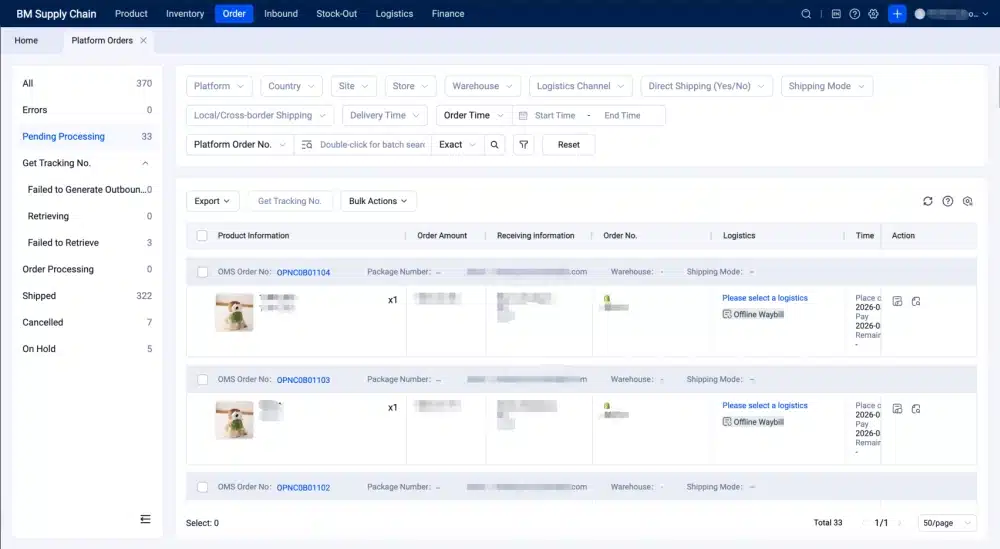
The physical center is the warehouse where goods are held in wait pending order. After a customer orders something on Shopify, the warehouse is immediately informed by the system. The items are then selected and packed by staff and shipped, often with tracking data automatically sent to the customer Shopify account.
Such integration eradicates manual data entry, and errors that are likely to be encountered in balancing spreadsheets or individual systems.
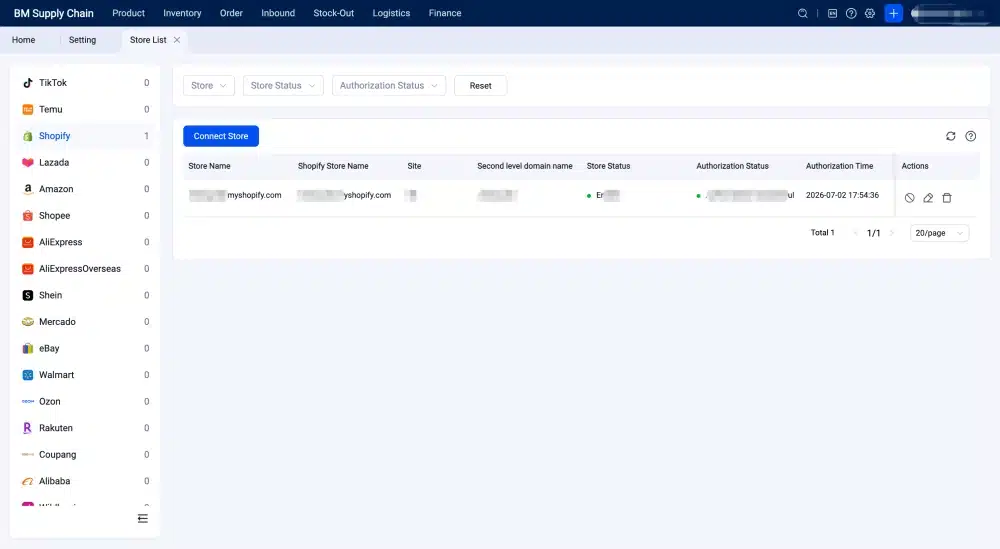
The following are some of the key elements:
| Component | Description |
| Inventory Storage | Secure holding of products in organized locations |
| Order Sync | Automatic transfer of orders from Shopify to the warehouse system |
| Fulfillment | Picking, packing, and shipping processes |
| Tracking | Real-time updates sent back to Shopify and customers |
When there is a trusted Shopify warehouse integration, sellers have up-to-date stocks in all channels and do not need to panic when oversold, which is one of the most frequent disappointments of stores in the growth phase.
How Warehousing Works for Shopify Stores
The warehousing process can be described as a simple, repeatable workflow that ensures the processes become efficient even with the rise of order volume at Shopify.
It starts with goods as they are taken to the warehouse. Employees check incoming goods, document quantities and place in stores in the most appropriate places so that they can be accessed with ease. Current warehouse management systems (WMS) are then linked to update back to Shopify inventory in real-time so your store never displays out of stock items that are in stock, in reality.
As a customer makes check out, the data of order is automatically sent to the warehouse. Instructors (notably with mobile devices or barcode scanners) provide instructions to pickers to find the specific items and pick them up. Orders are then transported to packing stations where they are accorded protective wrappings, proper labeling, and any special requisite. And, lastly, the shipment is provided to the selected carrier, and the tracking information is updated immediately in Shopify.
The warehouse solution has been used by many emerging brands aiming to bring their operations to the next level by automating fulfillment and enhancing efficiency.
The following is the workflow example:
| Step | Description |
| Receiving | Products arrive and are inspected/entered into the system |
| Storage | Inventory is organized for efficient access |
| Sync | Orders are sent automatically from Shopify |
| Picking | Items are selected according to order details |
| Packing | Orders are prepared with proper packaging |
| Shipping | Delivery to customers with tracking updates |
This is an end to end process which will reduce delays and ensure your team is geared towards growth and not addressing logistic fire fighting matters.
Why Shopify Stores Need Warehousing
Shopify warehousing only becomes mandatory after going past the first stage of start-up. The most significant one is faster delivery – customers now demand their orders within a small number of days, and the slow shipping may result in the carts being left or even bad reviews.
Another important reason is better inventory control. Real-time syncing eliminates permitting overselling and stockouts and provides you with the correct view of your entire catalog. This regulation has a direct impact on customer experience since they will get the correct products at the right time, resulting in trust and fostering repeat-customers.
The most attractive factor is probably scalability. Once product lines or sale surcharge during your promotions, then having a specific ecommerce warehouse Shopify to keep up with the increased volume is a solution that you do not have to hire more employees or rent more space at home. It liberates you on one hand to concentrate on marketing, product development and customer care as the logistics are introduced in the background.
Simply put, warehousing moves your operations towards being reactive to proactive, in supporting sustainable growth in competitive eCommerce markets.
Key Features to Look for in Shopify Warehousing
Avoid judging the Shopify fulfillment and warehousing provider based solely on their platform integration capabilities. An API integration will make sure that orders are instantly transmitted to a warehouse and processed without human intervention, and inventory tracking lets you maintain accurate levels of stock in your store.
Quick turnaround services are monumentally important. Find suppliers with same-day or next-day delivery, route optimization, and warehouse placed strategically near your customer base. Treatment of returns is also significant – effective reverse logistics can curb the friction of the refunds or exchange process by making them efficient, which contributes to positively maintaining customer relationships.
The other useful functions encompass automated reports to provide insights on performance, scanning barcodes to minimize picking mistakes, and variable storage capabilities to suit a variety of products (including small accessories or bulkyproducts). Combined, these elements will bring about a strong system that expands along with your business.
Benefits of Warehousing for Shopify Sellers
Shopify warehousing can provide quantifiable benefits to various sections of your operations.
The vantage shipping will result in increased customer reviews and conversion rates because customers will be pleased to have their goods delivered fast. Better inventory precision saves the unnecessary money that would be spent on mistakes such as dispatching the wrong product or making an empty stock order. Robotization deals with monotonous duties, reducing human labor and the possibility of human error.
Probably more importantly, scalability is supported by proper warehousing. You are able to increase your product line, grow into new markets or manage seasonal spikes without impacting the service level.
The following are the key advantages:
| Benefit | Impact |
| Faster shipping | Better reviews and fewer abandoned carts |
| Inventory accuracy | Reduced errors and overselling |
| Automation | Less manual work and higher efficiency |
| Scalability | Supports business growth without chaos |
The benefits are cumulative and logistics no longer becomes a bottleneck but a competitive edge.
When Should Shopify Sellers Use Warehousing?
The logistics and warehousing services provided by Shopify will make sense as soon as your business reaches some of the growth milestones. Growing size of orders is the most objective indicator, when you spend too much time on packing boxes or in the cases when you observe that delivering is delayed, it is high time to think about professional warehousing.
The fact that it requires delivery in a shorter time also leads towards warehousing. A dedicated setup can be used to create a two-day delivery when customer responses indicate that customers perceived the company as slow or when you want to compete with bigger brands that deliver within two days.
Larger product lines usually come with the need to have more structured storage and enhanced inventory visibility. In case you are introducing new SKUs and want to use a variety of suppliers, a Shopify warehouse will help you avoid chaos and keep everything in its place.
Additional indicators are expansion into foreign markets, conducting a regular promotion, or just desiring to reallocate time into more important tasks than everyday full-time work on fulfillment.
Common Mistakes Shopify Sellers Make
Even seasoned operators can trip when it comes to fulfillment. And some of the common pitfalls to watch include:
- Remaining in dropshipping indefinitely ❌ — It is a convenient option initially, but as sales increase you will not be able to influence the delivery time and branding.
- Neglecting speed of fulfillment ❌- Customers get impatient and fail to create repeat business; most of them do not realize the extent to which expectations grow rapidly.
- Ineffective inventory planning ❌ — You can run out of stock when it is most demanded or have inventory sit on the shelf, thereby wasting capital.
- Selecting on price alone ❌ – The lowest cost approach can not have reliable integration, rapid processing or quality returns processing resulting to larger issues later on.
Early identification of such mistakes assists you to make wiser decisions as you scale.
Conclusion — Warehousing Is Key to Scaling Shopify Stores
Warehousing plays a crucial role in helping Shopify stores to optimally scale. It allows control of inventory better, it can deliver faster and it can improve the overall customer experience-factors that directly impact on long term success in eCommerce.
With the knowledge of how warehousing on Shopify operates, and the right features you decide on doing what your operations should, you are establishing a solid base, what allows your operations to grow without headaches in operations all the time. Making the change between dropshipping or an already busy store worthwhile, spending time to think about your fulfillment strategy is rewarding with improved customer satisfaction and day-to-day management.
Pay attention to developing systems that evolve around you. The warehousing treated stores consider it as a strategic component.