Warehousing deals with maintaining stock, whereas fulfillment is concerned with assembling and making orders. The two terms are often used interchangeably as though they are different stages of provision chain. Most companies mistake warehousing and fulfillment to be similar processes, however, in the real sense, they constitute two different steps in the logistics process. This variance can be used to enable eCommerce vendors, dropshipping operations and procurement managers to reduce operational inefficiencies at great expense.
What Is Warehousing?
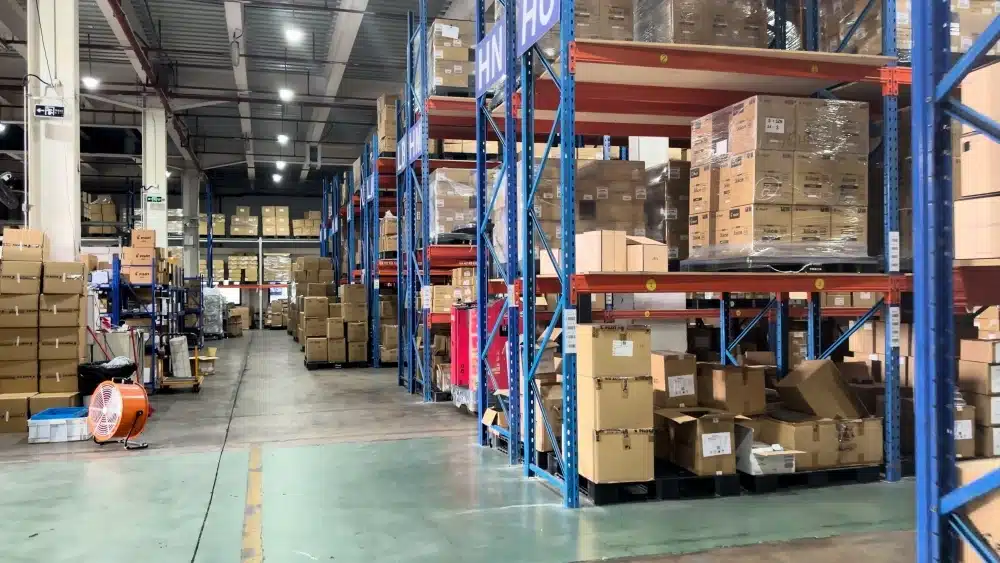
Warehousing entails the process of organised warehousing and administration of items until they are in demand either to sell or manufacture. It is the cornerstone of stock management within any supply chain.
Fundamentally, warehousing deals with the receipt of goods by the suppliers, their movement within a warehouse, and keeping good stock records. These are climate-controlled storage of sensitive products, shelfs designed to be fast to reach and tables of counts to avoid differences.
Warehousing has the effect of buffering in the larger supply chain. It enables companies to buy on bulk at a much low rate, safeguard goods one cannot spoil and react swiftly to demand variance without having to consistently reorganize the stock. In the case of import/export business and SMEs that use overseas shipments, trustworthy warehousing options can also offer a secure point to consolidate the cargo and carry out quality checks, and the subsequent distribution process.
Good warehousing is more than mere space leasing. The latest warehouses have high-tech systems to monitor the location, batch numbers, expiry dates, and stock levels in real time. Such a degree of control brings about a decrease in holding costs and elimination of stockouts or over stocks.
What Is Fulfillment?
Customer orders fulfillment is the end-end process of receiving, handling and delivering orders. It converts the inventory kept into those shipped products that arrive in time to the buyers.
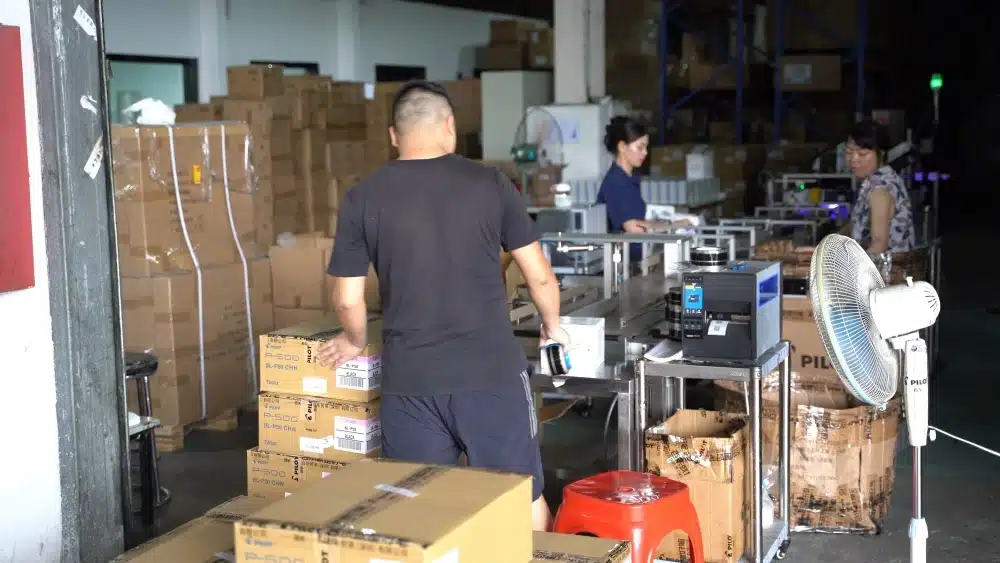
The fulfillment process usually starts with an order being made – either via Shopify, Amazon, TikTok Shop, or on a personal site. The appropriate items are then selected by the staff or automated systems in the storage, and they are checked and sorted in terms of quality and packed using the relevant materials, shipping labels are created, and the package is then handed over to the carrier. Other options can be a wrapping of gifts, personalizing the inserts or packing several items into one ship.
Fulfillment centers are faster and more accurate as opposed to pure storage. All slack of picking and packing has a direct impact on customer satisfaction and refund. With eCommerce sellers, particularly those who are expanding to work with more than one platform, high-volume and time-sensitive direct-to-consumer shipping is particularly not suited to most traditional warehouses, so professional fulfillment service providers are able to support such work.
Key Differences Between Warehousing and Fulfillment
The warehousing and fulfillment centers can be situated in the same structure but they have very different purposes and the daily operations with a wide range of different performance metrics.
A clear parallel is to be found here:
| Aspect | Warehousing | Fulfillment |
| Purpose | Storage of goods | Order processing |
| Function | Inventory holding | Order execution |
| Focus | Space management and organization | Speed and accuracy |
| Output | Stored goods in good condition | Delivered orders to customers |
| Key Metrics | Storage utilization, inventory accuracy | Order processing time, pick accuracy, on-time delivery |
| Typical Duration | Long-term (weeks to months) | Short-term (hours to days per order) |
Warehouse vs fulfillment center does not merely concern terminology, but a paradigm shift in operational priority. Warehousing is passive and a safeguard whereas fulfillment is active and in direct contact with the customers. When the two are mixed up, it may result in businesses making choices that have been good in terms of storage but poor when the orders start to come in.
Companies frequently turn to combination warehousing and order-fulfill adoption to conduct a successful and thriving storage of inventory and handling of orders.
How Warehousing and Fulfillment Work Together
Warehousing and fulfillment are simultaneous and complementary processes that establish a streamlined logistics operation in case they are incorporated appropriately.
This is normally initiated by warehousing, where goods have been received by the manufacturer or suppliers and sent to stores where they are received, checked, and stored. Upon a customer making an order, this activates the fulfilling stage of the system. Stocks are extracted at the warehouse where they are stored and then transported to the packing plant where they are carefully packed, labeled and shipped through the selected carrier.
This integration is made possible through modern supply chains which employs warehouse management system (WfMS) and order management system (OMS) which communicate with each other in real time. Stock level can be tracked, predictive replenishment requirement, and order automatically rerouted to the closest fulfillment station. This does away with manual handoffs and error reduction.
Importing companies that have their warehousing and fulfillment here have other advantages of having both warehousing and fulfillment under the same roof. It reduces the time frame between bulk deliveries and single order delivery, increases the visibility of the whole process, and enables such strategies as just-in-time inventory or area distribution.
Which One Does Your Business Need?
How much warehousing and/or fulfillment you require is determined by your sales model, volume of orders, and at which stage of growth you are.
Warehousing is only necessary in the event you mainly sell in bulk to retailers, wholesalers or manufacturers. Here, the primary issues that you are focused on are secure long storage, accuracy of inventory and the cost efficient use of space. A lot of the procurement units and import companies begin here as they develop demand.
It becomes imperative when you start selling to end consumers directly via eCommerce sites. The instant the orders come in small quantities with close delivery requirements, you require rapid picking, precise packing, and dependable last-mile delivery services, which is far more than merely a straightforward warehouse.
A majority of the expanding eCommerce sellers and drop shipping organizations persistently need them both. They require warehousing, where they can keep stock in a cost-effective manner and fulfillment where they can turn that stock into the happy customers within a short time. The appropriate balance will also help to avoid having cash locked up in stock and have the orders delivered within the same day or the next day.
Benefits of Combining Warehousing and Fulfillment
As warehousing and fulfillment are integrated as a single system, companies are known to record significant enhancements in various aspects.
| Benefit | Impact |
| Efficiency | Streamlined operations with fewer handoffs |
| Faster delivery | Improved customer experience and fewer delays |
| Cost savings | Reduced overhead from shared facilities and systems |
| Scalability | Easier support for business growth and seasonal peaks |
Also, better data visibility is offered by integrated solutions. Real time tracking of stock levels, fulfillment performance, and shipping cost can be tracked on a single dashboard. This also aids in predicting demand, minimizes the chances of running out of stock during seasons of rising demand, and aids in making smarter buying choices. To the SME operating logistics across borders, such a combination usually comes out as a reduction in the total landed costs and rival promises of delivery.
Common Mistakes Businesses Make
Warehousing and fulfillment management can befall even the experienced teams. The following are some of the most common mistakes:
- Bringing warehousing and fulfillment together as one ❌ – The belief that any warehouse can processes volumes of orders automatically results in slow shipping and unhappy customers.
- Committing half a solution ❌ – Choosing an inexpensive storage company with no ability to fulfill the order and then forces him to perform poorly when the order quantity doubles.
- Non-integration ❌ – Separate vendors of warehousing and fulfillment as well as the lack of system connectivity, which leads to delays and inventory variability.
- Underestimation of complexity of fulfillment ❌ -Not acknowledging the labor, technology and process accuracy needed to ensure accurate and quick order execution particularly in times of sales surges.
These traps can be avoided by first making a clear evaluation of your present and intended order profiles and then making a commitment to any logistics partner.
Conclusion — Both Are Essential for Modern Logistics
Fulfillment and warehousing satisfy overlapping, yet distinct roles in the logistics. Warehousing protects your stock and furnishes the basis of supply chain stability, and fulfillment transforms said stock into turnover by delivering it at the right place, and right time.
Those firms who know how to combine the two can realize greater efficiency, quicker delivery and operation that can really be scaled. As an eCommerce vendor on Amazon, a fast-growing Shopify business, an import enterprise looking to move into the direct-to-consumer business, reevaluating your warehousing and fulfillment strategy with your actual business requirements is one of the best operational choices you can make.
When you treat them as two separate, but related functions, you put your company in a more relaxed position to grow and be able to better satisfy customers in the current competitive environment.