A warehousing company is a company that deals with storage, movement and fulfilment of goods being part of a larger supply chain of a business. It goes way beyond inventory holding; it includes receiving, inspection, orderly storage, order processing, picking, packing, and delivering all parts in a smooth coordinated fashion with proper stock record keeping and smooth integration of the system.
The common belief among many businesses is that a warehousing company can only offer storage space. As a matter of fact, it is an integrated logistics provider that controls the entire process of goods movement since availability of inventory up to the ultimate customer.
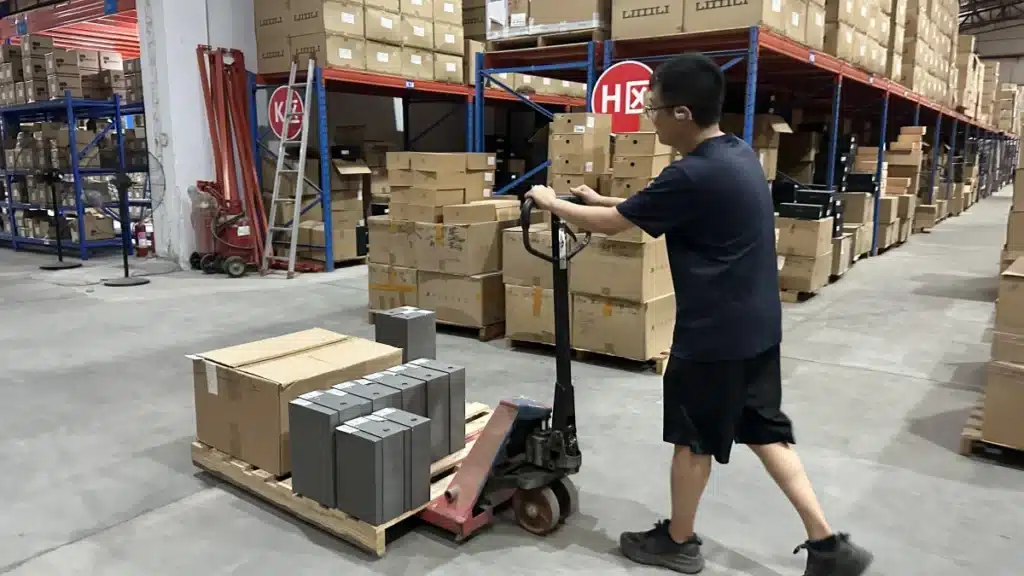
What Does a Warehousing Company Do? (Simple Overview)
Fundamentally, a warehousing company is the operational support of logistics and supply chain management. It assumes the role of ensuring products are safe, that all the movements are tracked, and that the orders are out of the facility fast and correct.
The following is a quick overview of its key functions:
| Function | Description |
| Storage | Safe and organized inventory holding |
| Inventory Management | Tracking stock levels and movements |
| Order Processing | Preparing customer orders for shipment |
| Picking & Packing | Selecting items and packaging them properly |
| Shipping Coordination | Managing delivery to end customers or carriers |
These roles render warehousing businesses a necessity to any business that deals with the sale of tangible items particularly those that deal across the borders or those that trade online.
Key Services Provided by a Warehousing Company
A professional warehousing company offers much more than just storage. It provides a full package of integrated services that ensure a smooth running of operations.
A trusted warehouse service provider in China is usually sought by businesses aiming at streamlining logistics to effectively address these operational tasks.
The main services usually consist of:
| Service | Description |
| Inventory Storage | Flexible storage solutions tailored to product type and volume |
| Order Fulfillment | End-to-end processing of customer orders |
| Pick & Pack | Accurate and efficient product selection and packaging |
| Returns Management | Handling returned goods, inspection, and restocking |
| System Integration | Connecting with eCommerce platforms, ERPs, and marketplaces |
These services enable companies to have a high accuracy of inventory and minimise manual work and errors.
How Warehousing Companies Support eCommerce Businesses
eCommerce companies are located in a high speed environment where success depends on speed, accuracy and scalability. A warehousing company is able to directly support such needs in a number of pragmatic ways.
First, it allows rapid shipping of products by locating them near large markets or consumers. Secondly, it provides a high level of inventory accuracy due to real-time tracking systems, which reduce the occurrences of stockouts and overselling. Third, it can lessen the operational load on the business owner by performing labor intensive activities like picking, packing and returns processing. Lastly, it offers scalability – companies can easily add storage and fulfillment space during peak times without adding their own warehouse system.
The above benefits usually result in higher customer satisfaction and profitability in the case of Amazon FBA sellers, dropshippers, and individual online stores.
How Warehousing Companies Work (Step-by-Step Process)
The day-to-day workflow allows understanding why warehousing companies are so productive. The majority of them have a definite, repeatable procedure:
- Receiving Inventory – Suppliers or manufacturers send goods, which are unloaded.
- Inspection- Goods are inspected in terms of quantity, quality and state.
- Storage – When the demand and the nature are taken into account, the items are stored in the most efficient places.
- Order Picking – As an order is received, employees find and collect the specific items.
- Packing- Products are neatly packed using the right materials and labeled.
- Shipping- The orders are passed onto the carriers with proper documentation and tracking.
Here’s a summary of the typical workflow:
| Step | Description |
| Receiving | Accept goods from suppliers |
| Inspection | Quality and quantity check |
| Storage | Organize inventory in optimal locations |
| Picking | Select items for customer orders |
| Packing | Prepare shipment with proper packaging |
| Shipping | Deliver to customers or carriers |
Such an organized process provides uniformity, minimizes mistakes, and retains complete visibility throughout the supply chain.
Who Should Use a Warehousing Company?
Any company that specializes in selling tangible goods and aims at expanding instead of handling logistics can utilize the services of a warehousing firm.
This includes:
- eCommerce sellers requiring quality order fulfillment.
- Amazon companies that are interested in complementing or supplementing FBA.
- SMEs that do not have their own warehouses.
- International vendors with their stock in various nations.
- Dropshipping merchants interested in expedited shipping and more control.
Even emerging brands and newer companies discover that warehousing outsourcing liberates capital and time in management which can be redirected to product development and marketing.
Benefits of Working With a Warehousing Company
Collaborating with a well-established warehousing firm brings quantifiable business enhancements.
| Benefit | Impact |
| Cost Efficiency | Reduced storage and labor costs |
| Faster Fulfillment | Improved delivery times and customer satisfaction |
| Inventory Accuracy | Fewer stock discrepancies and order errors |
| Scalability | Easy support for business growth and seasonal peaks |
These advantages assist organizations to reduce administrative expenses, enhance liquidity, and react to the market needs faster.
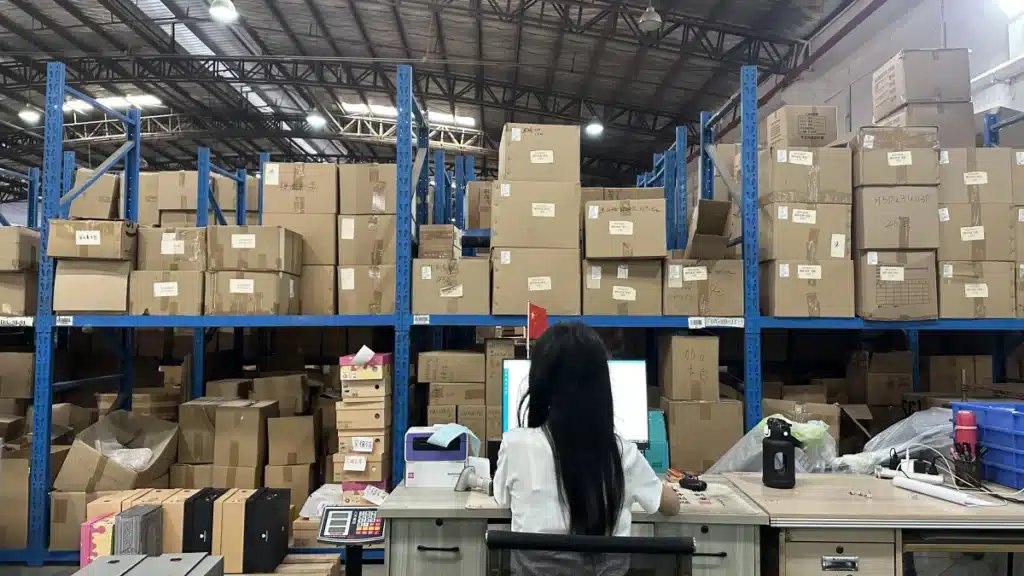
Common Misconceptions About Warehousing Companies
In spite of their significance, there are still a number of myths surrounding warehousing companies:
- Not only large companies ❌ — Plenty of SMEs and even startups successfully use warehousing services to become large without significant initial investment.
- Only storage providers ❌- Modern warehousing providers are full order fulfillment, returns and systems integration companies, not merely storage.
- Too costly ❌ — Outsourcing can be more affordable than operating your own warehouse, employees and systems.
- Not required in eCommerce ❌ -In the current competitive online business world, professional warehousing and delivery have become a necessity in fulfilling customer demands of speed and reliability.
Conclusion — Warehousing Companies Power Modern Logistics
A warehousing company is more than a storage facility but an important partner in operations that allows efficient inventory management, order fulfillment, and scalable logistics in the contemporary supply chains.
Warehousing companies, by managing the complicated and time-intensive elements of logistics, enable sellers of eCommerce platforms, Amazon enterprises, and importers to concentrate on their core competencies and expand their brand and customer service. With a highly competitive market environment, the difference between merely surviving and actually flourishing may be the correct warehousing partner.