The Regulatory Ecosystem Shift in Amazon FBA
One of the most notable examples as an Amazon operations consultant, who has been working in this environment for more than 10 years, I have seen that regulating ecosystems such as FBA do not change the playing field, they reset it to the global Amazon sellers. The 2026 revisions of rules 2026 of Amazon FBA should be considered a key reimbursement, focusing on accuracy of inbound supply, inventory quality, and cost models. These are not independent adjustments; they complement each other into a system of maximizing efficiency in the warehouse scale of Amazon so that sellers are being driven to become more self-reliant in the areas of operations compliance.
System thinking shows the cause and effect of these changes that spread as far as the manufacturer to the final user in the ecosystem. An example of this is that the end of in-house prep operations results in an upstream reallocation of duties, which increases the importance of strong partnerships in such areas as China, where fulfillment experience can counteract failures. This regulatory shift highlights a more general one: Amazon is simplifying its core capabilities in storage and delivery and displacing variability, which forces sellers to chart risks more comprehensively through their supply chains.
Dissecting the Prep Service Discontinuation
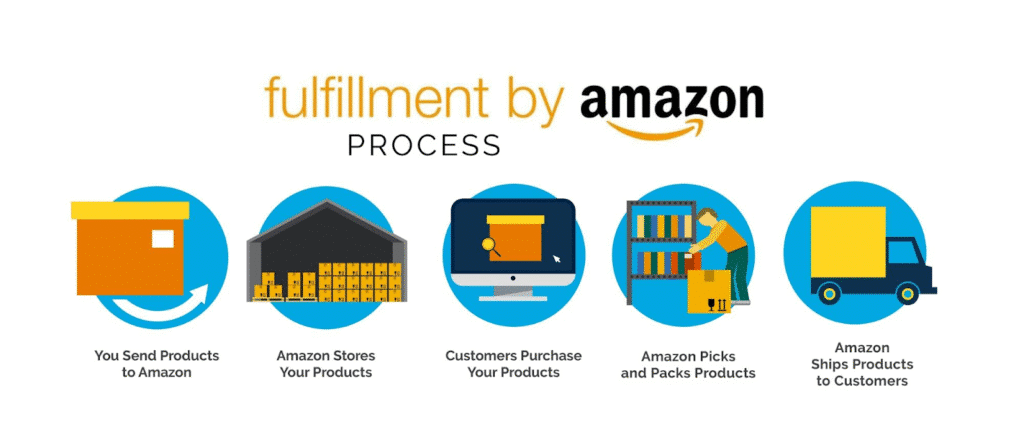
The essence of changes in Amazon’s inbound regulations is the irrevocable suspension of FBA prep and labeling services since January 1, 2026.This move removes a long-standing seller support option, as all deliveries must now be fully compliant, bagged, labeled, and prepared before shipment or risk rejection and finesThis is noted as a strategic unloading through regulatory analysis: Amazon warehouses are reusing space to process high velocity inventory, and labor intensive prep to improve throughput.
This creates an error tax, or the cumulative expense of non-compliance to global Amazon sellers, such as late stays and possible account banner. Risk-distribution mapping illustrates weaknesses at the inbound stage, where even a small failure in poly bagging or FNSKU application can propagate downstream, multiply holding costs, and reduce margins.International sellers must now incorporate prep into origin-country operations, and China fulfillment partners are essential for building compliance at origin and reducing cross-border risk.
Fulfillment Fee Adjustments: Economic Impact Modeling
Exploring the fee structure, the fulfillment fees that Amazon will implement on January 15, 2026, have an average cost per unit of a moderate 8 cents, but differ considerably depending on the product category and price range. The modeling of economic impacts reveals some stratified impacts: items with low standard sizes less than $10 are confronted with a bump of 0.12, and items greater than 50 have increases of 0.51, which strains low-margin items. This is not blanket inflation, but a measured response to operating costs in which efficient packaging is rewarded and compensation opportunities may be available.
Worldwide, these changes increase the ripple effects of the supply chains especially on sellers who have a long lead time. The greater unit charges compound with the fluctuations of the currency, and tariffs, profitability is tight in fluctuating markets. System thinking would be to think holistically about this, that is, raising fees and optimizing inventory could provide net benefits, but only when sellers take active modeling to predict the effects on cash flow and pricing policies.
Inbound Defect Penalties and Error Tax
The Amazon inbound regulations have now harmonized defects fees into a common structure by 2026 with charges varying between 0.32 to 1.74 per unit of the normal size and 5.72 per large size. It is an error tax system that imposes penalties on misrouted, abandoned or deleted shipments and makes accountability part of the cost equation. This is placed as a deterrent mechanism through regulatory ecosystem analysis in line with the efficiency objectives of Amazon.
Risk mapping shows how these fines are disproportionately allocated to the globally dispersed sellers: those that have fragmented supply chains are subjected to a higher risk, with the inbound failures flowing into the overages of the storage and the lack of sales. When the operations are cross-continental, the blowback is also immense, not only in the form of direct charges, but also the reduction of inventory performance scores, which restrict access to high-tier placement. Strategic mitigation is through upstream automation where the China fulfillment centers can impose stringent checks to reduce defects at the source.

Inventory Limits and Low-Stock Fees
Amazon Inventory is constraining with increased fees on low-inventory-level inventory with charges now imposed at the FNSKU level and expanded to bulky types with charges between 0.32 and 2.09 per unit on the difference between actual deviation of inventory quantities versus the 28-day levels. This policy has the effect of implementing healthier stock levels, but modelling of economic impact shows a two-sided sword, reducing the tendency to overstock, but penalizing the sellers whose demand is unpredictable.
Global supply chain ripple effects are dark in the case of long-haul shipments across Asia where the triggers of fee increments can be missed because transit delays drop below limits. System thinking proposes that there should be dynamic inventory modeling whereby real-time data is incorporated in balancing holding costs against penalties. FBA compliance requires agile replenishment, where China-based partnerships can accelerate cycles, distribute risk more evenly, and maintain operational continuity.
Aged Inventory Surcharges: Risk Distribution Mapping
Old inventory charges increase in the year 2026 when 12-15 month stock goes up to $0.15-30 every month per unit, and greater than 15 months up to 0.35 per unit or 7.90 per cubic foot. This is revealed in the risk distribution mapping as a goal-oriented attack on stagnation, redistribution of warehouse storage to fast-movers.
The sellers of Amazon globally, particularly those operating in seasonal markets, need to revise the curve of policy adoption to prevent such surcharges. The economic effect is not limited to the fees, it also wastes capital in sluggish inventory and prevents reinvestment. Operational compliance requires active liquidation or replenishment planning; however, upstream measures such as demand forecasting combined with China delivery can anticipate inventory aging by aligning production with market demand and reducing exposure across the supply chain.
Supply Chain Ripple Effects for Global Sellers
The 2026 Amazon FBA regulations 2026 shake the global supply chains, and the obstacles to sellers who may be dependent on distant manufacturing centers are increased. Regulatory analysis reveals the intersection of prep discontinuation and fee increments that will increase the price of mistakes in models that are heavy in transit. An example is non-conformant overseas inbound which will be punishable by compounded fines, defect fees, and low-stock fines.
This is calculated in economic impact modeling: a 20 percent increase in overheads in logistics may appear due to delays in compliance, especially during geopolitical conflicts in shipping lanes. China fulfillment becomes a stabilizing force by providing local prep and consolidation, helping sellers achieve FBA compliance without creating excessive error-related costs.
This systemic methodology reallocates risks, making possible weaknesses competitive advantages.
Automation Thresholds and Operational Compliance
The new rules include automation thresholds that encourage technology-driven efficiency, including labeling and tracking warehouse systems that support higher FBA compliance requirements.This is especially relevant for larger-scale operations: sellers that meet these thresholds through API integrations or automated prep can limit fee increases by reducing manual errors.
In case of global operations, this level is a maturity level; below this level, they will encounter increased risks in inbound regulations. Risk mapping recommends automating at the start of the process whereby partners in China use advanced management systems to strike compliance targets without a hitch. This effectively reduces error taxes besides increasing the speed of policy adoption curve, which places sellers in a strong position to grow resiliently in an environment of regulatory uncertainty.
Policy Adoption Curve: Transition Strategies
To negotiate the policy adoption curve of Amazon FBA policies 2026, it is necessary to integrate step-by-step, which has to begin with audits of existing inbound processes to meet January deadlines. According to regulatory ecosystem insights, it is recommended to embrace early involvement to prevent disruptions during high seasons as late entrants may be hit with cascading fines.
Strategic forecasting is the measure that is taken to counteract economic ripple effects: modeling of the effects of fees on inventory turns is used to make pricing decisions. Global Amazon sellers enjoy the benefit of diversified chains, which includes China fulfillment to achieve flexibility of prep and quick replenishment. This curve is not a linear one; it is an adaptive curve that requires constant attention to apportion risks and maximise efficiencies such as low-price discounts which increase to $0.86 per unit on products that cost less than ten dollars.
Strategic Imperatives for 2026 and Beyond
When considering these changes in totality, the strategic necessity of global Amazon sellers is apparent: upstream control must be adopted to be successful in the redefined FBA environment. Regulatory scrutiny and risk mapping leads to one fundamental fact–the rules of 2026 used by Amazon in its regulatory framework will reward accuracy and punish inefficiency, and integrated supply chains will be a precondition.
Through the optimization of inbound and inventory strategies, project models of the economic impact of proactive adapters may be 10-15% margins. As consultants, we support partnerships such as BM Supply Chain, where China fulfillment expertise delivers customized prep, labeling and logistics to improve compliance and reduce supply-chain ripple effects. Free warehousing (up to 30 days) and smooth API connections support the sellers go through this regulatory ecosystem to convert these obstacles into long-term competitive edges.